

By Michael Williams
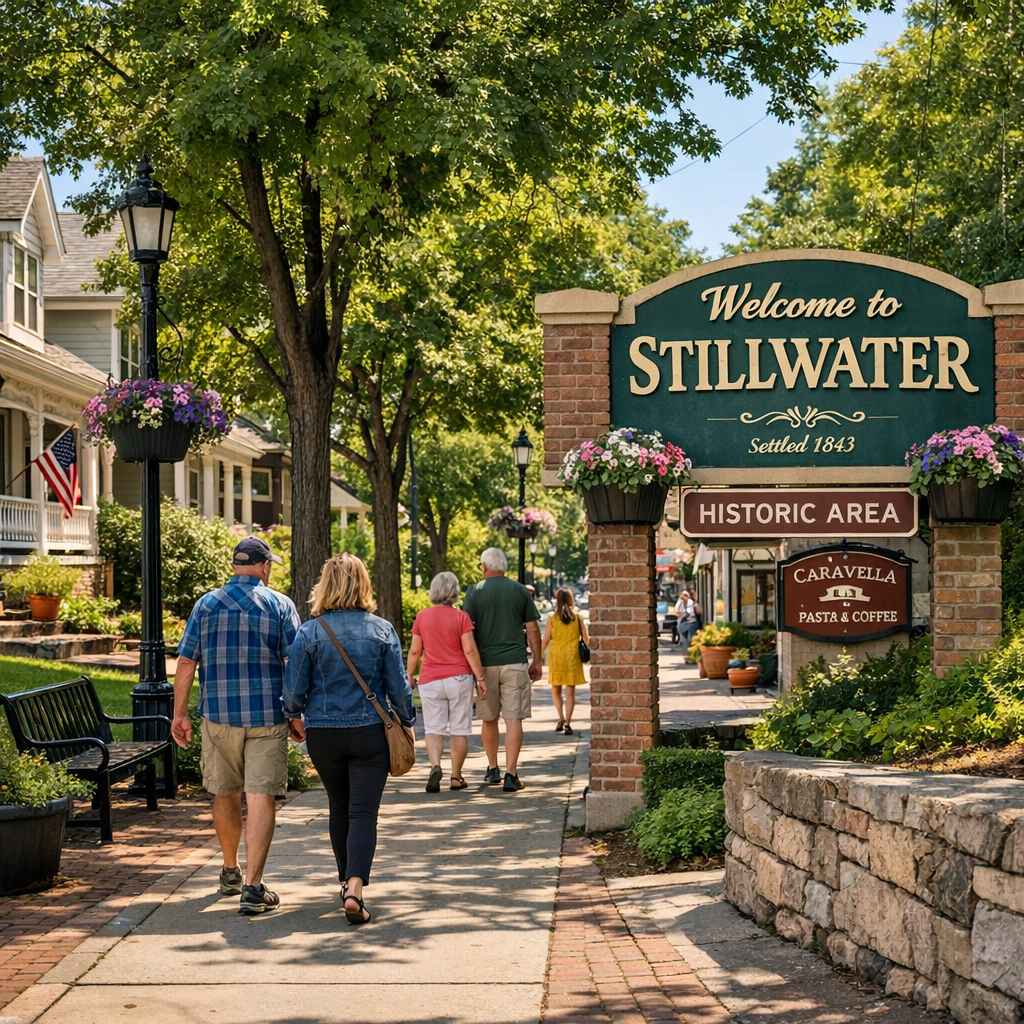
Every time I walk one of Stillwater’s charming streets—along Water Street, or up by Lily Lake—I notice the sidewalks. Some are wide and smooth; others are patchwork, interrupted by cracked pavement or cut off entirely. They’re easy to overlook, but they reflect something deeper about how we choose to shape our city and how we share space together.
Why Walkability Is More Than Convenience
Walkability isn’t just about being able to get from point A to point B on foot—it’s about safety, about access, and about belonging. Sidewalks make places feel connected. When kids walk to school, when people push strollers, when seniors stop to chat with neighbors—these moments only work when there’s safe, continuous, well-maintained paths.
What Stillwater Gets Right… and Where We Can Do Better
There are many things Stillwater does well. Parks like Lowell Park, Teddy Bear Park, and Pioneer Park are like beacons in our downtown—neighborly, open, and full of activity. There’s the network of trails, riverfront piers, charm in historic streetscapes and that Old Lift Bridge over the St. Croix. All of these encourage walking, gathering, seeing others, being seen. But despite these strong assets, several newer developments have raised concerns—they prioritize vehicle access, garages, or driveways over sidewalks or pedestrian-friendly connections.
Voices from the Neighborhood
Residents from different parts of town have shared concerns in council meetings: lack of sidewalks near school bus stops, limited lighting after dark, or trails that exist but don’t connect to nearby homes or parks. Parents worry about children crossing busy roads to reach school or dog walkers trying to reach a trail. These aren’t complaints—they’re insights, reminders that design matters.
What Walkable Should Look Like
A truly walkable Stillwater would mean:
- Continuous sidewalks along most streets—not just major roads, but the quiet residential blocks too.
- Pedestrian crossings with clear signage and lighting, especially near schools and parks.
- New developments held to standards that balance cars, parking, greenspace, shade trees, and safe foot traffic.
- Small-scale infrastructure—benches, shade trees, sidewalks widened, curb ramps—that make walking pleasant for people of all ages and abilities.
How We Can Make Change Happen
This isn’t just on the city staff or city council. We all play a part. Neighbors reminding each other, speaking up during planning meetings, using surveys, and supporting walkability in new developments or renovations. It also means making space in budgets and policy for repair and maintenance—not just flashy new sidewalks, but fixing the broken ones.
When sidewalks tell a story of inclusion, care, and foresight, they strengthen the connections between us. And in a place like Stillwater—where history, nature, and neighborliness all matter—our sidewalks are part of what makes this place feel like home. Let’s walk forward together.