

By Liam Anderson — From Washington to Stillwater, threads in the nation’s legal and economic fabric are stretching in new ways. Two major areas—Supreme Court decisions and economic indicators—are creating ripple effects that touch everything from democratic participation to the cost of groceries.
Supreme Court moves: Changes in power and campaign finance
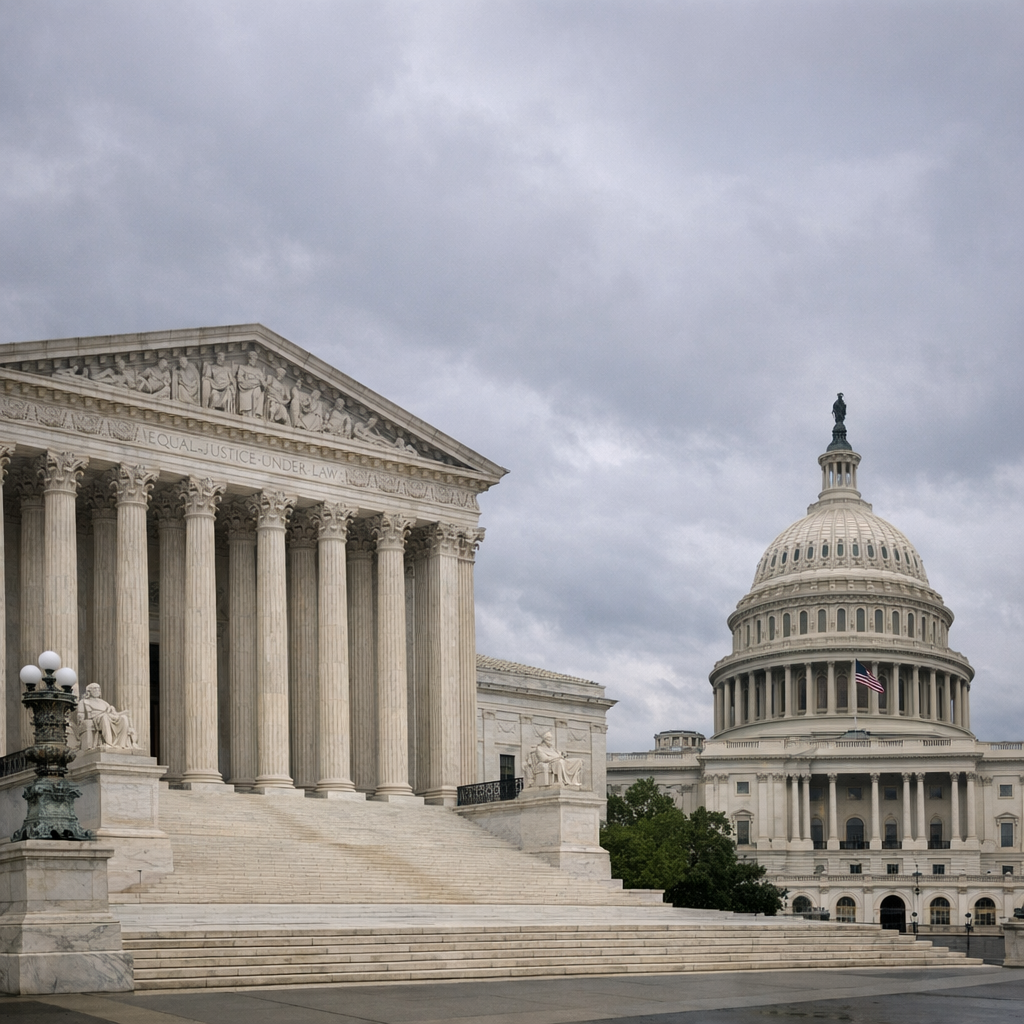
In its most recent term, the U.S. Supreme Court made several consequential decisions that realign presidential authority and campaign spending rules. A key ruling struck down longstanding limits on how much political parties can spend in coordination with their own candidates, citing First Amendment protections. These limits, first established decades ago, were viewed as constraints on political expression. The decision opens the door for parties to directly amplify candidate messaging and fundraising in new ways.
At the same time, the Court expanded presidential influence over certain independent federal agencies by overturning legal protections that previously made it harder to remove agency leaders without cause. Notably, it also preserved the independence of Federal Reserve governors—affording Congress continuity there, despite the broader shift toward greater executive flexibility. These rulings build on earlier decisions about electoral maps, immigration rules, and foundational democratic processes.
Why this matters
These legal shifts change long-standing boundaries between branches of government. When agencies become more directly accountable to the president rather than insulated by law, policy implementation may become more dynamic—and potentially more partisan. For folks in local communities, that could mean more rapid changes in regulations, enforcement, and federal oversight.
Economic snapshot: Growth tepid, inflation persistent
The U.S. economy has shown modest expansion—around 1.5% growth in recent months. That’s below what many economists hoped for, but it signals that growth remains positive despite challenges. Consumer spending continues to support that growth, though it’s losing steam under the weight of high prices and rising costs.
Inflation remains a top concern. While some metrics, especially those that exclude volatile sectors like food and energy, suggest a mild easing, headline inflation is still well above the Federal Reserve’s 2% target. Meanwhile, incomes in many areas have risen—but not always fast enough to offset price hikes on essentials. Some regions are feeling the squeeze harder than others.
Crosscurrents: How legal change and economic stress intersect
The legal recalibrations and economic conditions are dovetailing in ways with political impact. Campaign finance changes, for example, could amplify certain voices over others—especially as economic stress shapes voter concerns. Issues like inflation, wage stagnation, and cost burdens on everyday goods are already central to public sentiment. As voting rules and financial influence undergo revision, economic pressure may drive sharper voting patterns and policy priorities.
What to watch next
- How election campaigns adapt to the loosened spending constraints. Will parties coordinate more directly with candidates, and how might that change messaging?
- Whether the Federal Reserve’s measures—including interest rates—respond aggressively to inflation, especially if core prices stay elevated.
- Local effects in places like Minnesota: cost-of-living pressures, healthcare costs, housing, and how residents perceive fairness in the system.
Even in towns far from D.C., currents of legal precedent and economic trends flow through everyday life. They shape not just policy, but how people across the country plan for and live in the present—and what they expect for the future.