

By Michael Williams
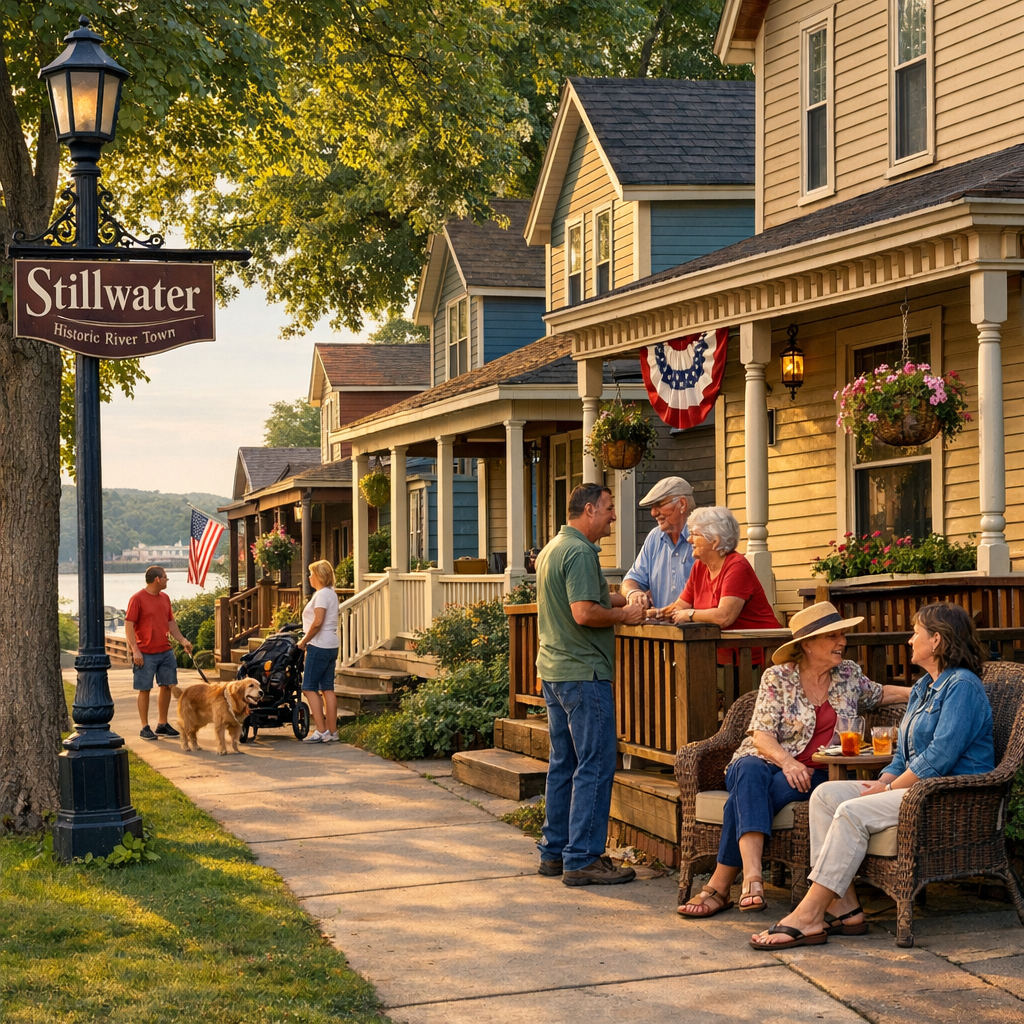
I’ve lived in Stillwater long enough to see the ebb and flow of what makes a neighborhood more than locations and buildings. Our city is picturesque—river views, historic architecture, charming Main Street—yet what shapes our daily lives often happens in quieter places: front porches, library hallways, community events. I want to explore what it means to truly live among each other here, the shared values and the challenges, as told through everyday stories.
Care in Daily Gestures
On summer evenings, it’s common to see someone mowing a neighbor’s lawn, not because they’re paid, but simply because the person down the block got sick. Or to find a note on the door saying, “I have extra rhubarb—help yourself,” with a pie dish inside. It’s these spontaneous acts—yes, neighborly, almost old-fashioned—that glue our community together.
Volunteering is more than obligation in Stillwater. Places like Community Thread help coordinate efforts like leaf-raking for seniors or food shelf work. The public library welcomes people interested in local history, greeting visitors, and preserving the St. Croix Collection. These aren’t grand gestures but parts of the daily oxygen: needed and sustaining. I’ve volunteered at the library’s greeting desk, and hearing someone say, “Thanks, I feel welcome here,” is reward enough.
Diverse Voices, Shared Space
Not everyone’s experience here is the same. Some longtime residents say downtown has become more oriented toward tourists: traffic, noise, and parking struggles. Others who’ve moved here more recently love the small-town feel and engagement in schools and city government, yet notice gaps in diversity—cultural, socioeconomic, racial—and in affordable housing. These observations aren’t complaints as much as tried-by-many stories of belonging.
Stillwater has important institutions trying to meet those gaps. Nonprofits work on housing access, food security, cultural programming. Library resources and historical collections bridge generations. Some neighborhood forums have pushed for thoughtful street design (wider sidewalks, more greenery) instead of parking strip dominance downtown. It’s a balancing act: preserving what makes us feel like home, while making space for others who’d like to feel that way too.
Challenges to Our Common Ground
We face tensions—sometimes between preserving history and promoting progress, between attracting visitors and keeping peace, between protecting natural beauty and allowing development. One example: proposals for “social districts” (spots where people might enjoy drinks outdoors to boost business and foot traffic) drew almost even split in support and concern, especially downtown. Some worry about behavior and trash; others about liveliness and economy.
Then there’s affordability. Rising housing, parking, and daily living costs strain many families. When a child grows up in one corner of town, teaching in another, commuting or stretching the budget—these are real stresses. Stillwater’s beauty shouldn’t become a barrier to those who work here, volunteer here, or are raised here.
What Brings Us Together
Through it all, what I see most is love for place: clean rivers, walkable streets, schools where families know each other, library evenings, summer concerts. It’s in traditions—annual events, food trucks, art in small shops—that community is not just imagined but lived.
Living here means choosing each other every day. We may come from different walks—some born here, some just moving in—but what makes Stillwater home is the decision to care about our shared streets, our neighbors’ children, and the visible and invisible threads that bind us.
If there’s one invitation: next time you’re walking down Main, or browsing at the library, ask yourself—how can I show up? One small gesture, one conversation, one effort to listen. That could be what builds a Stillwater we’re all proud to call home.