

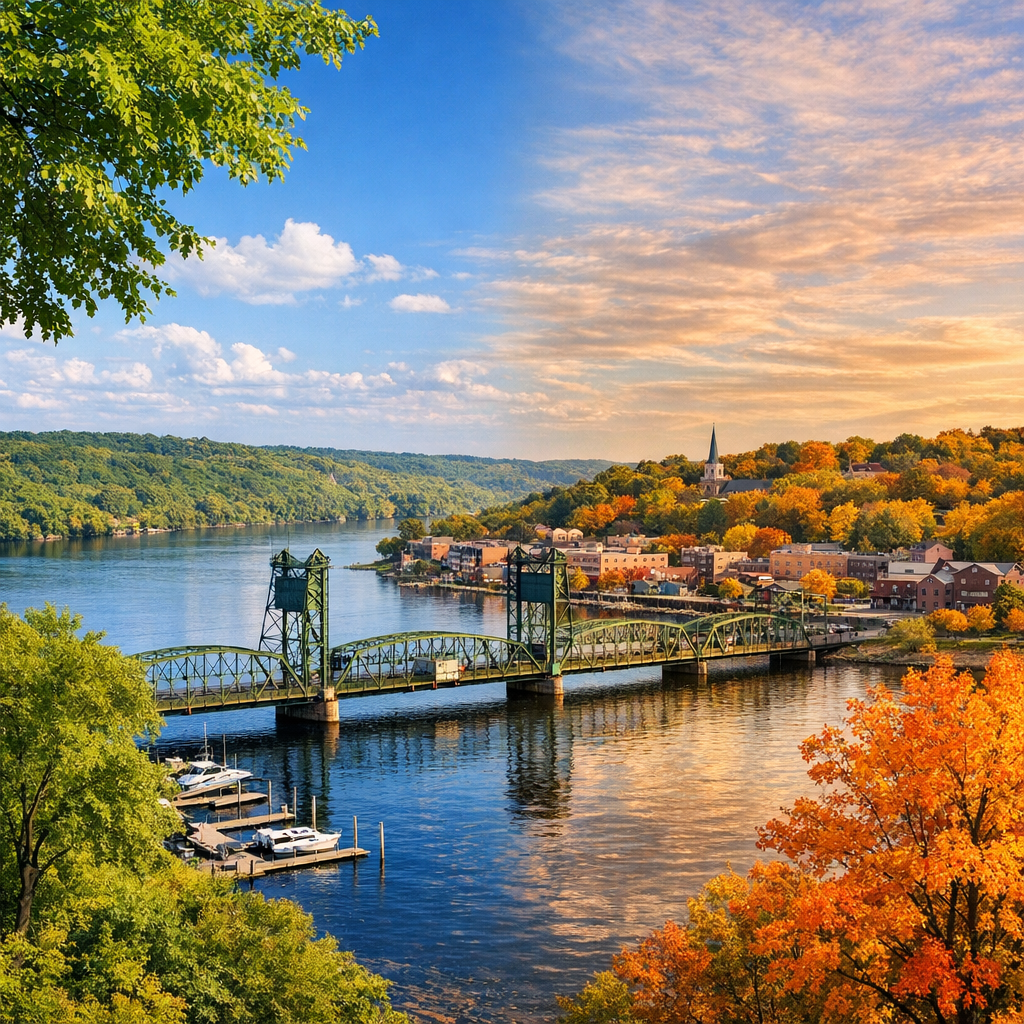
Stillwater’s weather is shaped by a humid continental climate—cold winters, warm summers, and distinct seasonal transitions. As our local environment shifts in subtle ways, awareness of patterns like frost dates, drought, and air quality becomes increasingly important.
Seasons, Frost, and Growing Days
Spring typically thaws out here between late April, when the last frost (32°F) usually occurs, and early October, when the first fall frost settles in. The local growing season averages about 150–180 days, enough time for many garden plants and summer crops to thrive—but cool nights and sudden drops in spring and autumn temperature can still catch gardeners off guard. Stillwater sits in USDA Plant Hardiness Zone 5a, meaning winter lows can dip to −15°F to −20°F.
Summers peak in July, with average highs in the upper 70s to low 80s°F. Winters are long and cold: January lows tend to hover near single digits. Throughout the year, precipitation is well-distributed, though June usually brings the most rain. Winter months are much drier, with most moisture falling as snow or mixed precipitation.
Drought, Water Stress, and Landscape Impacts
Despite the general pattern of regular precipitation, Stillwater—and much of Minnesota—has seen increasing dryness in recent years. Drought conditions have become frequent by late summer, driven by below-average rainfall, high temperatures, and increased evaporation. These dry spells strain local water sources, affect soil moisture important to crops and gardens, and raise wildfire risks.
Our proximity to the Gulf of Mexico means when moisture-bearing air masses penetrate northward, they bring much-needed relief; when they don’t—either stalled weather systems or blocked by high pressure—dry air dominates. These swings in moisture fuel both periods of heavy rainfall (which can lead to flash flooding) and periods of sharp deficit.
Air Quality, Smoke, and Health
Wildfires, especially those in northern Minnesota or across the border in Canada, increasingly generate smoke that drifts south and degrades air over Stillwater. During these events, particulate matter thickens skies, reduces visibility, and poses health risks. Vulnerable groups—older adults, young children, people with respiratory conditions—are especially affected.
Ground-level ozone also builds up under hot, sunny, and stagnant conditions. Even without smoke, ozone events can push air quality into “unhealthy for sensitive groups” territory. Both ozone and fine particles are closely tied to our weather: warm days, bright skies, and light winds help them accumulate.
What Residents Can Do
- Watch local frost-date forecasts when planting or harvesting. Starting too early can risk damage from a late freeze.
- Stay informed about air quality alerts, especially during wildfire season or heat waves—reduce outdoor activity when alerts are issued.
- Support water conservation at home, and choose landscaping suited to periods of dry soil.
- Advocate for cleaner air through reduced idling, using low-emission tools and heating, and supporting green policy efforts.
Stillwater’s weather and environment are rich and varied. Paying attention to the rhythms of frost, rain, heat, and air quality helps us connect with the land we live on—and adapt as change continues.