

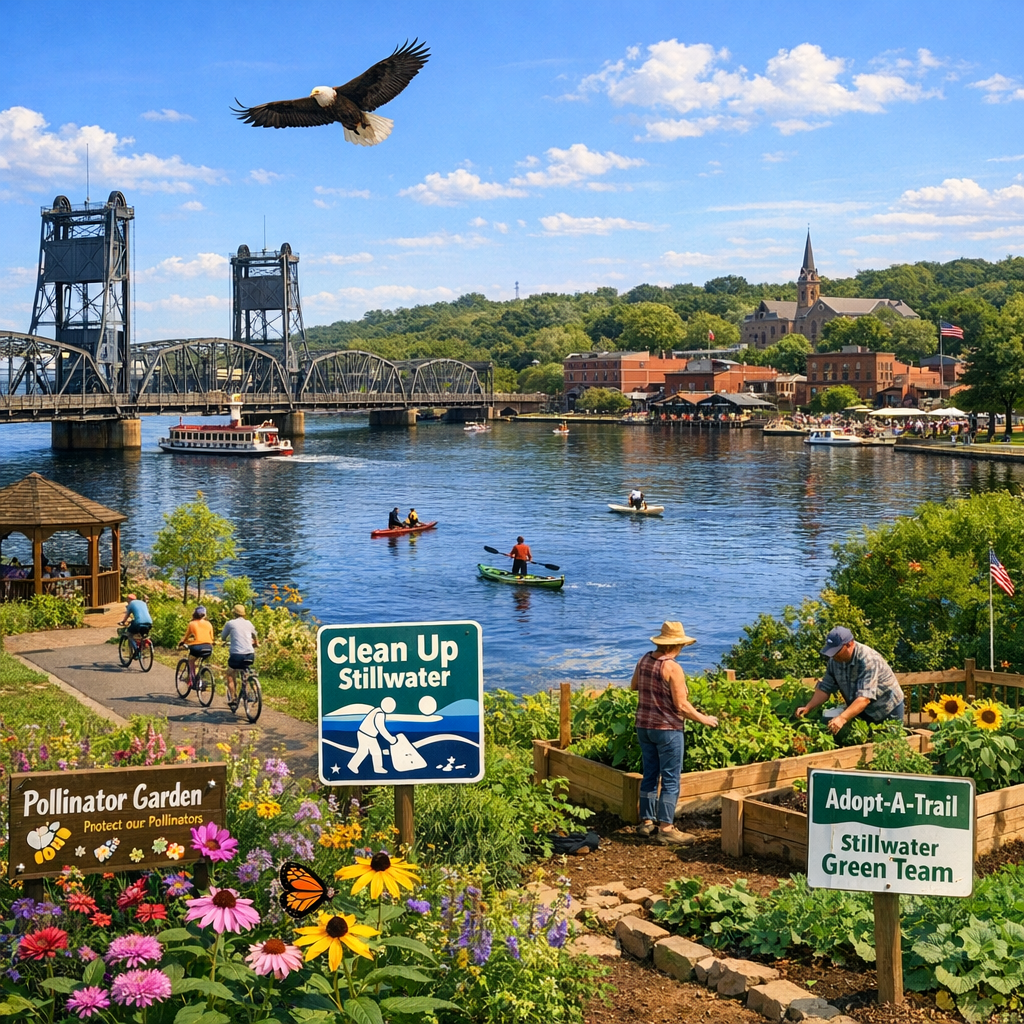
Stillwater, Minnesota, experiences a diverse range of weather conditions throughout the year, characteristic of a humid continental climate. This includes warm, wet summers and cold, snowy winters.
Climate Overview
Throughout the year, temperatures in Stillwater typically range from 8°F to 82°F. The warm season spans from late May to mid-September, with average daily highs above 70°F, peaking in July with an average high of 81°F. Conversely, the cold season lasts from late November to early March, with average daily highs below 35°F. January is the coldest month, averaging a high of 24°F and a low of 9°F. Precipitation is fairly evenly distributed, with June being the wettest month, averaging 4.63 inches of rainfall.
Environmental Initiatives
In response to these climate patterns, Stillwater has implemented several environmental initiatives to promote sustainability and resilience.
Sustainable Stillwater MN
Established in 2016, Sustainable Stillwater MN is a nonprofit organization dedicated to promoting social, economic, and environmental resilience in the community. The organization has been instrumental in initiatives such as the Green Business Directory and the Energy Action Plan adopted in 2024.
GreenStep Cities Program
Since 2018, Stillwater has been designated a Minnesota GreenStep City. This program provides a framework for cities to achieve sustainability through best practices in areas like green building, energy efficiency, and natural resource conservation. The GreenStep team collaborates with city officials to align local programs with the 2040 Comprehensive Plan.
Water Quality and Safety
Water quality is a priority for Stillwater. The city regularly tests for contaminants like PFAS (per- and polyfluoroalkyl substances) to ensure safe drinking water. The Minnesota Department of Health provides health-based guidance values for PFAS, and the city works to maintain levels below these thresholds to protect public health.
Understanding Stillwater’s climate and supporting local environmental initiatives are essential steps toward building a sustainable and resilient community.