

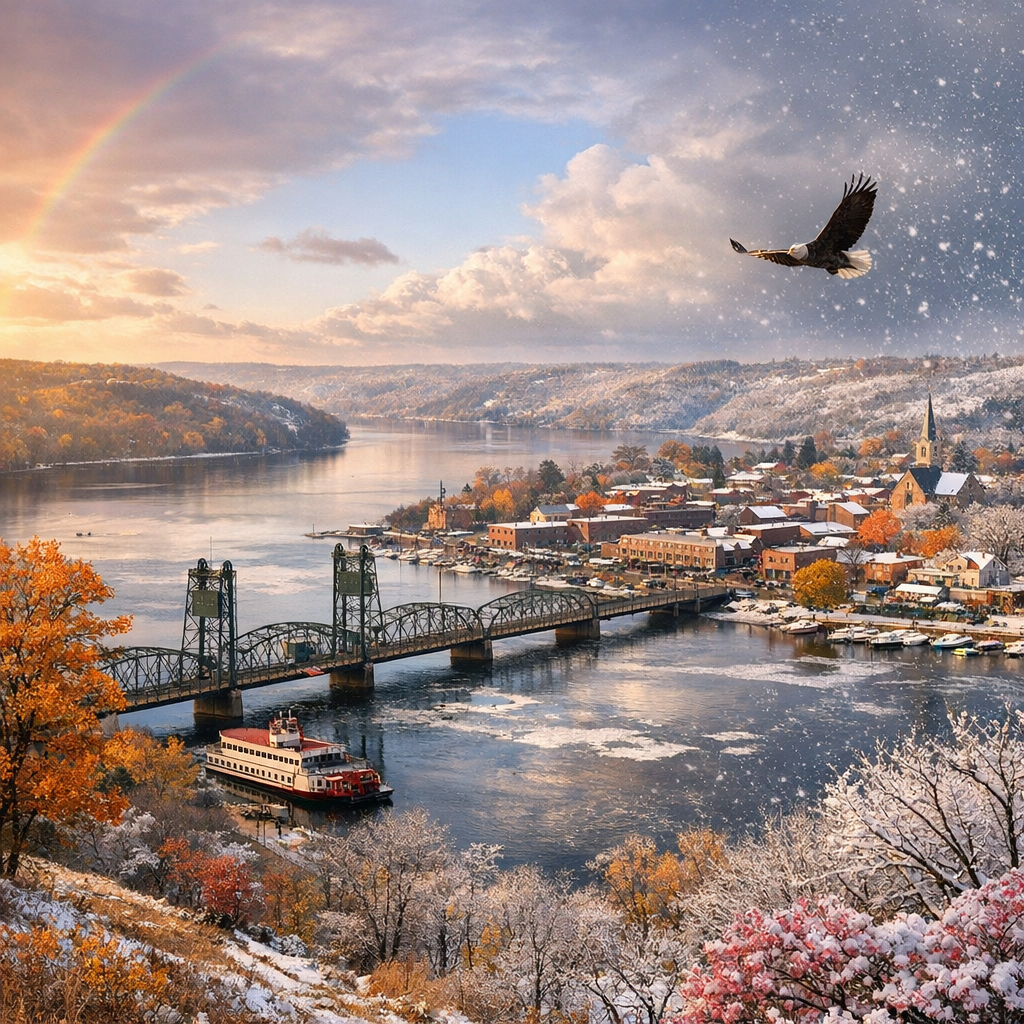
Stillwater, Minnesota, experiences a diverse range of weather conditions throughout the year, characteristic of a humid continental climate. This includes warm, wet summers and cold, snowy winters.
Climate Overview
On average, Stillwater receives approximately 42 inches of snowfall and 24 inches of rainfall annually. The city typically experiences about 14 days each year with temperatures exceeding 90°F. The warm season lasts from late May to mid-September, with average daily high temperatures above 70°F. July is the hottest month, averaging a high of 81°F and a low of 62°F. Conversely, the cold season spans from late November to early March, with average daily highs below 35°F. January is the coldest month, with an average high of 24°F and a low of 9°F.
Environmental Initiatives
In response to these climatic conditions, Stillwater has implemented several environmental initiatives to promote sustainability and resilience. The city has been designated a Minnesota GreenStep City since 2018, a program that provides guidelines to help cities achieve sustainability and a better quality of life for their citizens. The GreenStep program focuses on best practices in areas such as green building, energy efficiency, and natural resource conservation.
Additionally, the Environmental Learning Center (ELC) at Stillwater Area High School offers students hands-on experiences in environmental education. The 55-acre ELC includes diverse biomes such as oak forests, prairies, and coniferous plantings, along with several ponds. Students engage in activities like banding migratory birds, trapping and marking small mammals, and using camera traps to study wildlife.
These initiatives reflect Stillwater’s commitment to understanding and managing its natural resources responsibly, ensuring a sustainable future for the community.