

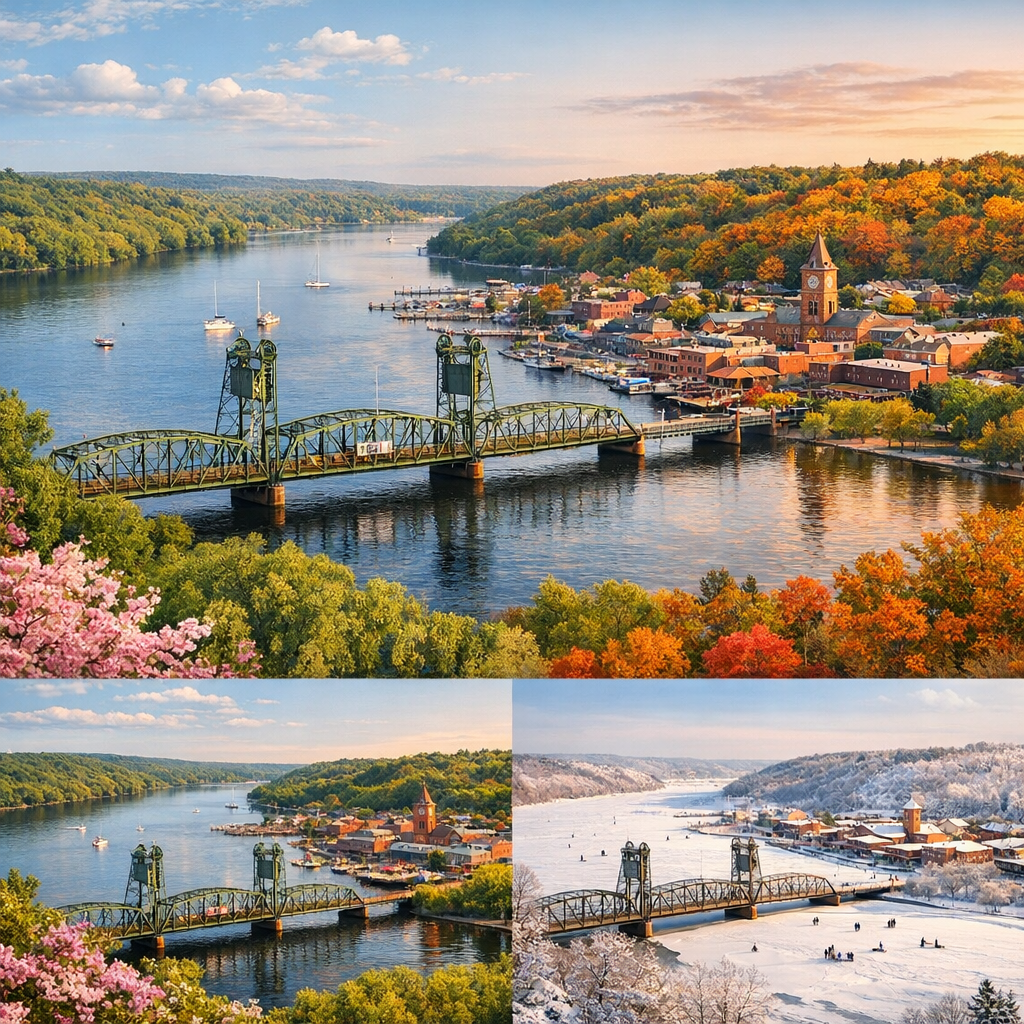
Stillwater, Minnesota, experiences a Humid Continental Mild Summer climate, characterized by warm, wet summers and cold, snowy winters. Average annual temperatures range from a low of 36.5°F to a high of 55.3°F, with annual precipitation averaging 34.5 inches. The growing season typically spans from late April to early October, providing approximately 150-180 frost-free days each year.
Seasonal Climate Overview
Winter
Winters in Stillwater are cold and snowy, with average low temperatures around 6.9°F in January. Snowfall is common, contributing to the region’s winter landscape.
Spring
Spring brings a gradual warming, with average highs reaching 56.2°F in April. This season also sees increased precipitation, averaging 3.18 inches, supporting the blooming of local flora.
Summer
Summers are warm and wet, with July being the warmest month, averaging a high of 81°F. This period is ideal for outdoor activities, though occasional thunderstorms can occur.
Autumn
Autumn features cooler temperatures and vibrant foliage, with average highs around 58.7°F in October. Precipitation decreases, averaging 3.06 inches, as the region transitions to winter.
Environmental Initiatives
Stillwater is actively engaged in environmental stewardship through various initiatives:
Energy Action Plan
The city’s Energy Action Plan aims to save 3.8 million kWh of electricity and 198,000 therms of natural gas by the end of 2025. This effort is expected to reduce greenhouse gas emissions by 58% and save the community $450,000.
Bird City Program
In collaboration with Sustainable Stillwater MN, the Bird City Program focuses on protecting bird habitats and biodiversity. Efforts include community education, habitat restoration, and reducing threats to bird populations.
Environmental Learning Center
Located behind Stillwater Area High School, the 55-acre Environmental Learning Center features diverse biomes such as oak forests, prairies, and coniferous plantings. It serves as an outdoor classroom for students to engage in hands-on environmental education.
Water Quality Management
The city is addressing concerns about per- and polyfluoroalkyl substances (PFAS) in drinking water. A new PFAS treatment facility at Well #10 is under construction, with completion expected by May 2026. This proactive measure aims to ensure safe drinking water for residents.
Understanding Stillwater’s climate patterns and participating in local environmental initiatives can help residents contribute to the community’s sustainability and resilience.