

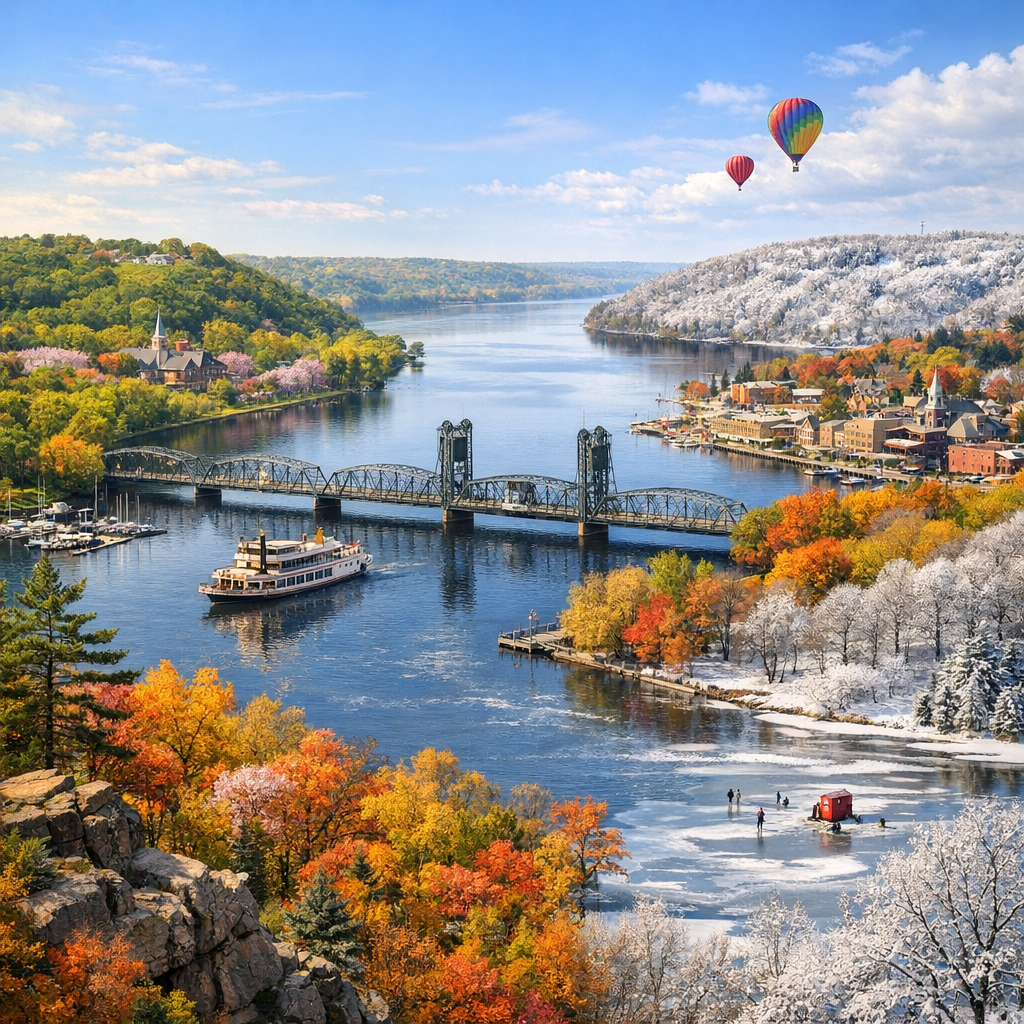
Stillwater, Minnesota, experiences a Humid Continental Mild Summer climate, characterized by distinct seasonal variations. Understanding these patterns is essential for residents and visitors alike.
Climate Overview
Throughout the year, temperatures in Stillwater typically range from lows of 8°F in winter to highs of 82°F in summer. The warm season spans approximately from May 21 to September 18, with July being the hottest month, averaging a high of 81°F and a low of 62°F. Conversely, the cold season lasts from November 27 to March 4, with January being the coldest month, averaging a low of 9°F. Precipitation is fairly evenly distributed, with June receiving the highest average at 4.63 inches. The growing season generally runs from late April to early October, providing ample time for agriculture and gardening activities.
Environmental Initiatives
Beyond its natural climate, Stillwater is proactive in environmental stewardship. The city has been recognized as a Minnesota GreenStep City since 2018, reflecting its commitment to sustainability and quality of life improvements. This designation involves implementing best practices in areas such as green building, energy efficiency, and natural resource conservation.
One notable effort is the Bird City Program, which focuses on protecting bird populations and their habitats through education and community collaboration. This initiative aligns with the city’s broader sustainability goals and enhances local biodiversity.
Additionally, the Environmental Learning Center at Stillwater Area High School offers students hands-on experiences in diverse ecosystems, including oak forests, prairies, and coniferous plantings. This 55-acre facility serves as an outdoor classroom, fostering environmental awareness and stewardship among the younger generation.
Understanding Stillwater’s climate and participating in its environmental initiatives not only enriches our connection to the natural world but also ensures a sustainable future for our community.