

Stillwater, Minnesota, experiences a diverse climate characterized by distinct seasonal variations. Understanding these patterns is essential for residents and visitors alike.
Climate Overview
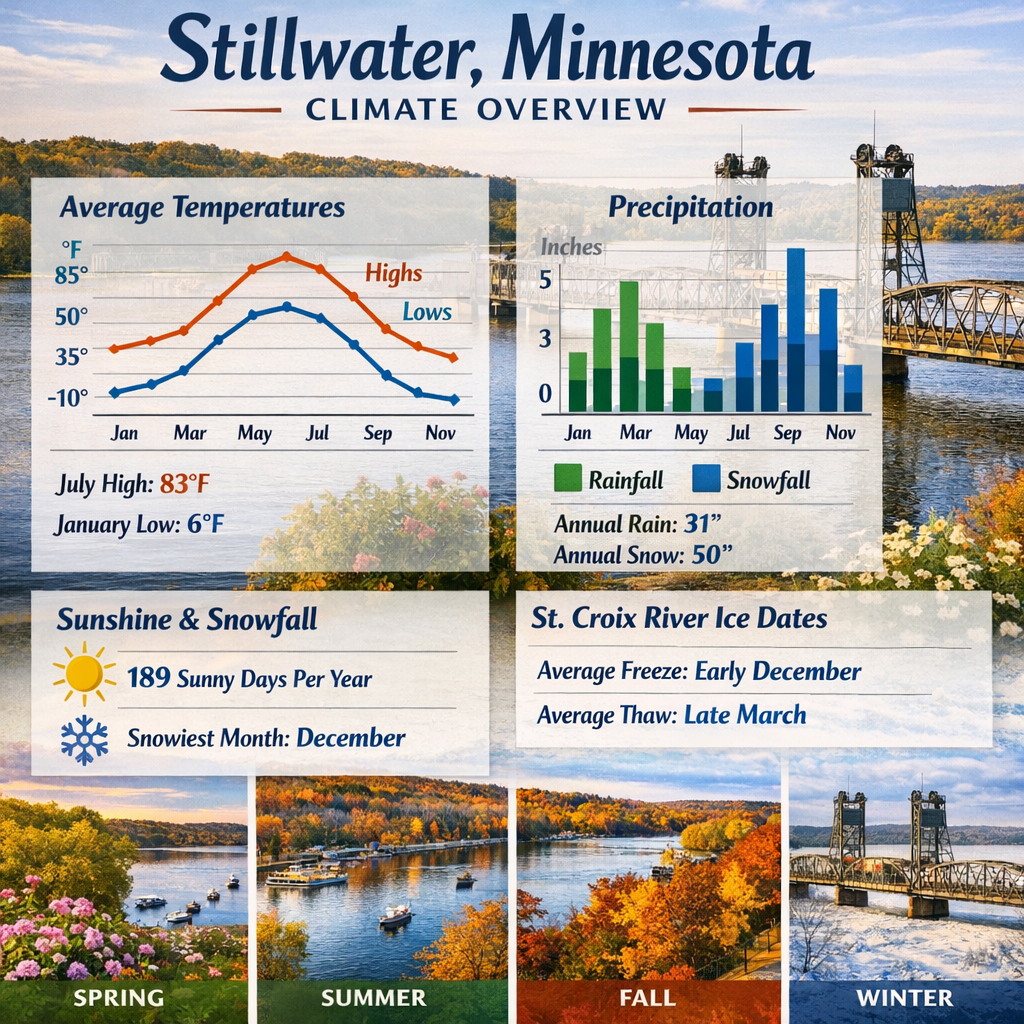
Stillwater’s climate is classified as Humid Continental, featuring warm, wet summers and cold, snowy winters. Average annual temperatures range from a low of 36.5°F to a high of 55.3°F, with annual precipitation averaging 34.5 inches. The city falls within USDA Plant Hardiness Zone 5a, indicating that the growing season typically spans from late April to early October.
Seasonal Highlights
- Summer: The warm season lasts from late May to mid-September, with average daily high temperatures above 70°F. July is the hottest month, averaging a high of 81°F and a low of 62°F.
- Winter: The cold season extends from late November to early March, with average daily high temperatures below 35°F. January is the coldest month, with an average low of 9°F.
Environmental Concerns: PFAS in Drinking Water
In recent years, attention has been drawn to the presence of per- and polyfluoroalkyl substances (PFAS) in Stillwater’s drinking water. PFAS are man-made chemicals used in various consumer products since the 1940s. They can be found in items such as non-stick cookware, water-repellent clothing, and certain food packaging materials.
The Minnesota Department of Health (MDH) has established health-based guidance values to assess the risks associated with PFAS exposure. Consuming water with PFAS levels above these guidance values can increase the risk of health effects, including immune suppression, lower birth weights, and increased risk of certain cancers.
The City of Stillwater’s water utility serves approximately 20,600 people, drawing from groundwater sources through eight wells. The city has been proactive in monitoring and addressing PFAS levels to ensure the safety of its drinking water. Residents are encouraged to stay informed about water quality reports and any measures taken to mitigate potential risks.
Understanding Stillwater’s climate and environmental challenges is crucial for the well-being of the community. Staying informed and proactive can help residents adapt to seasonal changes and address environmental concerns effectively.