

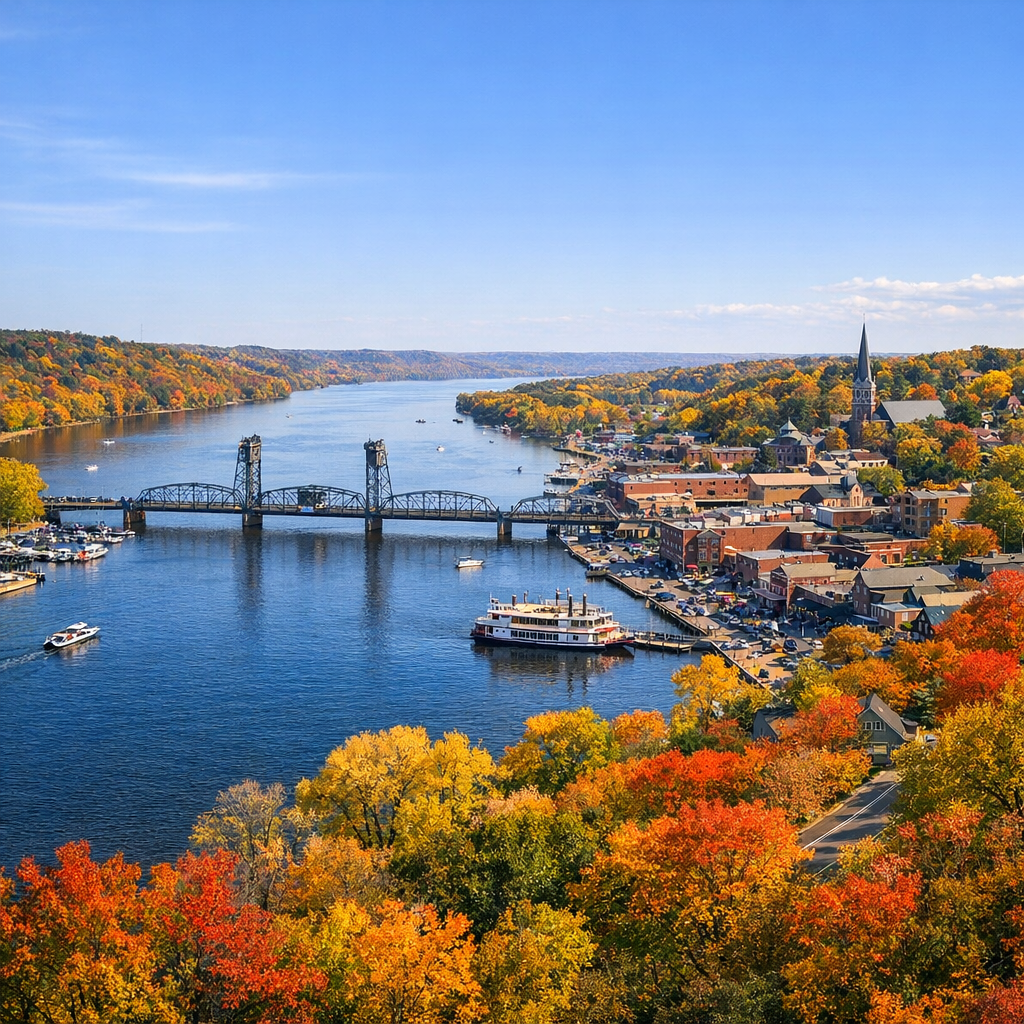
Stillwater, Minnesota, experiences a diverse range of weather conditions throughout the year, characterized by distinct seasonal changes that shape the local environment and community activities.
Spring: A Season of Renewal
Spring in Stillwater brings a gradual warming trend, with average high temperatures rising from 41.3°F (5.2°C) in March to 68.5°F (20.3°C) in May. This season also sees an increase in precipitation, averaging 1.62 inches in March and peaking at 4.21 inches in May. The combination of warming temperatures and increased rainfall contributes to the blossoming of local flora and the rejuvenation of the St. Croix River.
Summer: Warm and Lush
Summers are warm and humid, with average high temperatures reaching 82.7°F (28.2°C) in July. This period is also marked by significant rainfall, averaging 4.37 inches in July, supporting the lush greenery and vibrant community events that define Stillwater’s summer months.
Autumn: Crisp and Colorful
Autumn brings cooler temperatures and a decrease in precipitation. Average high temperatures drop from 72.8°F (22.7°C) in September to 42.8°F (6°C) in November. The diminishing rainfall and cooler air create ideal conditions for the stunning fall foliage that attracts visitors to the area.
Winter: Cold and Snowy
Winters are cold and snowy, with average high temperatures of 24°F (-4.4°C) in January and average lows of 6.9°F (-13.9°C). Snowfall is common, contributing to the picturesque winter landscapes and providing opportunities for seasonal activities like ice fishing and snowmobiling.
Environmental Considerations
Recent climate trends indicate that Minnesota is experiencing warmer and wetter conditions. The state has warmed by 3.0°F (1.7°C) between 1895 and 2020, with annual precipitation increasing by an average of 3.4 inches. These changes can lead to more frequent and intense storms, impacting local infrastructure and natural resources. Additionally, warmer temperatures may affect local ecosystems, potentially altering the distribution of native plant and animal species.
Understanding these seasonal patterns and environmental changes is essential for residents and visitors alike, as they influence daily life, recreational activities, and the overall health of the Stillwater community.