

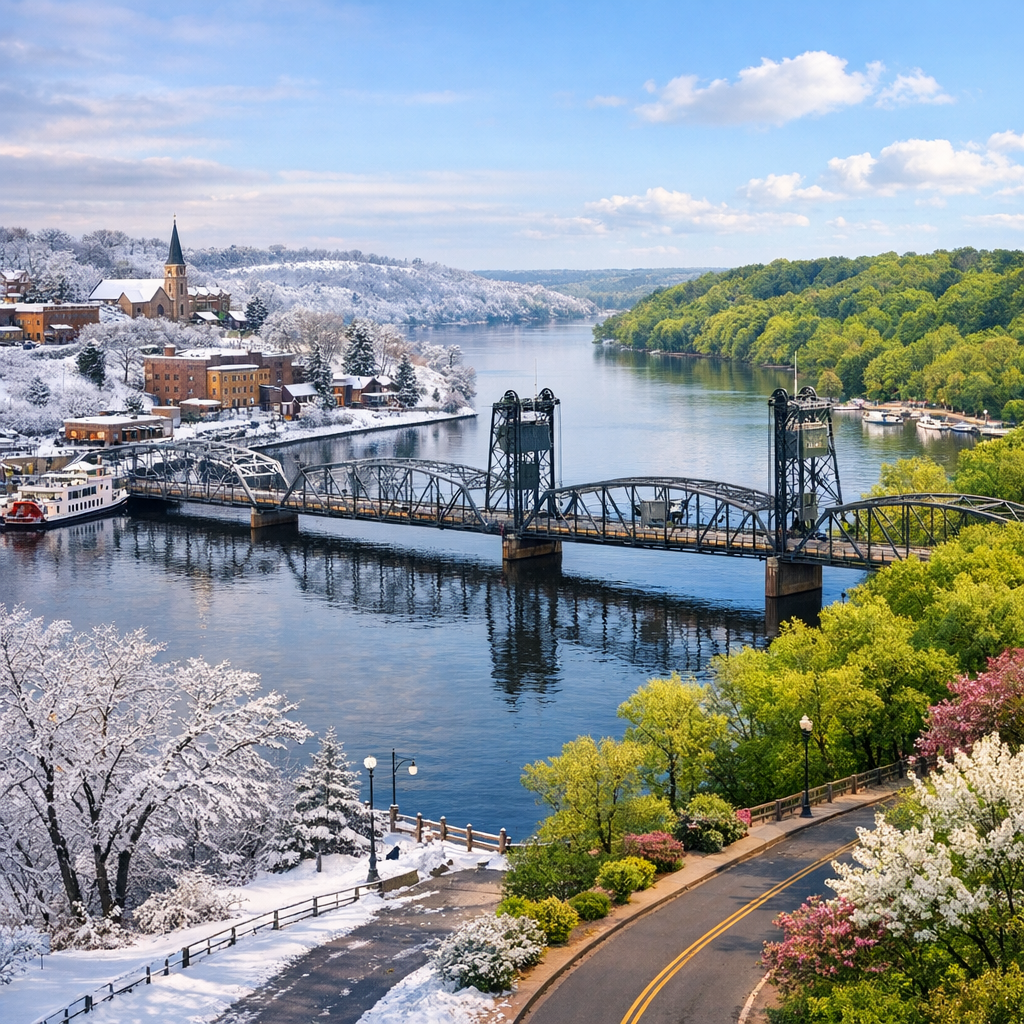
Stillwater, Minnesota, experiences a diverse range of weather conditions throughout the year, characteristic of a humid continental climate. Understanding these patterns can help residents and visitors prepare for the varying seasons.
Winter: Cold and Snowy
Winters in Stillwater are typically cold, with average low temperatures around 9°F (-13°C) and highs near 24°F (-4°C) in January, the coldest month. Snowfall is common, contributing to the city’s picturesque winter landscapes. Residents should be prepared for freezing temperatures and snowy conditions during this season.
Spring: Gradual Warming
Spring brings a gradual increase in temperatures, with average highs reaching 56°F (13°C) in April. This season also sees an uptick in precipitation, averaging 2.42 inches (61 mm) in April, which supports the blooming of local flora. It’s a time of renewal, as the city transitions from the cold winter months to warmer days.
Summer: Warm and Humid
Summers are warm and humid, with July being the warmest month, averaging highs of 83°F (28°C) and lows of 64°F (18°C). This season also experiences the highest precipitation, with June averaging 4.63 inches (118 mm) of rainfall. The combination of warmth and moisture supports lush vegetation and outdoor activities.
Fall: Cooling Temperatures
Autumn sees a gradual cooling, with October averaging highs of 58°F (14°C) and lows of 40°F (4°C). The changing foliage provides a vibrant display of colors, making it a popular time for outdoor excursions. Precipitation decreases compared to summer, averaging 2.60 inches (66 mm) in October.
Environmental Considerations
Climate change is influencing weather patterns in Minnesota, including Stillwater. The state has observed increases in extreme precipitation events and shifts in temperature patterns. These changes can impact local ecosystems, agriculture, and public health. Staying informed about these trends is essential for community preparedness and resilience.
By understanding Stillwater’s seasonal weather patterns and the broader environmental factors at play, residents can better prepare for the year’s climatic variations and contribute to the community’s adaptability to changing conditions.