

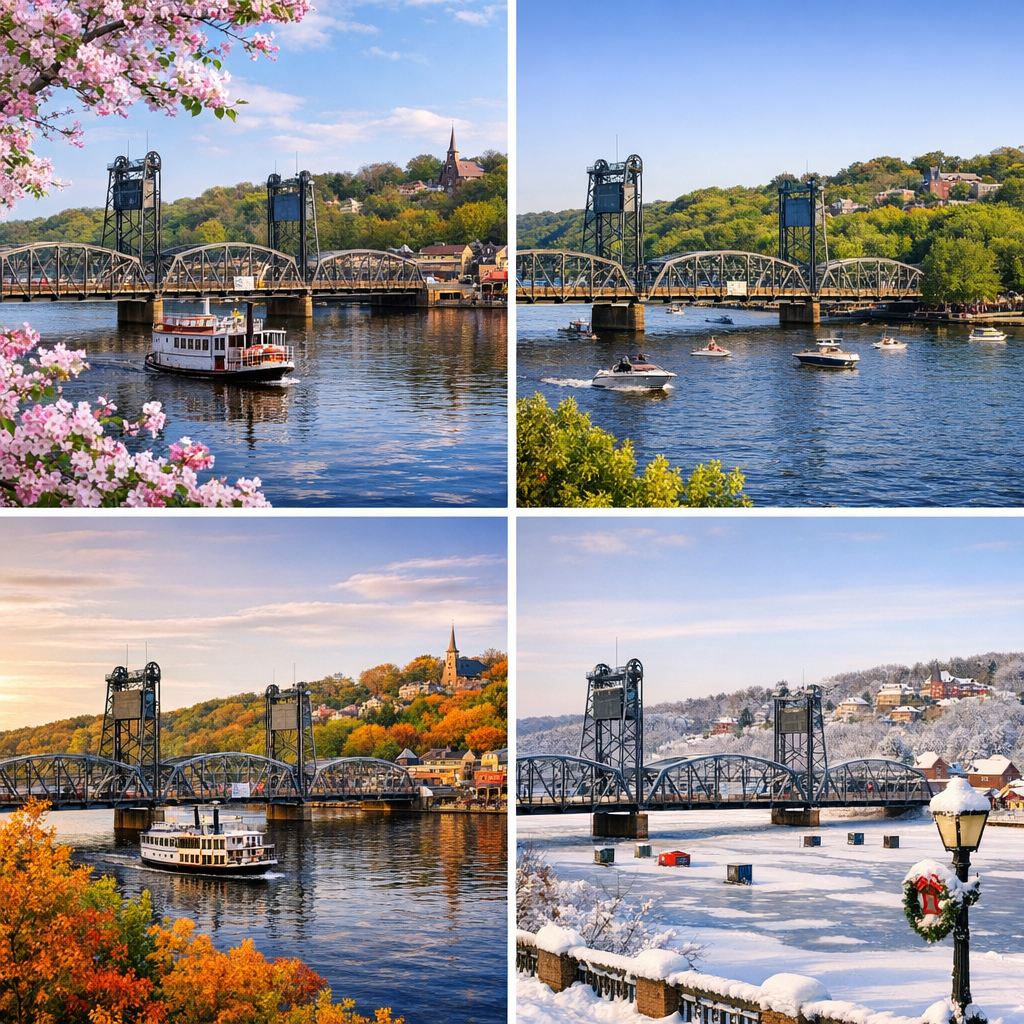
Located in the heart of Minnesota, Stillwater experiences a diverse range of weather conditions throughout the year. Understanding these patterns can help residents and visitors alike prepare for the seasons.
Winter: December to February
Winters in Stillwater are characterized by freezing temperatures and snowfall. Average high temperatures hover around 24°F (-4°C) in January, with lows dipping to approximately 9°F (-13°C). Snowfall is common, contributing to the picturesque winter landscapes the region is known for.
Spring: March to May
As spring arrives, temperatures gradually rise. March sees average highs of 42°F (6°C), increasing to 69°F (21°C) by May. This season also brings increased precipitation, with May averaging around 3.73 inches (95 mm) of rainfall, supporting the blooming flora.
Summer: June to August
Summers are warm and humid, with July being the warmest month. Average highs reach 83°F (28°C), and lows are around 64°F (18°C). June typically records the highest precipitation, averaging 4.63 inches (118 mm), often in the form of thunderstorms.
Autumn: September to November
Autumn brings cooler temperatures and vibrant foliage. September averages highs of 73°F (23°C), which drop to 43°F (6°C) by November. Rainfall decreases during this period, with November averaging 1.29 inches (33 mm).
Climate Considerations
Stillwater’s climate is classified as Humid Continental Mild Summer, Wet All Year (Köppen classification: Dfb). The area falls within USDA Plant Hardiness Zone 5a, indicating average annual extreme minimum temperatures between -20°F to -15°F (-29°C to -26°C). The growing season typically spans from late April to early October, providing approximately 150-180 frost-free days annually.
Being aware of these seasonal patterns allows residents to plan activities, gardening, and travel accordingly, ensuring a comfortable and prepared experience throughout the year.