

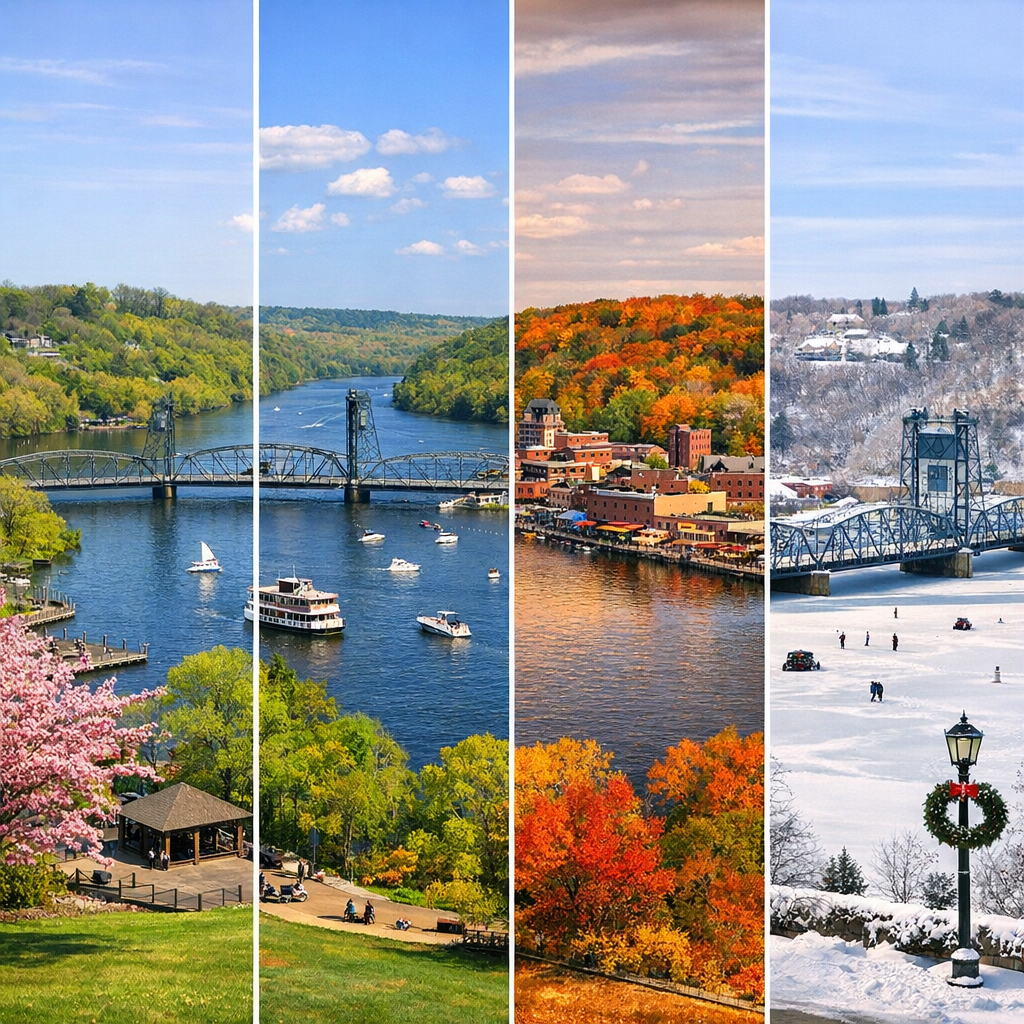
Located in the heart of the Midwest, Stillwater, Minnesota, experiences a humid continental climate characterized by distinct seasonal variations. Understanding these patterns can help residents and visitors alike prepare for the year’s weather.
Winter: Cold and Snowy
Winters in Stillwater are typically cold, with average low temperatures around 6.9°F in January and 10.2°F in February. Snowfall is common, contributing to the picturesque winter landscapes the region is known for.
Spring: Gradual Warming
As spring arrives, temperatures begin to rise. March sees average highs of 41.3°F, increasing to 56.2°F in April and 68.5°F in May. This season also brings increased precipitation, with May averaging 4.21 inches of rainfall.
Summer: Warm and Wet
Summers are warm and humid, with July being the warmest month, averaging a high of 82.7°F. June and August also experience warm temperatures, with highs of 78.3°F and 80.5°F, respectively. These months are also the wettest, with June receiving an average of 5.05 inches of precipitation.
Fall: Cooling Down
Autumn brings cooler temperatures and less humidity. September averages a high of 72.8°F, dropping to 58.7°F in October and 42.8°F in November. Precipitation decreases during this period, with October averaging 3.06 inches.
Climate Trends and Considerations
Recent data indicates that Minnesota is experiencing changes in its climate, including warmer winters and more intense precipitation events. These trends can impact local ecosystems, agriculture, and daily life. Staying informed about these changes is essential for adapting to the evolving climate.
By understanding Stillwater’s typical weather patterns and staying aware of ongoing climate trends, residents can better prepare for the seasons and any variations that may arise.