

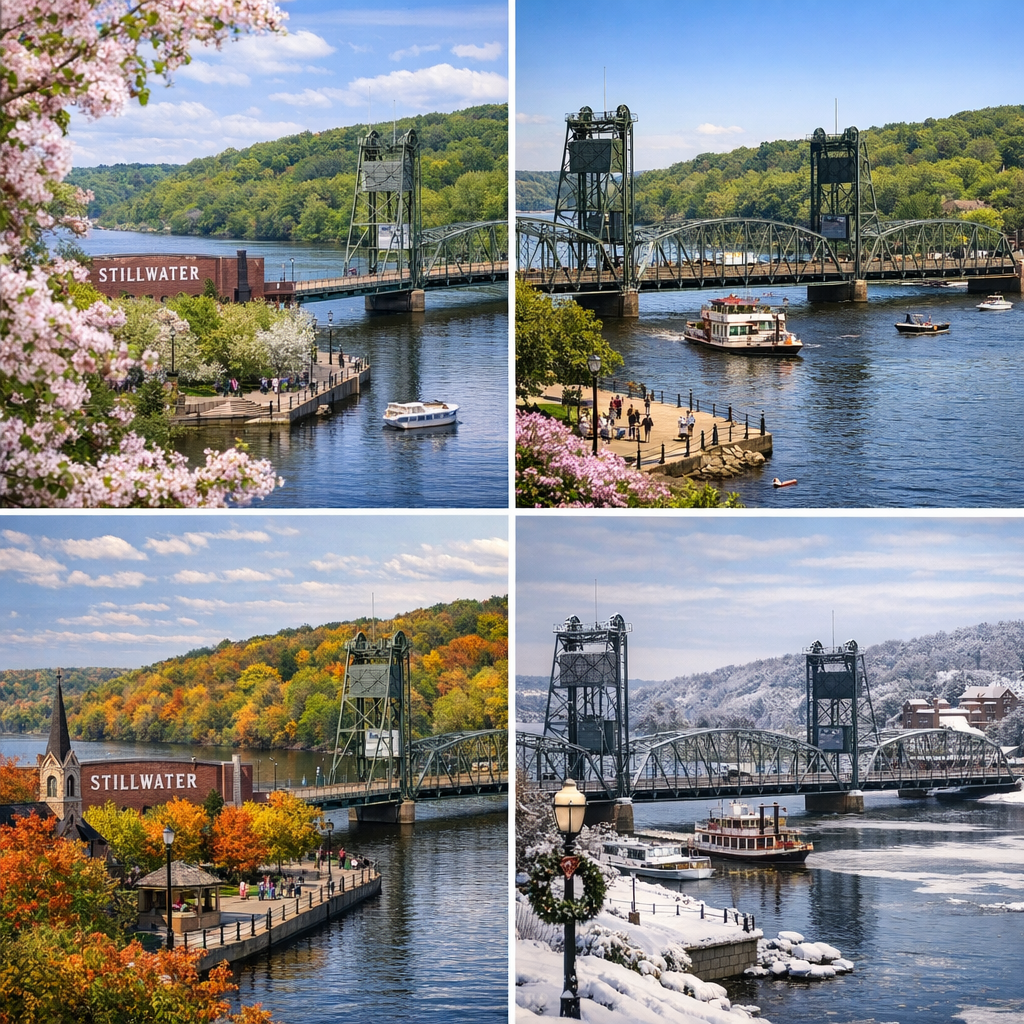
Stillwater, Minnesota, experiences a humid continental climate characterized by distinct seasonal variations. Understanding these patterns can help residents and visitors prepare for the year’s weather.
Winter: Cold and Snowy
Winters in Stillwater are typically cold, with average high temperatures around 24°F (-4°C) in January and lows near 7°F (-14°C). Snowfall is common, contributing to the season’s characteristic landscape.
Spring: Gradual Warming
Spring brings a gradual increase in temperatures, with April averaging highs of 56°F (13°C) and lows of 36°F (2°C). This season also sees increased precipitation, averaging 3.18 inches (81 mm) in April, supporting the blooming of local flora.
Summer: Warm and Humid
Summers are warm and humid, with July being the warmest month, averaging highs of 82.7°F (28°C) and lows of 63.1°F (17°C). Precipitation peaks in June, averaging 5.05 inches (128 mm), often resulting in lush greenery.
Fall: Cooling Temperatures
Fall sees cooling temperatures, with October averaging highs of 58.7°F (14°C) and lows of 39.3°F (4°C). The season is marked by vibrant foliage as trees prepare for winter.
Environmental Considerations
Climate change is impacting Minnesota’s environment, leading to more frequent and intense storms, higher temperatures, and changes in ecosystems. These changes can affect local wildlife, plant species, and water quality.
By understanding Stillwater’s climate patterns and ongoing environmental changes, residents can better prepare for seasonal variations and contribute to local conservation efforts.