

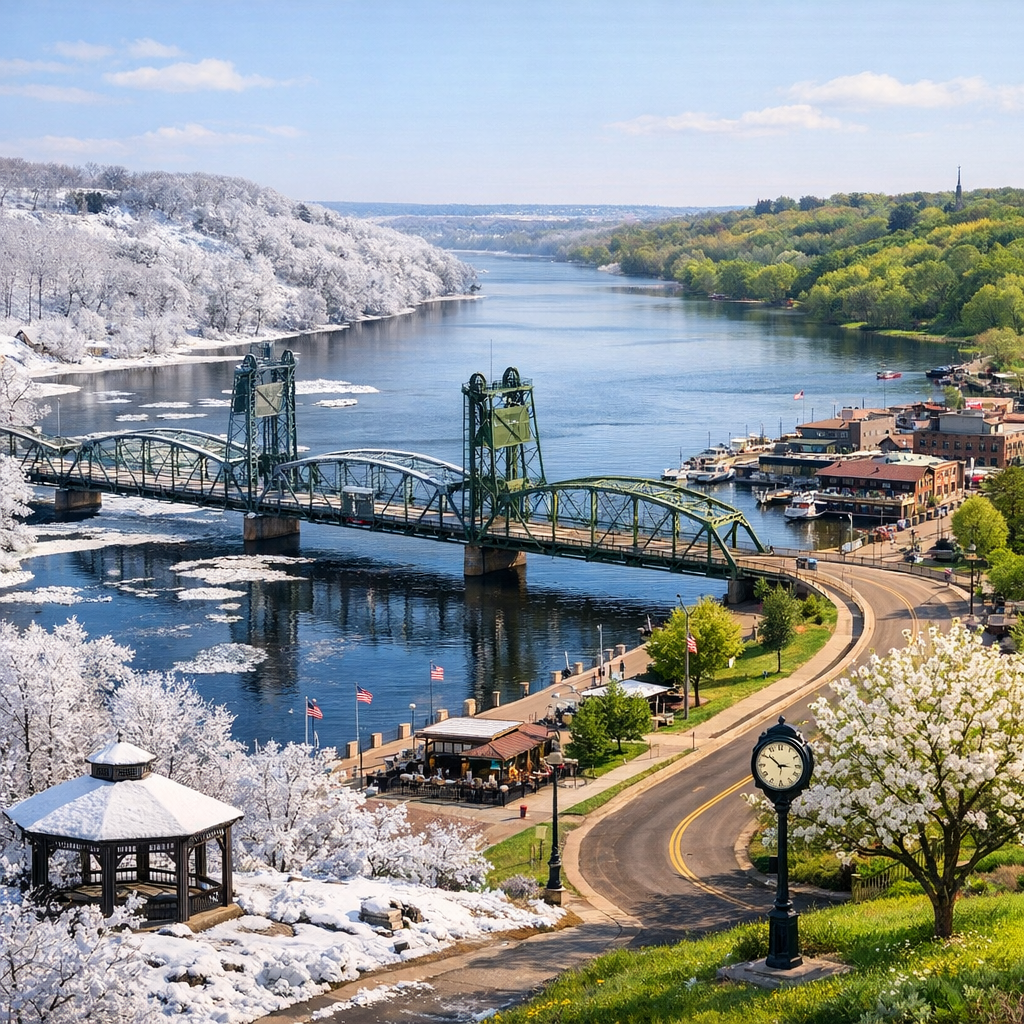
Stillwater, Minnesota, experiences a humid continental climate characterized by distinct seasonal variations. Understanding these patterns is essential for residents and visitors alike.
Seasonal Temperature and Precipitation
Winters in Stillwater are typically cold and snowy, with average low temperatures around 9°F in January. Summers are warm, with average highs reaching 81°F in July. Precipitation is fairly evenly distributed throughout the year, with June being the wettest month, averaging 4.2 inches of rainfall.
Climate Change Impacts
Recent trends indicate that Minnesota is experiencing warmer temperatures, particularly during winter nights in the northern regions. Additionally, the state has seen an increase in the frequency and intensity of storms, leading to more frequent flooding events.
These changes have significant implications for local ecosystems. For instance, native tree species like paper birch and black spruce may decline, while species such as maples and oaks could become more prevalent.
Preparing for the Future
As climate patterns continue to evolve, it’s crucial for the Stillwater community to stay informed and proactive. This includes supporting local environmental initiatives, adapting infrastructure to withstand extreme weather, and promoting sustainable practices to mitigate further climate change impacts.
By understanding our local climate and its changes, we can better prepare for the future and protect the natural beauty of Stillwater for generations to come.