

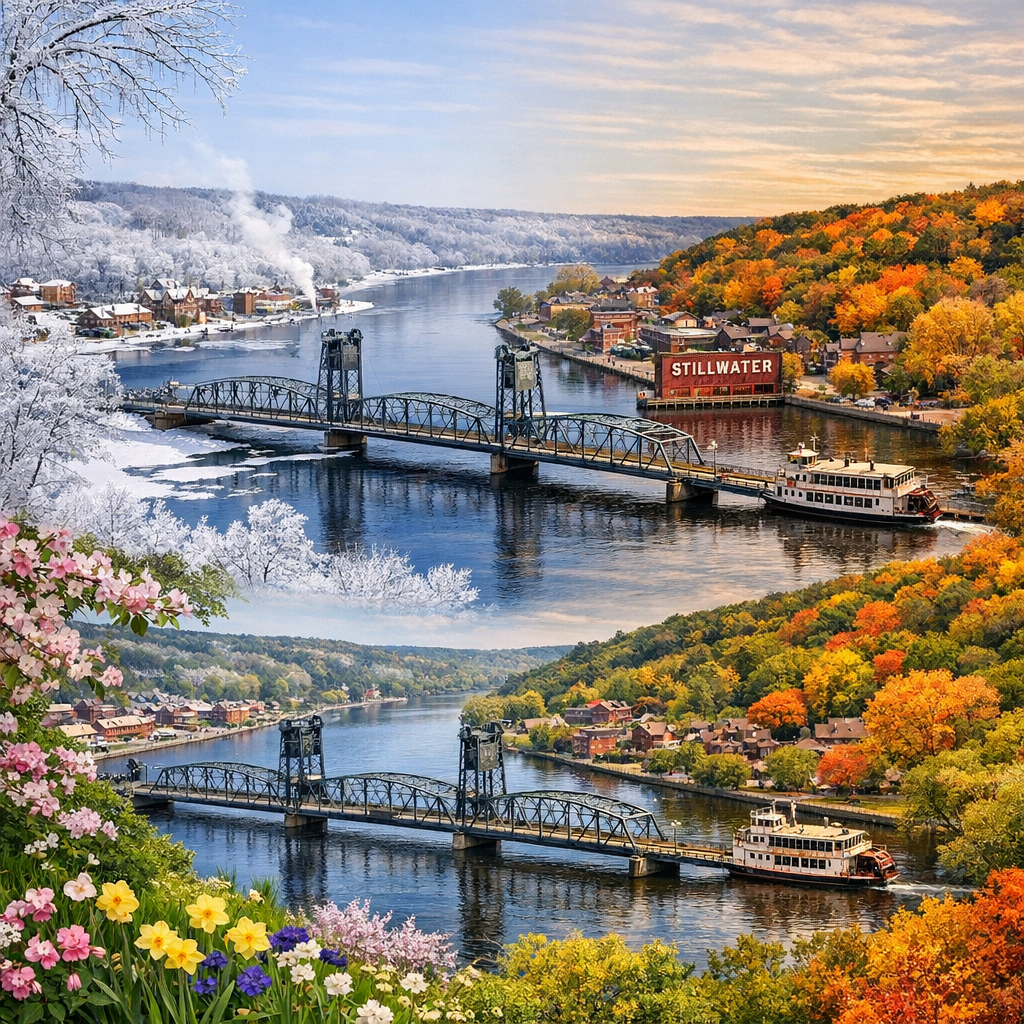
Stillwater, Minnesota, experiences a diverse range of weather conditions throughout the year, offering residents and visitors a taste of all four seasons. Understanding these patterns can help us better prepare for and appreciate the natural rhythms of our environment.
Winter: A Frosty Embrace
Winter in Stillwater is characterized by freezing temperatures and snowfall. Average low temperatures in January hover around 9°F, with highs reaching approximately 24°F. Snowfall is common, creating picturesque landscapes but also necessitating caution on roads and sidewalks.
Spring: A Gradual Thaw
As winter recedes, spring brings a gradual warming. By April, average highs reach 56°F, with lows around 37°F. This season often sees increased precipitation, averaging 2.42 inches, contributing to the blooming of local flora and the greening of our surroundings.
Summer: Warm and Lush
Summers are warm and humid, with July being the hottest month. Average highs peak at 83°F, and lows are around 64°F. This season is also the wettest, with June averaging 4.63 inches of precipitation, supporting the lush greenery and vibrant community events.
Fall: A Colorful Transition
Autumn brings cooler temperatures and stunning foliage. By October, average highs are around 58°F, with lows near 40°F. Precipitation decreases to about 2.60 inches, and the crisp air invites outdoor activities like hiking and apple picking.
Environmental Considerations
Understanding our local climate is essential for environmental stewardship. Organizations like Sustainable Stillwater MN work to protect our natural resources and promote sustainability. Their initiatives, such as the Bird City Program, aim to preserve biodiversity and educate the community on environmental conservation.
By staying informed about our climate and participating in local environmental efforts, we can all contribute to maintaining the beauty and health of Stillwater for generations to come.