

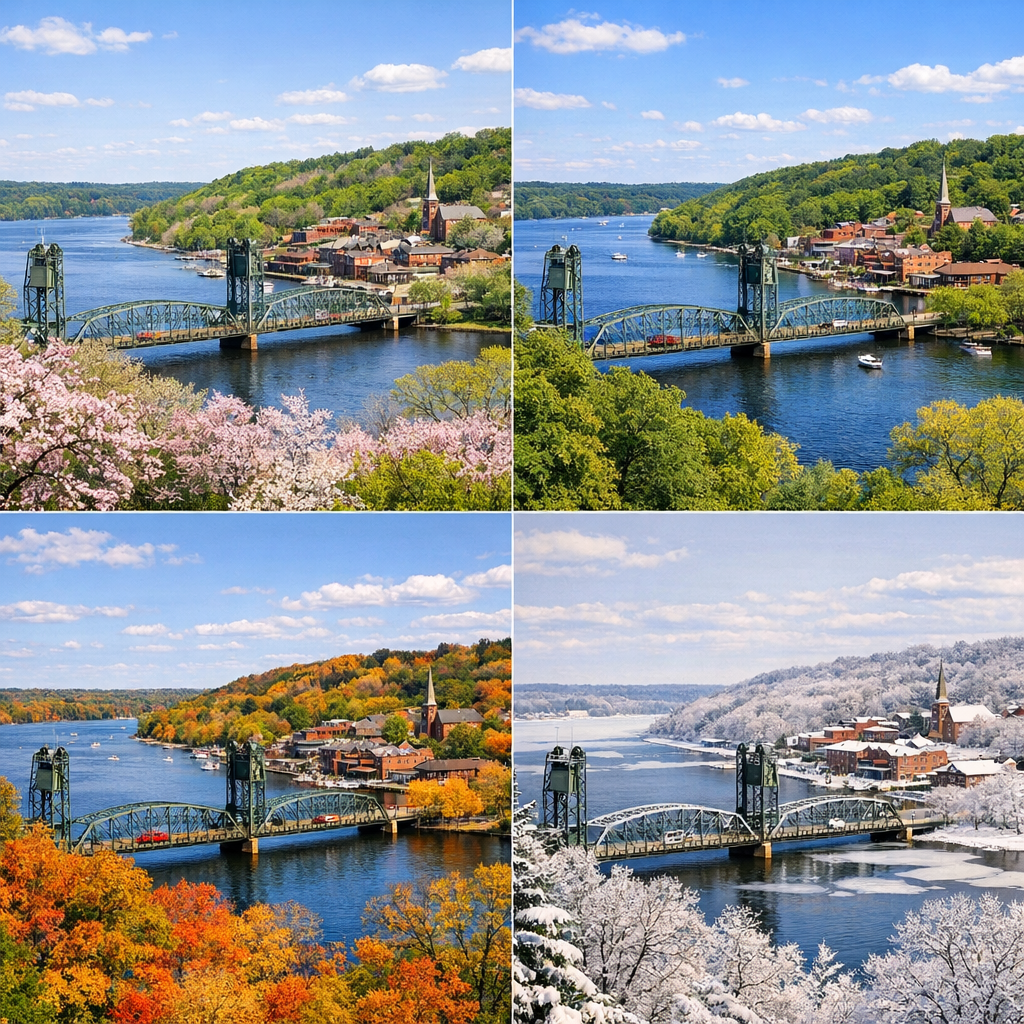
Stillwater, Minnesota, experiences a humid continental climate characterized by distinct seasonal variations. Understanding these patterns is essential for residents and visitors alike.
Winter: Cold and Snowy
From late November to early March, Stillwater endures cold winters with average high temperatures around 24°F (-4°C) in January, the coldest month. Snowfall is common, contributing to the picturesque winter landscape.
Spring: Gradual Warming
Spring brings a gradual increase in temperatures, with April averaging highs of 56°F (13°C). This season often sees increased precipitation, supporting the blooming of local flora.
Summer: Warm and Humid
Summers are warm and humid, with July being the warmest month, averaging highs of 83°F (28°C). This period also experiences the highest rainfall, averaging 4.63 inches (117 mm) in June, supporting lush vegetation.
Fall: Cool and Crisp
Autumn features cooler temperatures and vibrant foliage. October averages highs of 58°F (14°C), providing comfortable conditions for outdoor activities.
Climate Change Considerations
Recent trends indicate shifts in precipitation patterns and temperature extremes, potentially impacting local ecosystems and water resources. Staying informed about these changes is crucial for community preparedness.
By understanding Stillwater’s climate, residents can better appreciate and adapt to the natural rhythms that define our environment.