

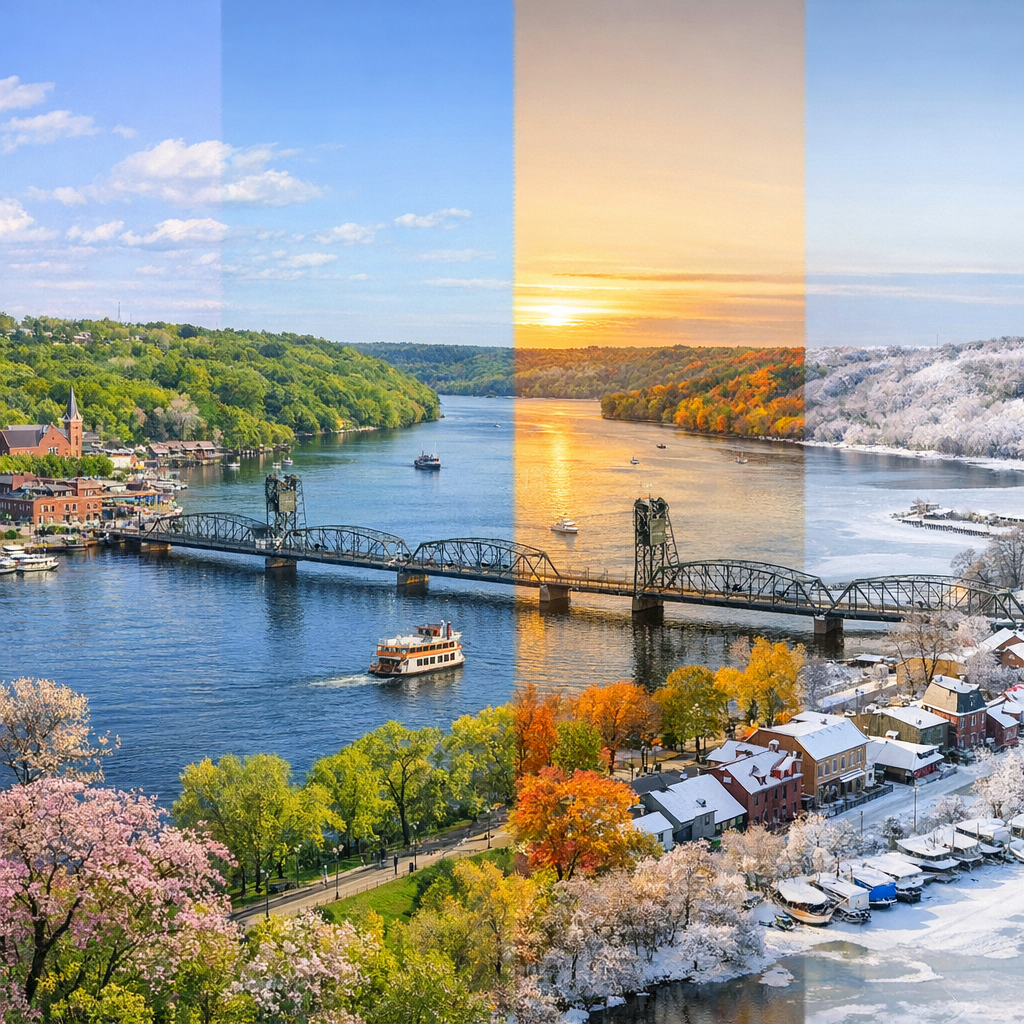
Stillwater, Minnesota, experiences a diverse range of weather conditions throughout the year, characteristic of a humid continental climate. Understanding these patterns can help residents and visitors prepare for seasonal changes and appreciate the natural beauty of our region.
Seasonal Temperature Variations
In Stillwater, temperatures fluctuate significantly between seasons. Winters are typically cold, with average low temperatures around 6.9°F in January, while summers are warm, with average highs reaching 82.7°F in July. This variation offers a distinct experience for each season, from snowy landscapes in winter to warm, sunny days in summer.
Precipitation and Snowfall
Precipitation is distributed throughout the year, with an annual average of approximately 34.53 inches. June tends to be the wettest month, averaging 5.05 inches of rainfall. Snowfall is a notable feature of our winters, averaging 42 inches annually, transforming Stillwater into a picturesque winter wonderland.
Frost Dates and Growing Season
For gardening enthusiasts, it’s important to note that the average last frost date in spring falls between April 21 and April 30, while the first frost in autumn typically occurs between October 1 and October 10. This results in a growing season of approximately 150 to 180 days, suitable for a variety of plants adapted to our climate.
Environmental Considerations
Recent environmental assessments have identified the presence of per- and polyfluoroalkyl substances (PFAS) in Stillwater’s drinking water. PFAS are synthetic chemicals found in various consumer products and industrial applications. The Minnesota Department of Health has established health-based guidance values to evaluate potential health risks from PFAS exposure. While some PFAS compounds have been detected in our water supply, ongoing monitoring and mitigation efforts are in place to ensure water safety.
Additionally, the Stillwater Area Public Schools have conducted radon testing in their facilities to ensure safe learning environments. Radon is a colorless, odorless gas that can pose health risks at elevated levels. The district’s proactive testing and mitigation efforts reflect a commitment to environmental health and safety.
Understanding Stillwater’s climate and environmental factors allows us to better prepare for seasonal changes and address environmental challenges. Staying informed and engaged with local environmental initiatives contributes to the well-being of our community.