

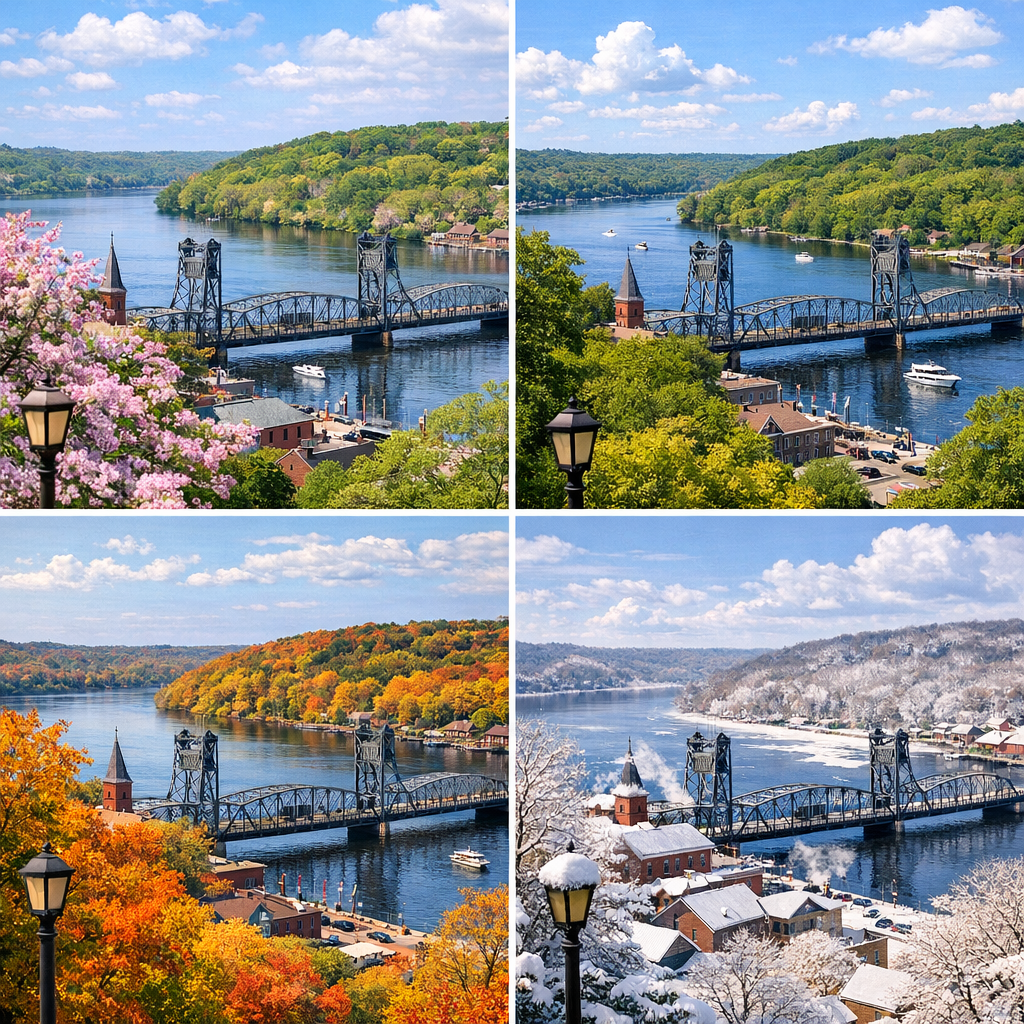
Stillwater, Minnesota, experiences a diverse range of weather conditions throughout the year, characteristic of a humid continental climate. Understanding these patterns can help residents and visitors prepare for seasonal changes and appreciate the natural beauty of our region.
Seasonal Weather Patterns
Winter
Winters in Stillwater are cold and snowy. Average high temperatures in January hover around 24°F (-4°C), with lows dipping to approximately 7°F (-14°C). Snowfall is common, contributing to the picturesque winter landscapes we cherish.
Spring
Spring brings a gradual warming trend. By April, average highs reach 56°F (13°C), and lows are around 36°F (2°C). This season also sees increased precipitation, averaging about 3.18 inches (81 mm) in April, fostering the growth of our lush greenery.
Summer
Summers are warm and humid. July, the warmest month, boasts average highs of 83°F (28°C) and lows of 64°F (18°C). This period is ideal for outdoor activities along the St. Croix River and in our numerous parks.
Autumn
Autumn is marked by cooler temperatures and vibrant foliage. October sees average highs of 58°F (14°C) and lows of 40°F (4°C). It’s a favorite season for many, offering comfortable weather and scenic beauty.
Climate Change Impacts
Recent years have shown signs of climate change affecting our local environment. Minnesota has experienced increased temperatures, particularly during winter nights, and more frequent intense storms leading to flooding. These changes can impact agriculture, infrastructure, and natural ecosystems.
For instance, native tree species like paper birch and quaking aspen may decline, while species like maples and oaks could become more prevalent. Additionally, warmer temperatures and increased stormwater runoff can lead to algae blooms in our lakes, affecting water quality and aquatic life.
Understanding these patterns and changes is crucial for community planning and environmental stewardship. By staying informed, we can work together to mitigate adverse effects and preserve the natural beauty of Stillwater for future generations.