

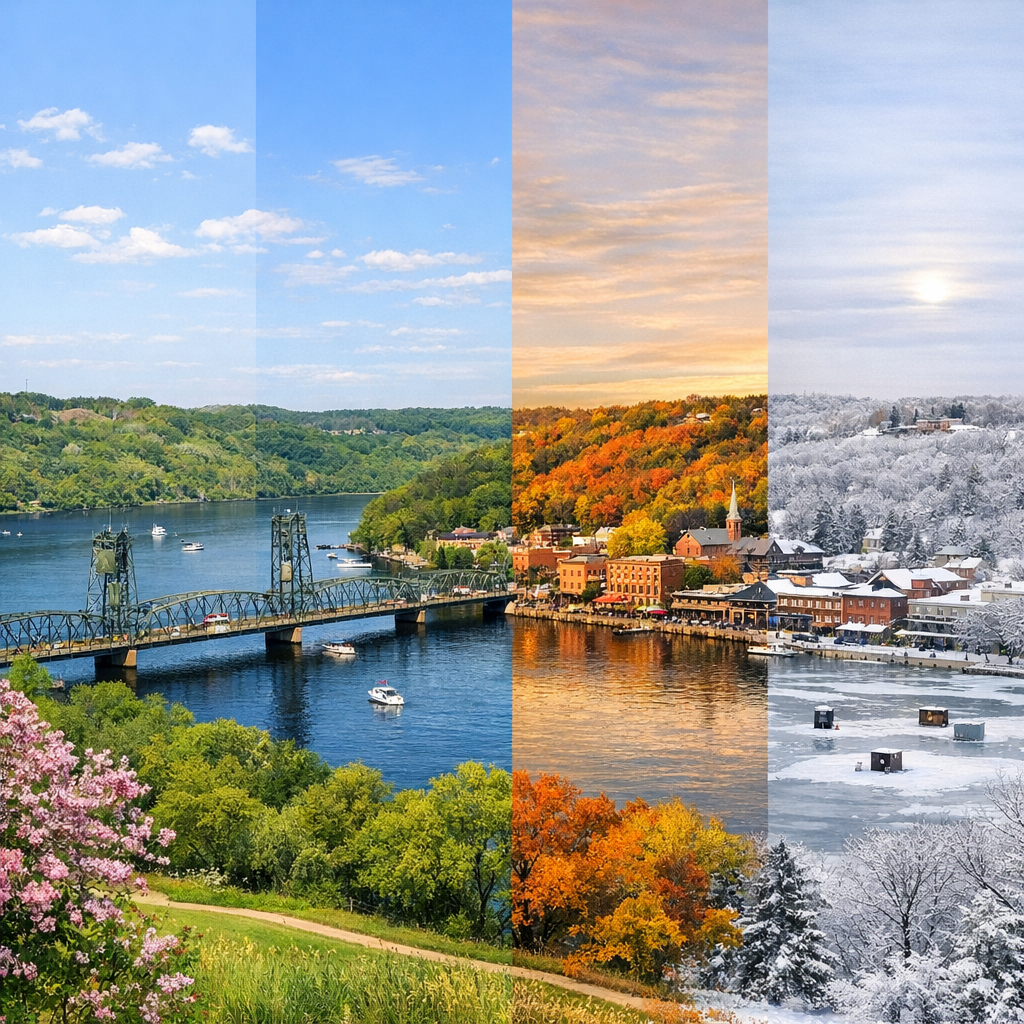
Stillwater, Minnesota, experiences a diverse range of weather conditions throughout the year, characteristic of a humid continental climate. Understanding these patterns can help residents and visitors prepare for the varying seasons.
Seasonal Temperature Variations
The warm season in Stillwater spans from late May to mid-September, with average daily high temperatures exceeding 70°F. July stands out as the hottest month, boasting an average high of 81°F and a low of 62°F. Conversely, the cold season extends from late November to early March, during which average daily high temperatures remain below 35°F. January is typically the coldest month, with an average high of 24°F and a low of 9°F.
Precipitation and Weather Events
Annual precipitation in Stillwater averages around 28.83 inches. June is notably the wettest month, receiving an average of 4.63 inches of rainfall. The area also experiences significant snowfall during the winter months, contributing to its picturesque winter landscapes.
Environmental Considerations
Climate change has begun to influence weather patterns in Minnesota, including Stillwater. The state has observed an increase in the frequency and intensity of storms, leading to more instances of flooding. Additionally, rising temperatures have been noted, particularly during winter nights in the northern regions. These changes can have profound effects on local ecosystems, agriculture, and daily life.
By staying informed about these climatic trends, the Stillwater community can better adapt to and mitigate the impacts of a changing environment.