

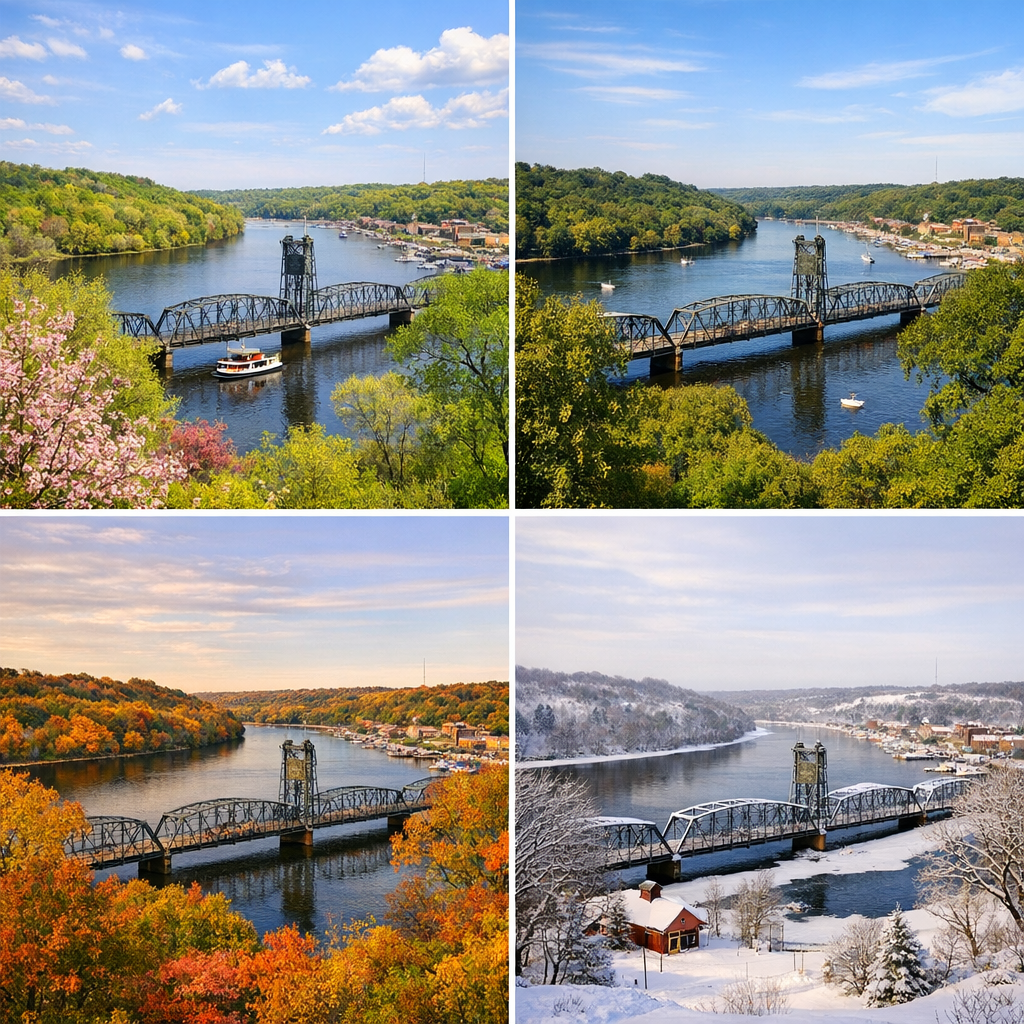
Stillwater, Minnesota, experiences a diverse range of weather conditions throughout the year, characteristic of a humid continental climate. Understanding these patterns can help residents and visitors prepare for seasonal changes and appreciate the natural beauty of the area.
Winter: Cold and Snowy
Winters in Stillwater are typically cold, with average high temperatures around 24°F (-4°C) in January, the coldest month. Low temperatures can drop to approximately 6.9°F (-14°C). Snowfall is common, contributing to the picturesque winter landscape.
Spring: Gradual Warming
Spring brings a gradual increase in temperatures. By April, average highs reach about 56°F (13°C), with lows around 35.5°F (2°C). This season also sees an uptick in precipitation, averaging 3.18 inches (81 mm) in April, supporting the blooming flora.
Summer: Warm and Humid
Summers are warm and humid, with July being the warmest month. Average high temperatures peak at 82.7°F (28°C), and lows hover around 63.1°F (17°C). June tends to be the wettest month, receiving approximately 5.05 inches (128 mm) of rainfall, often in the form of thunderstorms.
Autumn: Cooling Down
Autumn sees a gradual cooling, with October averages showing highs of 58.7°F (14°C) and lows of 39.3°F (4°C). The fall foliage provides a vibrant display of colors, making it a popular season for outdoor activities.
Environmental Considerations
Climate change is impacting Minnesota’s weather patterns, leading to more frequent and intense storms, as well as rising temperatures, especially during winter nights. These changes can affect local ecosystems, agriculture, and water resources. Staying informed and prepared for these shifts is essential for the community.
By understanding Stillwater’s climate and the ongoing environmental changes, residents can better appreciate the natural cycles and take proactive steps to adapt to evolving conditions.