

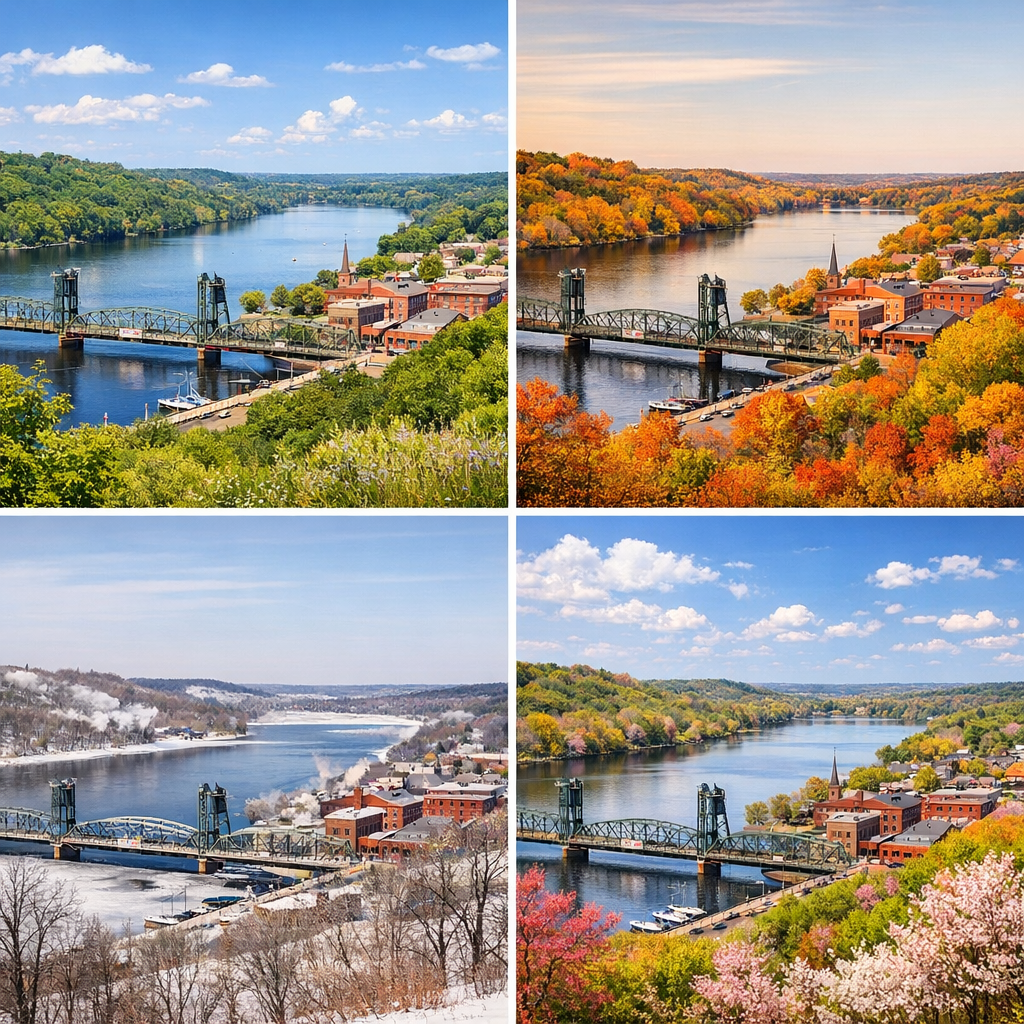
Stillwater, Minnesota, experiences a diverse range of weather conditions throughout the year, characterized by distinct seasons that shape our local environment and daily lives.
Seasonal Weather Patterns
Winter
Winters in Stillwater are typically cold and snowy. Average high temperatures in January hover around 24°F (-4°C), with lows dipping to approximately 7°F (-14°C). Snowfall is common, contributing to the picturesque winter landscapes we cherish.
Spring
Spring brings a gradual warming trend. By April, average highs reach about 56°F (13°C), and lows are around 36°F (2°C). This season often sees increased precipitation, averaging 2.42 inches (61 mm) in April, which supports the blooming of local flora.
Summer
Summers are warm and humid. July, the warmest month, features average highs of 83°F (28°C) and lows near 64°F (18°C). This period also experiences the highest rainfall, with June averaging 4.63 inches (118 mm), often due to thunderstorms.
Autumn
Autumn is marked by cooler temperatures and vibrant foliage. October sees average highs of 58°F (14°C) and lows around 40°F (4°C). Precipitation decreases compared to summer, averaging 2.60 inches (66 mm) in October.
Climate Change Impacts
Recent trends indicate that Minnesota’s climate is warming, particularly during winter months. This warming can lead to reduced snow cover and altered ecosystems. Additionally, the state has experienced more frequent and intense storms, resulting in increased flooding risks. These changes have significant implications for our local environment, agriculture, and infrastructure.
Understanding these patterns and changes is crucial for our community to adapt and prepare for the future. Staying informed and proactive will help us navigate the evolving climate landscape in Stillwater.