

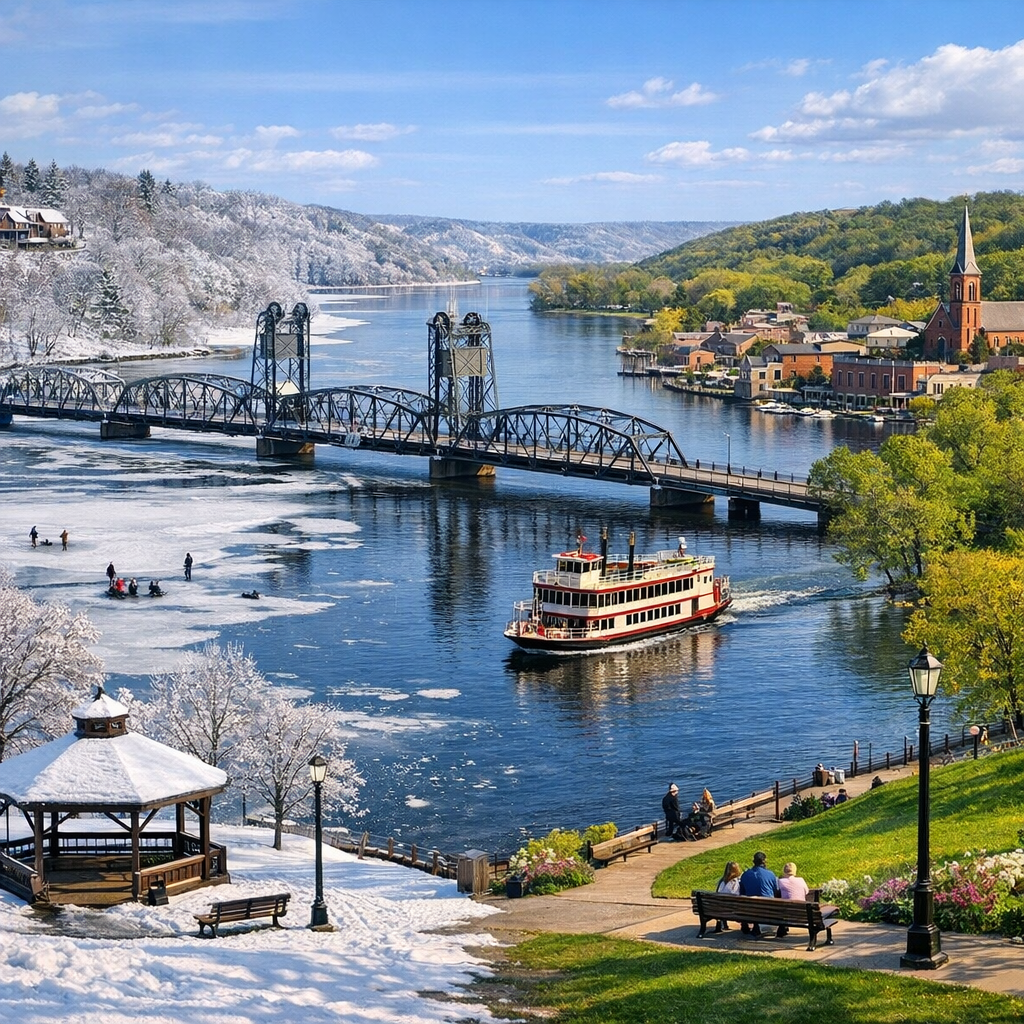
Stillwater, Minnesota, experiences a diverse range of weather conditions throughout the year, characteristic of a humid continental climate. Understanding these patterns can help residents and visitors prepare for the varying seasons.
Winter: Cold and Snowy
Winters in Stillwater are typically cold, with average low temperatures around 6.9°F (-14°C) in January, the coldest month. Snowfall is common, contributing to the city’s picturesque winter landscapes. Residents should be prepared for freezing temperatures and snowy conditions during this season.
Spring: Gradual Warming
Spring brings a gradual increase in temperatures, with average highs reaching 56.2°F (13.4°C) by April. This season also sees an uptick in precipitation, averaging 3.18 inches (80.8 mm) in April, as the snow melts and gives way to rain. The warming trend and increased rainfall contribute to the blooming of local flora.
Summer: Warm and Humid
Summers are warm and humid, with average high temperatures peaking at 82.7°F (28.2°C) in July. This season also experiences the highest rainfall, averaging 4.37 inches (111 mm) in July, often due to thunderstorms. The combination of warmth and moisture supports lush vegetation and outdoor activities.
Fall: Cooling Temperatures
Fall sees a gradual cooling, with average highs decreasing to 58.7°F (14.8°C) by October. Precipitation remains moderate, averaging 3.06 inches (77.7 mm) in October. The changing foliage provides a vibrant display of colors, making it a popular time for outdoor excursions.
Climate Trends and Environmental Considerations
Over the past century, Minnesota has experienced a warming trend of approximately 3°F (1.7°C), with notable increases in winter temperatures and more frequent heavy precipitation events. These changes can impact local ecosystems, agriculture, and water resources. Staying informed about these trends is essential for community planning and environmental stewardship.
By understanding Stillwater’s seasonal weather patterns and ongoing climate trends, residents can better prepare for the year’s variations and contribute to sustainable practices that support the local environment.