

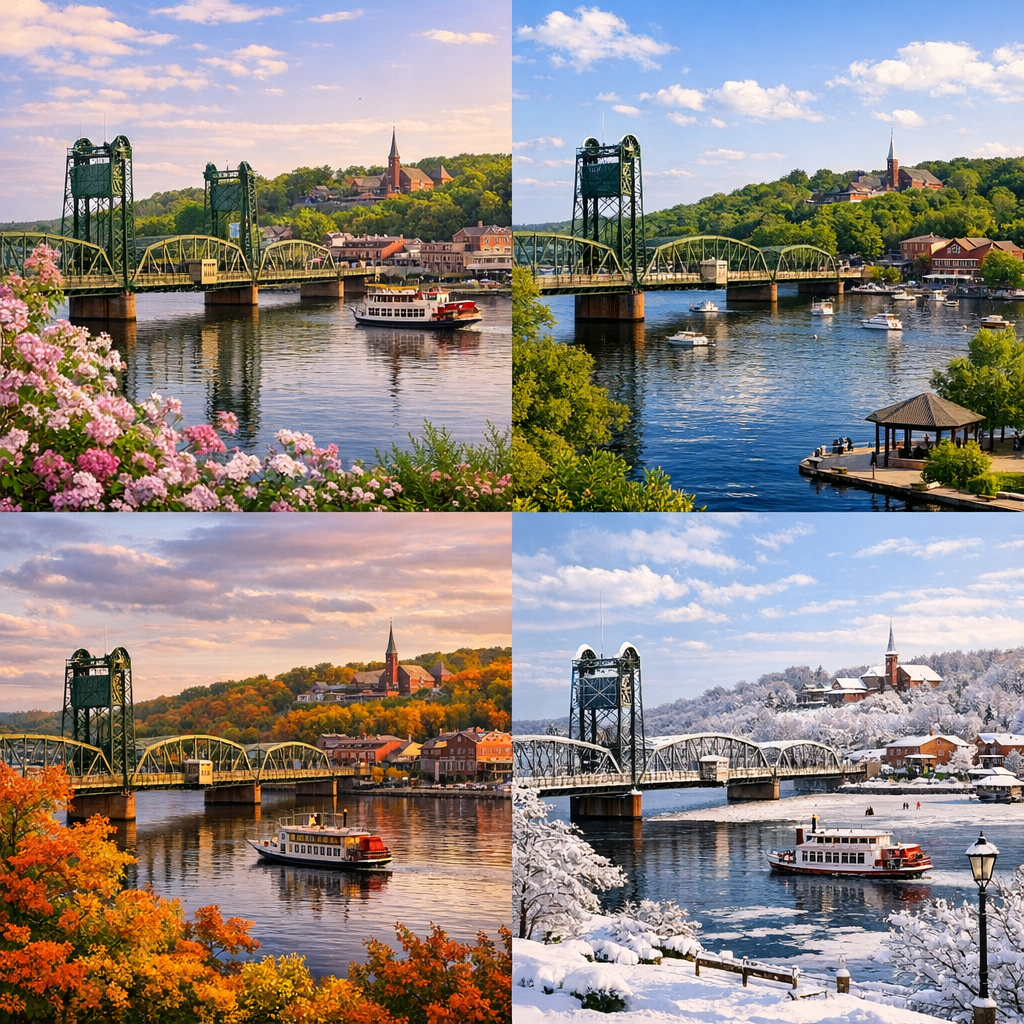
Stillwater, Minnesota, experiences a diverse range of weather conditions throughout the year, characteristic of a humid continental climate. Understanding these patterns can help residents and visitors prepare for seasonal changes.
Winter (December to February)
Winters in Stillwater are cold and snowy. Average high temperatures range from 24°F (-4°C) in January to 29°F (-2°C) in February, with lows dipping to 9°F (-13°C) in January. Snowfall is common, contributing to the picturesque winter landscape.
Spring (March to May)
Spring brings a gradual warming trend. March sees average highs around 42°F (6°C), increasing to 69°F (21°C) by May. This season also experiences increased precipitation, with May averaging 3.73 inches (95 mm) of rainfall.
Summer (June to August)
Summers are warm and humid. July is typically the warmest month, with average highs reaching 83°F (28°C) and lows around 64°F (18°C). June tends to be the wettest month, averaging 4.63 inches (118 mm) of rainfall.
Autumn (September to November)
Autumn features cooler temperatures and vibrant foliage. September averages highs of 73°F (23°C), cooling to 43°F (6°C) by November. Rainfall decreases during this period, with November averaging 1.29 inches (33 mm).
Being aware of these seasonal patterns allows for better planning and appreciation of Stillwater’s natural beauty throughout the year.