

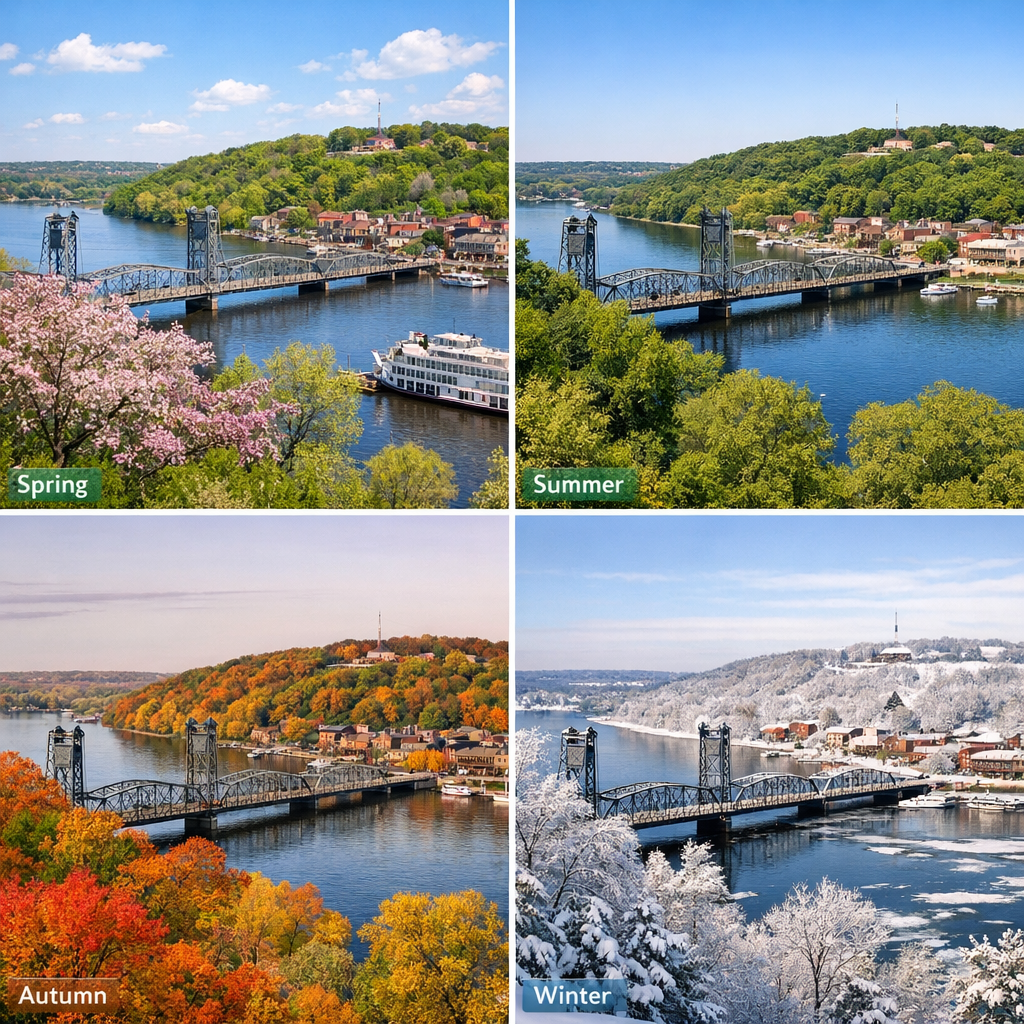
Located in the heart of Minnesota, Stillwater experiences a diverse range of weather conditions throughout the year. Understanding these patterns can help residents and visitors alike prepare for the seasonal changes.
Winter: Cold and Snowy
Winter in Stillwater is characterized by freezing temperatures and snowfall. Average high temperatures hover around 24°F (-4°C) in January, with lows dipping to approximately 9°F (-13°C). Snowfall is common, contributing to the city’s picturesque winter landscapes.
Spring: Gradual Warming
As spring arrives, temperatures begin to rise. By April, average highs reach 56°F (13°C), and lows are around 37°F (3°C). This season often brings increased precipitation, with April averaging about 2.42 inches (61 mm) of rainfall.
Summer: Warm and Humid
Summers are warm and humid, with July being the hottest month. Average highs peak at 83°F (28°C), and lows are around 64°F (18°C). This period also sees the highest rainfall, with June averaging 4.63 inches (118 mm).
Fall: Cooling Down
Fall brings cooler temperatures and vibrant foliage. By October, average highs are 58°F (14°C), and lows drop to 40°F (4°C). Precipitation decreases compared to summer, averaging 2.60 inches (66 mm) in October.
Climate Change Considerations
Recent studies indicate that climate change is impacting Minnesota’s weather patterns. The state has observed an increase in very heavy precipitation events over the past 50 years, leading to more frequent flooding. Additionally, more winter precipitation is falling as rain rather than snow, affecting traditional snowfall patterns.
Understanding these trends is crucial for community planning and personal preparedness. Staying informed about local weather forecasts and being aware of seasonal changes can help mitigate the impacts of these evolving patterns.