

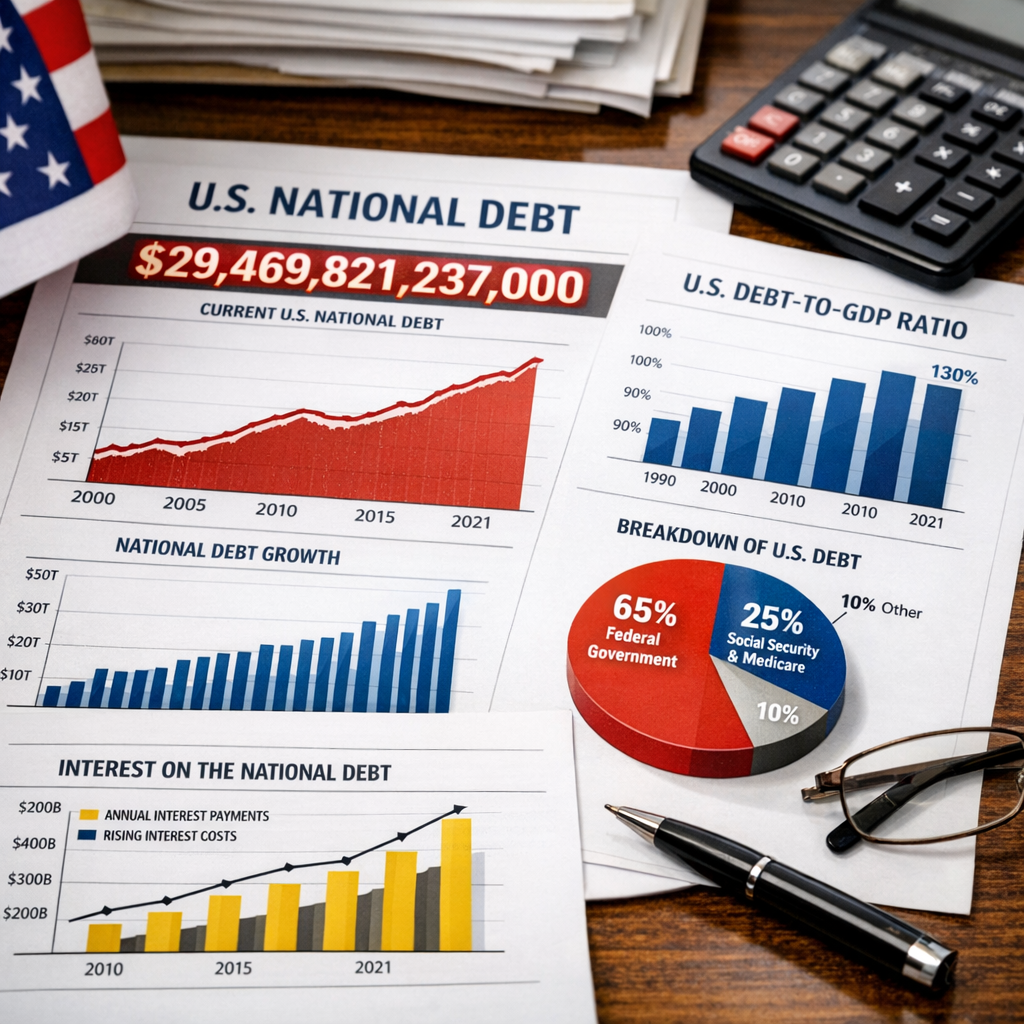
As of mid-2026, the United States faces a complex debt scenario across various sectors. Understanding the nuances of household, corporate, and government debt is essential for grasping the broader economic picture.
Household Debt
Recent data indicates a slight improvement in household debt. In the second quarter, overall household debt decreased by $13 billion, a 0.1% drop. Additionally, loan delinquencies have improved compared to the previous year, suggesting that many American families are managing their debts more effectively.
Corporate Debt
Corporate borrowing has been substantial, primarily driven by significant investments in artificial intelligence (AI) infrastructure. Notably, a leading chipmaker announced a $500 billion financing package, marking one of the largest corporate financings in history. While corporate debt stands at about 45.5% of GDP, which is manageable, the concentration in AI investments introduces potential risks if these ventures do not yield expected returns.
Government Debt
The most concerning aspect is the federal government’s debt, which has reached 100% of GDP. Annual deficits are running around 6% of GDP, even in a strong employment environment. This level of public borrowing points to structural issues that could threaten economic stability, especially if external shocks occur.
Implications for the Economy
While household debt appears stable and corporate borrowing is linked to potentially high-return investments, the government’s fiscal imbalance remains a key point of concern for the broader economic outlook. Elevated debt levels can make the economy more vulnerable to shocks, with a highly leveraged economy more likely to experience a crisis or recession in response to relatively small tremors.
Understanding these dynamics is crucial for policymakers and citizens alike as they navigate the complexities of the current economic landscape.