

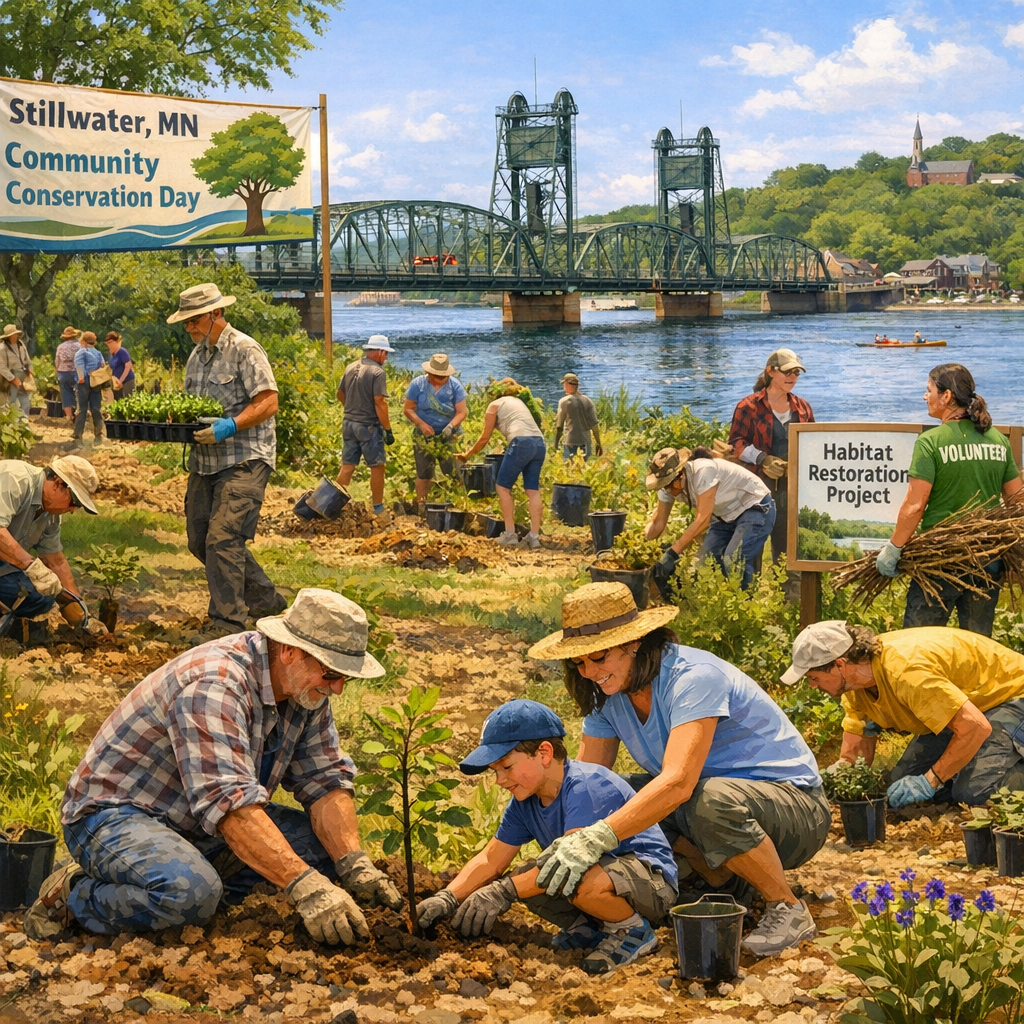
Stillwater, Minnesota, is a community deeply committed to environmental stewardship and sustainability. Through various initiatives and programs, the city and its residents actively work to preserve natural resources and promote eco-friendly practices.
Environmental Learning Center at Stillwater Area High School
The Environmental Learning Center (ELC) is a 55-acre area behind Stillwater Area High School, featuring diverse biomes such as oak forests, prairies, and coniferous plantings. This space serves as an outdoor classroom where students engage in activities like bird banding, small mammal tracking, and wildlife photography. The ELC is also open to the public for hiking, though dogs are not permitted to maintain the area’s ecological integrity.
Sustainable Stillwater MN and the GreenStep Program
Sustainable Stillwater MN (SSMN) is a nonprofit organization dedicated to promoting sustainability within the community. Since its inception in 2016, SSMN has played a pivotal role in Stillwater’s designation as a Minnesota GreenStep City. This program provides a framework for cities to achieve sustainability goals through best practices in areas like green building, energy efficiency, and natural resource conservation. The GreenStep team collaborates with city officials to implement these practices, aligning with the city’s 2040 Comprehensive Plan.
Bird City Program
Under the leadership of SSMN, Stillwater participates in the Bird City Program, which focuses on protecting bird habitats and promoting biodiversity. This initiative involves community education, habitat restoration, and reducing threats to bird populations. By aligning with the Minnesota Audubon Society’s best practices, the program underscores the connection between healthy bird populations and overall environmental health.
Energy Action Plan
Stillwater’s Energy Action Plan aims to educate and inspire residents and businesses to engage in energy-saving practices. The plan sets a community-wide goal to save 3.8 million kWh of electricity and 198,000 therms of natural gas by the end of 2025. Achieving this goal is expected to reduce greenhouse gas emissions by 58% and save the community approximately $450,000.
Addressing PFAS Contamination
The city is proactively addressing the presence of per- and polyfluoroalkyl substances (PFAS) in its drinking water. Construction is underway for a new PFAS treatment facility at Well #10, with completion expected by May 2026. This facility will ensure that the city’s water supply meets safety standards and protects public health.
Through these initiatives, Stillwater demonstrates a strong commitment to environmental conservation and sustainability, fostering a healthier and more resilient community for current and future generations.