

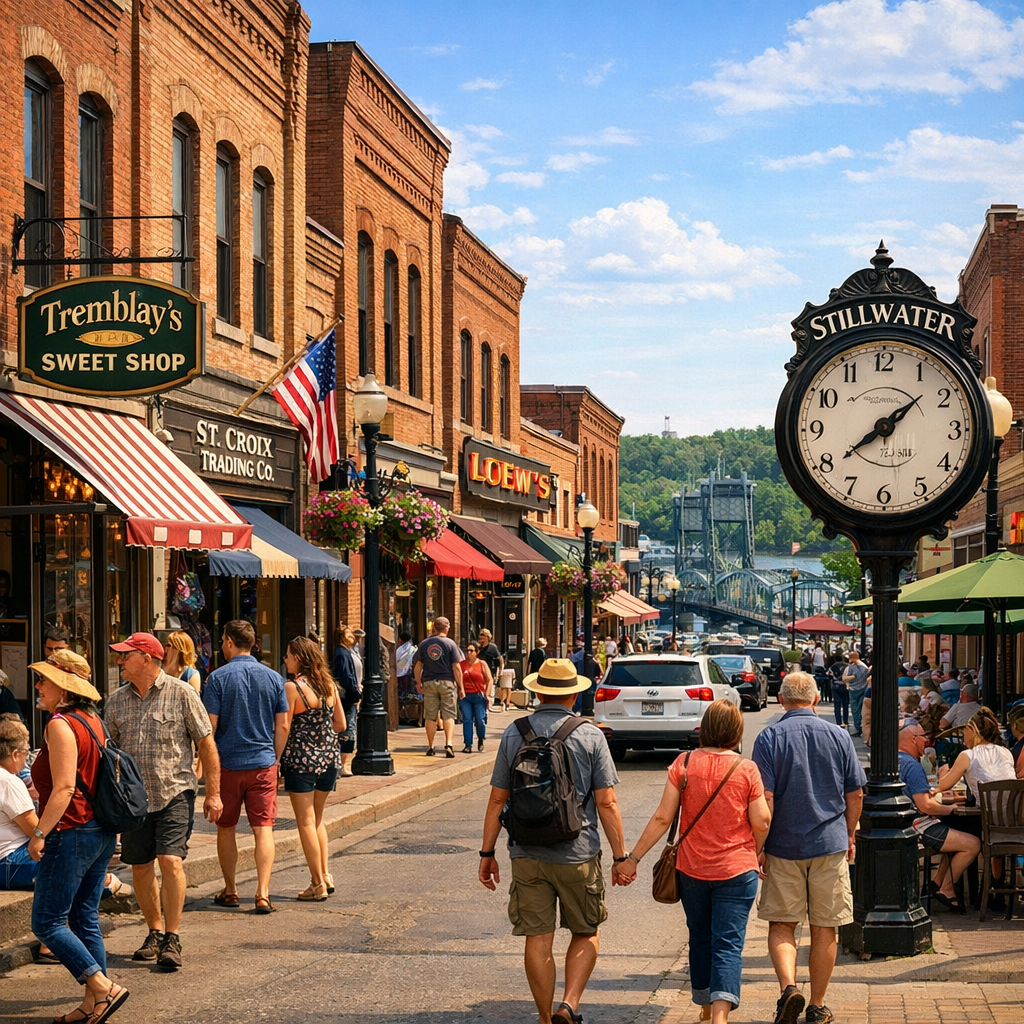
Stillwater, Minnesota, renowned for its historic charm and vibrant community, continues to foster a dynamic economic environment. This article provides an overview of the city’s current economic trends, focusing on local businesses, employment sectors, and community development initiatives.
Local Business Landscape
Stillwater’s business community is diverse, encompassing a range of industries that contribute to the city’s economic vitality. As of 2025, the city is home to 909 businesses employing approximately 11,980 individuals. Key sectors include public administration, healthcare and social assistance, retail trade, and accommodation and food services. Notably, the healthcare and social assistance sector comprises 118 businesses with 1,700 employees, while retail trade includes 106 businesses employing 1,368 individuals. The accommodation and food services sector, vital to Stillwater’s tourism appeal, consists of 86 businesses with a workforce of 1,213.
Employment and Workforce
The city’s workforce is characterized by a high level of education and a strong presence of professionals in management, sales, and administrative support roles. In 2023, Stillwater employed approximately 9,870 individuals, with management occupations accounting for 1,362 employees, sales and related occupations comprising 1,184 employees, and office and administrative support occupations including 1,118 employees. The median household income in 2024 was $105,853, reflecting the city’s economic stability.
Community Development Initiatives
In February 2026, Stillwater welcomed Jason Zimmerman as the new Community Development Director. Zimmerman is leading efforts to update the Comprehensive Plan, which will guide the city’s development over the next two decades. This plan aims to balance growth with the preservation of Stillwater’s unique character, ensuring sustainable economic development.
Additionally, the city has established the Stillwater Economic Development Authority (EDA) to enhance economic development tools, facilitate site assembly, and pursue public financing for development projects. The EDA collaborates closely with local businesses to address their needs and promote a thriving business environment.
Support for Local Businesses
Stillwater offers a variety of resources to support local businesses and entrepreneurs. The city partners with organizations such as the Washington County Community Development Agency and the Washington County Open to Business Program to provide financial assistance, site selection support, and business development services. These initiatives aim to foster a supportive environment for business growth and innovation.
Conclusion
Stillwater’s economic landscape reflects a community committed to balanced growth and support for local businesses. Through strategic planning and collaborative initiatives, the city continues to enhance its economic vitality while preserving the unique qualities that make Stillwater a desirable place to live and work.