

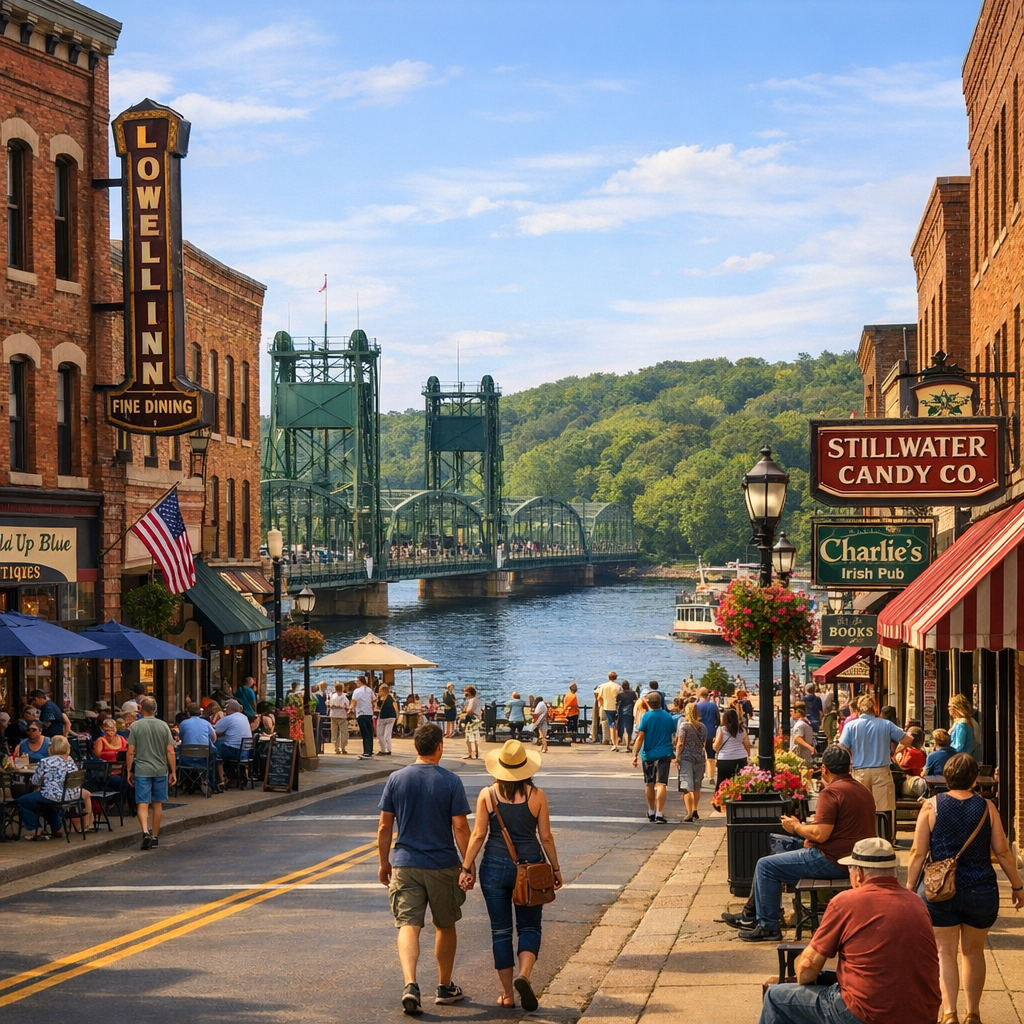
Stillwater, Minnesota, renowned for its historic charm and scenic beauty along the St. Croix River, boasts a dynamic economy that harmoniously blends tradition with innovation. This unique combination has fostered a resilient and diverse business environment, making Stillwater an attractive destination for entrepreneurs and established businesses alike.
Tourism and Hospitality: The Heartbeat of Stillwater
The tourism and hospitality sector stands as a cornerstone of Stillwater’s economy. The city’s picturesque downtown, adorned with 19th-century architecture and panoramic river views, draws visitors year-round. Boutique shops, diverse dining establishments, and a calendar filled with events contribute significantly to local revenue and employment opportunities. This vibrant atmosphere not only enhances the city’s appeal but also supports a multitude of small businesses that thrive on the steady influx of tourists.
Healthcare: A Growing Sector
Beyond its tourism appeal, Stillwater has witnessed substantial growth in the healthcare industry. The presence of medical facilities and clinics has led to an increase in medical and administrative roles, offering residents stable and well-paying career paths. This expansion not only meets the healthcare needs of the community but also contributes to the city’s economic stability.
Manufacturing and Technology: Embracing Innovation
Stillwater’s manufacturing sector has evolved from its historic roots to encompass modern industries, including biomedical advancements and innovative consumer products. This shift reflects the city’s adaptability and commitment to embracing new technologies, positioning Stillwater as a hub for forward-thinking enterprises.
Community Development: Planning for the Future
In 2021, the Stillwater City Council established the Stillwater Economic Development Authority (EDA) to enhance the city’s economic development initiatives. The EDA focuses on analyzing economic needs, facilitating site development, and exploring public financing options for development projects. This proactive approach underscores the city’s dedication to sustainable growth and collaboration with the local business community.
Furthering these efforts, the city appointed Jason Zimmerman as the new Community Development Director in early 2026. Zimmerman is spearheading the Comprehensive Plan, a strategic blueprint set to guide Stillwater’s community and development endeavors for the next two decades. His leadership aims to build upon the city’s positive momentum and ensure thoughtful, meaningful growth.
Economic Indicators: A Snapshot
As of April 2026, Stillwater’s housing market reflects a median listing price of approximately $450,000, with 116 homes available for sale. The median rent stands at $2,550 per month, indicating a stable rental market. These figures suggest a balanced real estate environment, offering opportunities for both buyers and renters.
Demographically, Stillwater is home to around 19,377 residents, with a median household income of $105,853. The city’s population is predominantly White (86.7%), followed by Hispanic (6.8%) and Asian (2.3%) communities. The median age of residents is 42.5 years, reflecting a mature and experienced workforce.
Conclusion
Stillwater’s economic landscape is a testament to its ability to honor its rich history while embracing modern advancements. The city’s diverse economy, strategic development plans, and commitment to community engagement position it as a thriving locale for businesses and residents alike. As Stillwater continues to evolve, it remains a shining example of how tradition and innovation can coexist to foster a prosperous and vibrant community.