

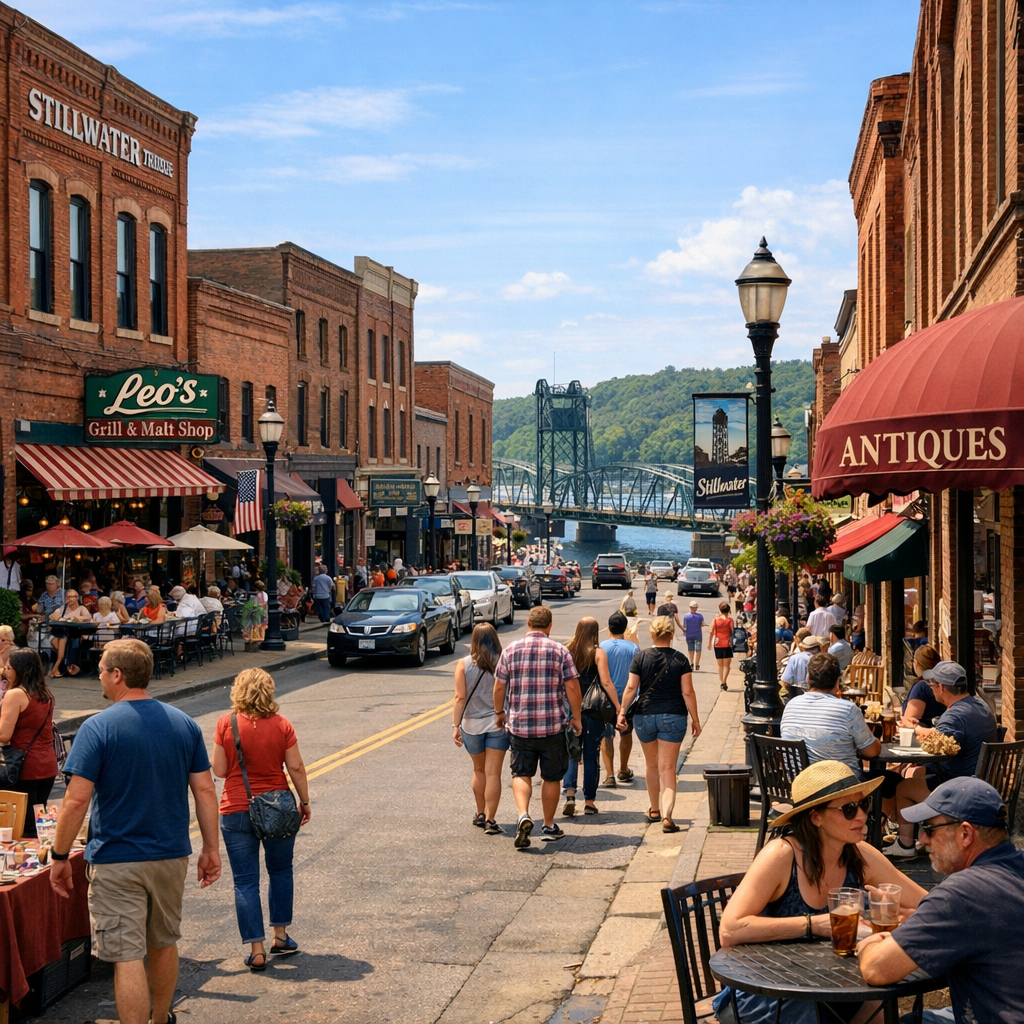
Stillwater, Minnesota, renowned for its historic charm and scenic beauty along the St. Croix River, boasts a dynamic economic landscape that harmoniously blends tradition with modern growth. This article delves into the city’s key industries, housing market trends, and community-driven development initiatives.
Key Industries Driving Stillwater’s Economy
Stillwater’s economy is supported by a diverse mix of industries, each contributing to the city’s vitality:
- Tourism and Hospitality: The city’s historic downtown, with its 19th-century architecture and riverfront attractions, draws visitors year-round. This sector accounts for a significant portion of local business activity, with numerous boutique shops, restaurants, and events enhancing the city’s appeal.
- Healthcare: The healthcare sector offers a range of medical and administrative roles, providing stable employment opportunities for residents.
- Manufacturing and Technology: Modern manufacturing facilities in Stillwater focus on biomedical advancements and innovative consumer products, reflecting the city’s evolution from its historic lumber town roots.
Housing Market Trends
Stillwater’s housing market reflects the city’s desirability and economic health. As of June 2026, key indicators include:
- Median Listing Price: $632,450, marking a 9.08% year-over-year increase.
- Median Sold Price: $476,500, a 12.57% decrease from the previous year.
- Price per Square Foot: $241, showing a 2.35% year-over-year increase.
- Active Listings: 151 homes, indicating a 20.75% increase compared to the previous year.
- Median Days on Market: 37 days, reflecting an 8.77% decrease year-over-year.
These figures suggest a balanced market with opportunities for both buyers and sellers, underscoring Stillwater’s appeal as a residential destination.
Community-Driven Development Initiatives
The City of Stillwater actively fosters economic development through various initiatives:
- Economic Development Authority (EDA): Established in 2021, the EDA aims to expand tools for analyzing economic needs, facilitate site assembly, and pursue public financing for development projects. The EDA also emphasizes communication and collaboration with the local business community.
- Comprehensive Plan: Under the leadership of Community Development Director Jason Zimmerman, the city is developing a Comprehensive Plan to guide community and development efforts for the next 20 years, ensuring sustainable growth and prosperity.
These initiatives reflect Stillwater’s commitment to fostering a thriving business environment while preserving its unique character.
Conclusion
Stillwater’s economic landscape is a testament to the city’s ability to honor its rich history while embracing growth and innovation. The diverse industries, robust housing market, and proactive development strategies position Stillwater as a vibrant community with a promising future.