

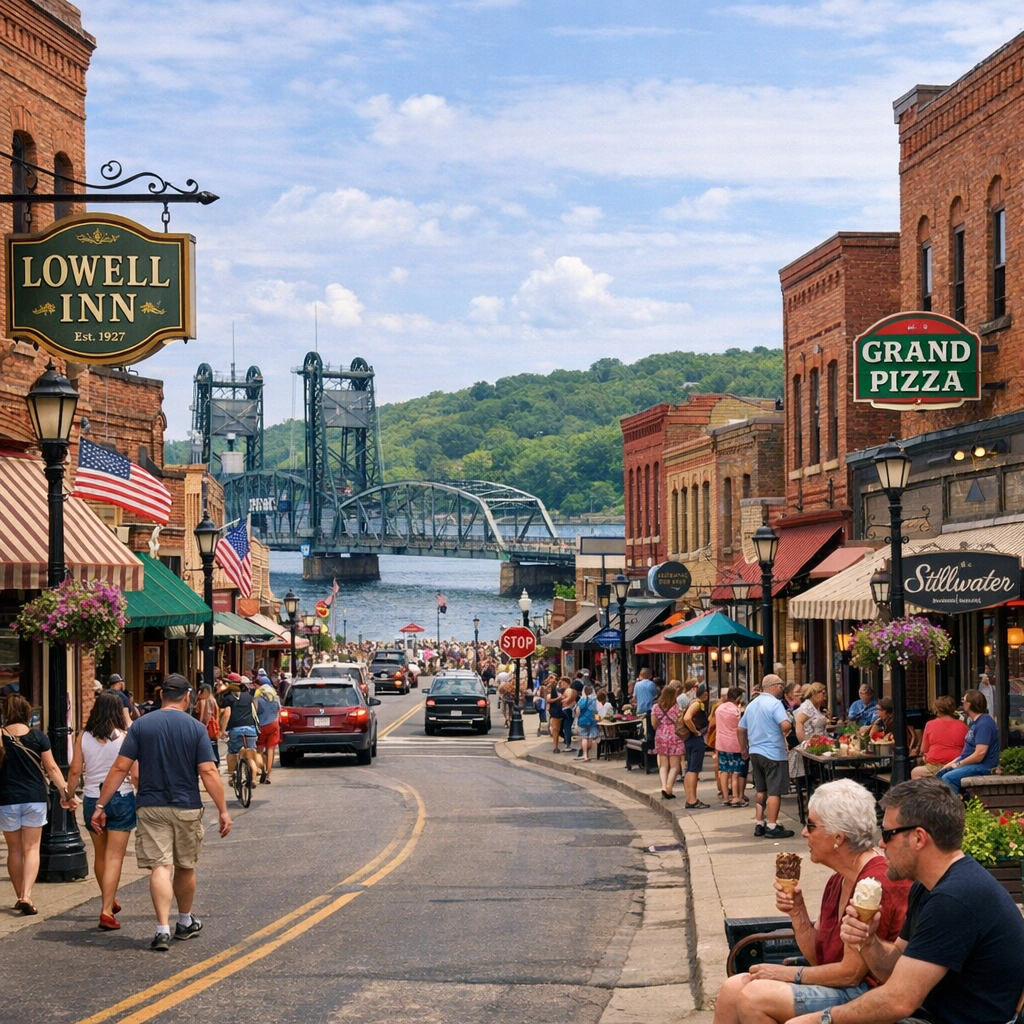
Stillwater, Minnesota, renowned for its historic charm and scenic beauty along the St. Croix River, has cultivated a dynamic economic environment that harmoniously blends tradition with modern growth. This article delves into the city’s economic landscape, highlighting key industries, employment trends, and community initiatives that support local businesses.
Economic Overview
With a population of approximately 19,361 residents, Stillwater boasts a highly educated workforce, with over 50% holding a bachelor’s degree or higher. The median household income stands at around $105,853, reflecting the city’s economic vitality. The local economy is diverse, encompassing sectors such as healthcare, retail trade, and professional services.
Key Industries and Employment
Healthcare and social assistance emerge as the leading employment sectors, engaging over 1,500 residents. Retail trade follows closely, providing jobs for approximately 1,278 individuals, while professional, scientific, and technical services employ around 1,053 people. This diversification ensures economic resilience and offers a range of employment opportunities for the community.
Housing Market Insights
The housing market in Stillwater reflects its economic health. As of April 2026, the median listing price for homes is $449,950, with 116 homes available for sale. The median rent is $2,550 per month, indicating a stable rental market. Homes typically spend a median of 33 days on the market, suggesting a balanced demand between buyers and sellers.
Community Initiatives Supporting Local Businesses
Stillwater’s success is partly attributed to robust partnerships between the city, the Greater Stillwater Chamber of Commerce, and local businesses. These collaborations have led to innovative solutions, such as organizing events to attract visitors during challenging times. For instance, during downtown construction in 2023, businesses hosted a dance party inspired by a 1901 street dance photo, turning a potential downturn into a celebratory event that drew crowds and boosted sales.
Seasonal events like ‘Hometown for the Holidays’ and the ‘World Snow Celebration’ further exemplify the community’s commitment to supporting local businesses. These events not only enhance the city’s cultural vibrancy but also drive significant economic activity by attracting visitors and encouraging local spending.
Future Prospects
Looking ahead, Stillwater continues to focus on sustainable economic development. The establishment of the Stillwater Economic Development Authority (EDA) in 2021 aims to expand tools for analyzing economic needs, facilitating site assembly, and pursuing public financing for development projects. This proactive approach underscores the city’s dedication to fostering a thriving business environment.
In conclusion, Stillwater’s economic landscape is a testament to the power of community collaboration and strategic planning. By leveraging its rich history, diverse industries, and strong community ties, Stillwater stands as a model for balanced and sustainable economic growth.