

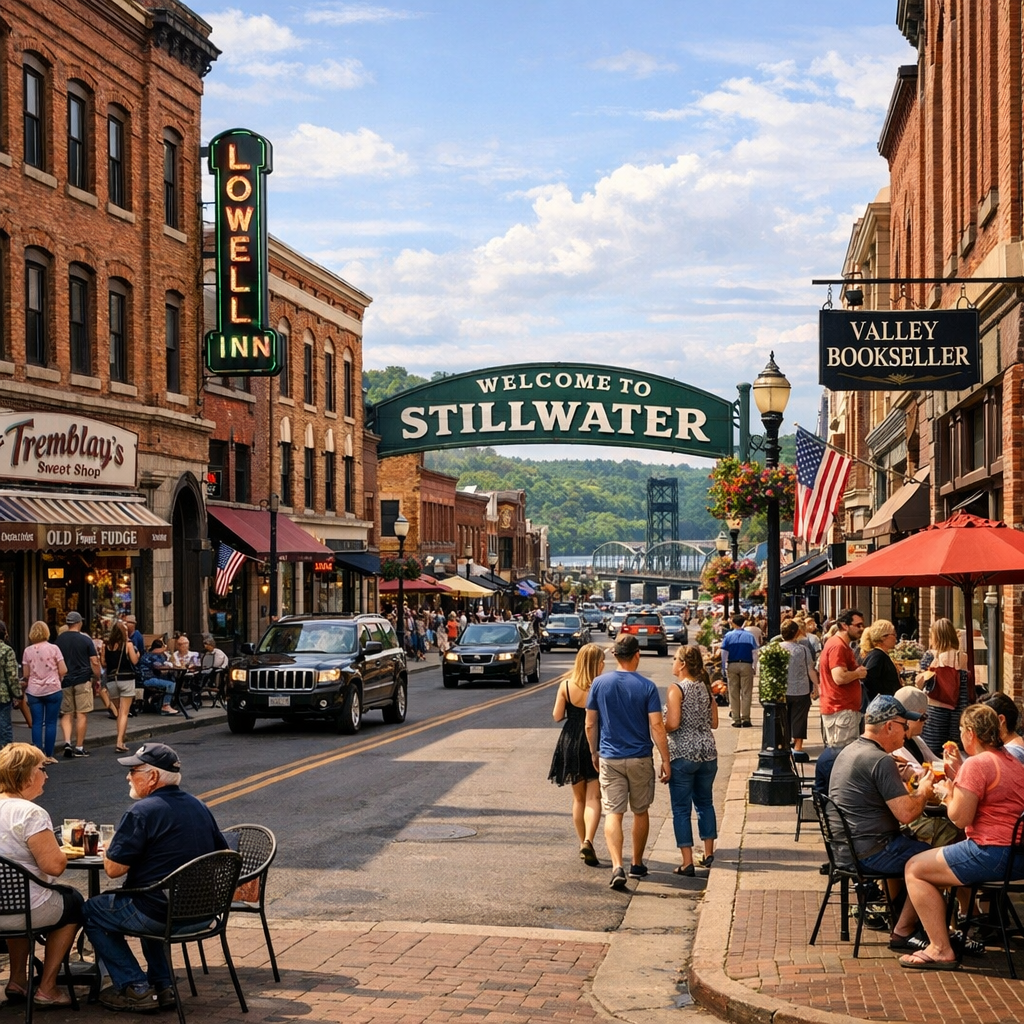
Stillwater, Minnesota, renowned for its historic charm and scenic beauty along the St. Croix River, boasts a dynamic economic environment that harmoniously blends tradition with modern growth. This article delves into the city’s economic landscape, highlighting key industries, employment trends, and development initiatives.
Key Industries and Employment Trends
As of 2024, Stillwater’s economy employs approximately 10,200 individuals. The leading sectors include:
- Health Care & Social Assistance: Employing 1,557 residents, this sector underscores the city’s commitment to quality healthcare services.
- Retail Trade: With 1,278 employees, retail businesses contribute significantly to the local economy, offering diverse shopping experiences.
- Professional, Scientific, & Technical Services: This sector employs 1,053 individuals, reflecting a growing emphasis on specialized professional services.
Notably, the highest-paying industries are:
- Finance & Insurance: Average annual salary of $99,167.
- Professional, Scientific, & Technical Services: Average annual salary of $94,293.
- Finance & Insurance, & Real Estate & Rental & Leasing: Average annual salary of $86,438.
These figures highlight the city’s diverse employment opportunities and competitive wage offerings.
Local Business Initiatives and Community Support
Stillwater’s vibrant downtown is a testament to the collaborative efforts between the city, the Greater Stillwater Chamber of Commerce, and local businesses. This partnership has fostered a thriving business community, evident in the bustling retail shops, diverse restaurants, and collaborative spaces that line the historic streets.
Community-driven events, such as the World Snow Celebration, attract thousands of visitors annually, boosting local businesses during the winter months. This event not only showcases international talent but also stimulates the local economy by filling hotels and driving traffic to stores and restaurants.
Economic Development and Future Plans
The City of Stillwater actively promotes economic development through various initiatives. The establishment of the Stillwater Economic Development Authority (EDA) in 2021 aims to expand tools available for analyzing economic needs, facilitating site assembly, and pursuing public financing for development projects. The EDA also emphasizes communication and collaboration with the local business community to ensure sustainable growth.
Additionally, the city offers a range of business and financial resources, including tax increment financing, tax abatement, and partnerships with organizations like the Washington County Community Development Agency. These resources are designed to support viable projects with unique economic development needs, fostering a conducive environment for business growth.
Conclusion
Stillwater’s economic landscape is characterized by a harmonious blend of historical preservation and forward-thinking development. The city’s commitment to supporting local businesses, coupled with strategic economic initiatives, ensures a vibrant and resilient economy that continues to thrive.