

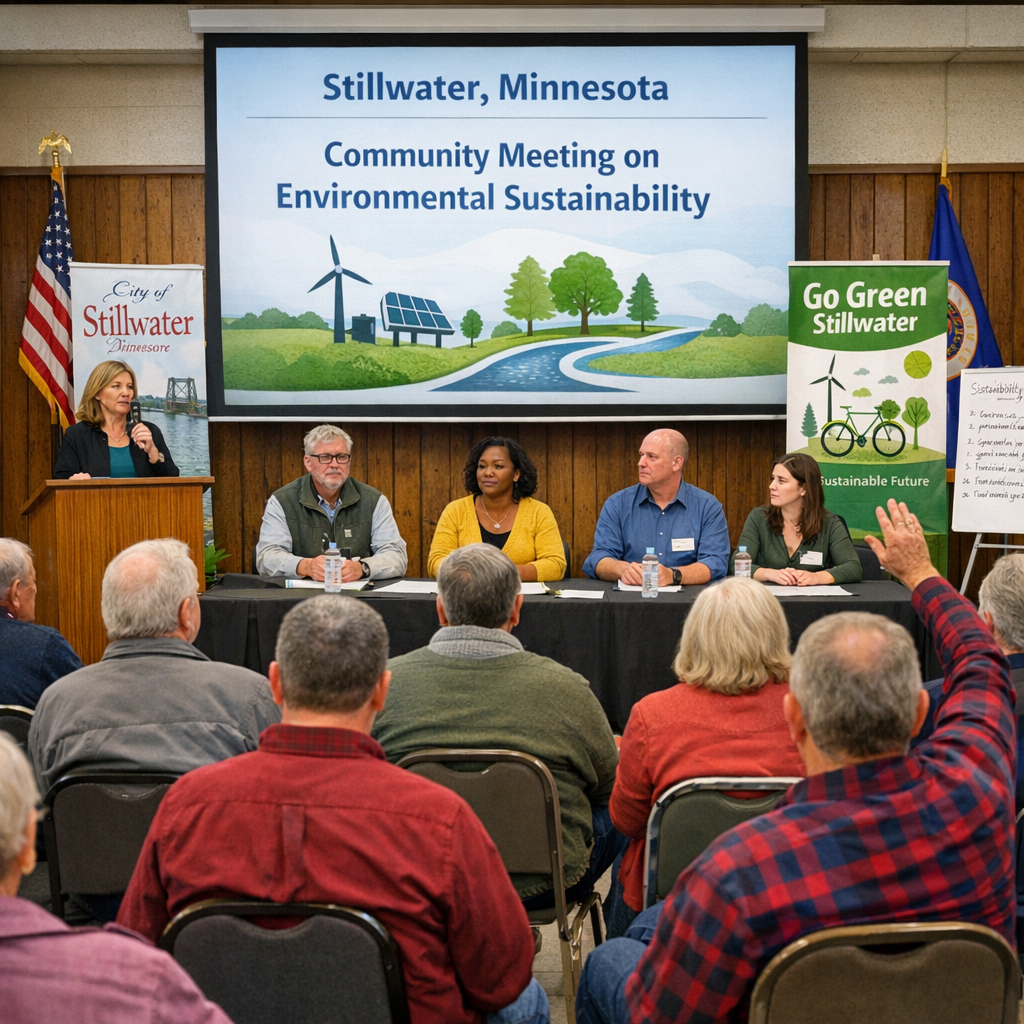
Stillwater, Minnesota, is actively pursuing environmental sustainability through various initiatives aimed at preserving natural resources and ensuring public health.
Addressing PFAS Contamination
Per- and polyfluoroalkyl substances (PFAS) have been detected in some of Stillwater’s drinking water wells. In response, the city has initiated the construction of a PFAS treatment facility at Well #10, with completion expected by May 2026. This facility aims to mitigate PFAS levels and provide safe drinking water to residents.
Community-Led Environmental Programs
Local organizations are at the forefront of environmental conservation. Sustainable Stillwater MN, established in 2016, has been instrumental in promoting sustainability through various programs. The Bird City Program focuses on protecting bird habitats and biodiversity, aligning with the Minnesota Audubon Society’s best practices. Additionally, the GreenStep Team collaborates with city officials to implement sustainable practices under the 2040 Comprehensive Plan, addressing areas such as green building and energy efficiency.
Educational Initiatives
Education plays a vital role in fostering environmental stewardship. The Environmental Learning Center at Stillwater Area High School offers students hands-on experiences in diverse ecosystems, including oak forests and prairies. Programs like the Naturalist-in-Residence at the Stillwater Public Library provide families with opportunities to explore local ecology and wildlife.
Energy Action Plan
Stillwater’s Energy Action Plan aims to reduce energy consumption and greenhouse gas emissions. The plan sets a community-wide goal to save 3.8 million kWh of electricity and 198,000 therms of natural gas by the end of 2025, promoting energy efficiency and sustainability.
Through these concerted efforts, Stillwater demonstrates a strong commitment to environmental sustainability, ensuring a healthier and more resilient community for future generations.