

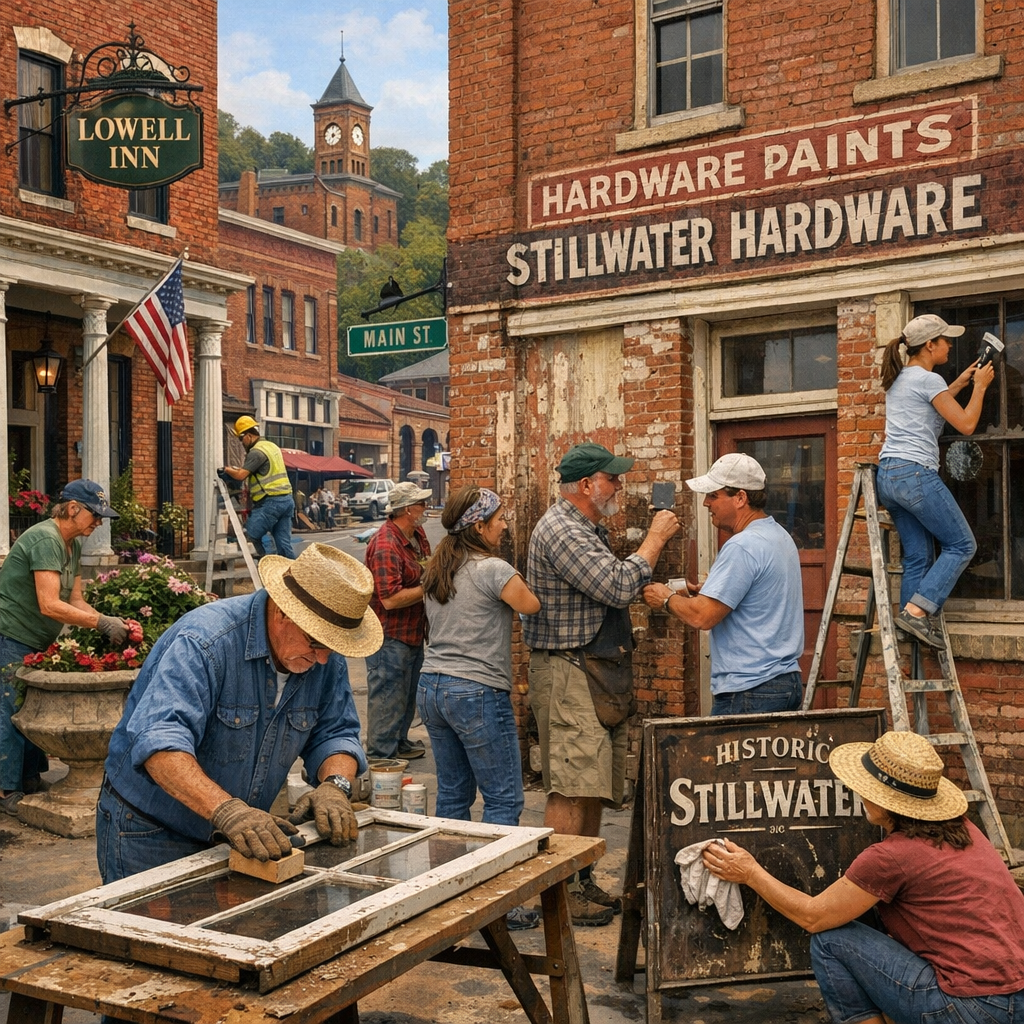
Stillwater, often referred to as the ‘Birthplace of Minnesota,’ boasts a rich tapestry of history that dates back to its founding in 1843. As one of the state’s oldest communities, it has witnessed significant events that have shaped the region. Today, preserving this heritage is a collective endeavor that involves various community initiatives and organizations.
Historical Significance
Established in 1843, Stillwater played a pivotal role in Minnesota’s journey to statehood. The city was the site of the 1848 territorial convention that initiated the process of establishing Minnesota as a state. Its strategic location along the St. Croix River made it a hub for the lumber industry in the late 19th century, earning it the title of the world’s largest lumber producer during that era.
Community Initiatives in Preservation
Recognizing the importance of its historical assets, Stillwater has undertaken several initiatives to document and preserve its heritage. The city’s Heritage Preservation Commission (HPC) has been instrumental in this effort. In 1993, the HPC commissioned a comprehensive historic context study, which led to detailed surveys of 16 neighborhoods. These surveys have been crucial in identifying and protecting historic structures and sites.
Additionally, the Stillwater Public Library houses the St. Croix Collection, a repository of local historical resources, including oral histories that capture personal narratives of residents. This collection serves as a valuable resource for researchers and community members interested in the city’s past.
Adaptive Reuse of Historic Buildings
Preservation efforts in Stillwater also emphasize the adaptive reuse of historic buildings. Many of the city’s historic structures have been repurposed to serve contemporary needs while retaining their historical character. For instance, a historic school built in 1862 now serves as the headquarters for a local business, with original features like plaques and chalkboards preserved in many offices. Such initiatives not only protect architectural heritage but also breathe new life into these structures, making them functional and relevant in today’s context.
Community Engagement and Education
Engaging the community is a cornerstone of Stillwater’s preservation strategy. Events like the annual ‘Hometown for the Holidays’ celebrate the city’s history and foster a sense of pride among residents. These events often include tours of historic sites, educational programs, and community gatherings that highlight the city’s rich past.
Furthermore, the city collaborates with local historians and organizations to offer educational programs that inform residents and visitors about Stillwater’s heritage. These programs aim to instill a sense of responsibility and appreciation for preservation among community members.
Looking Ahead
Preserving Stillwater’s heritage is an ongoing process that requires the collective effort of the community. By documenting history, repurposing historic structures, and engaging residents through education and events, Stillwater ensures that its rich legacy is not only remembered but also integrated into the fabric of contemporary life. This commitment to preservation not only honors the past but also enriches the community’s present and future.