

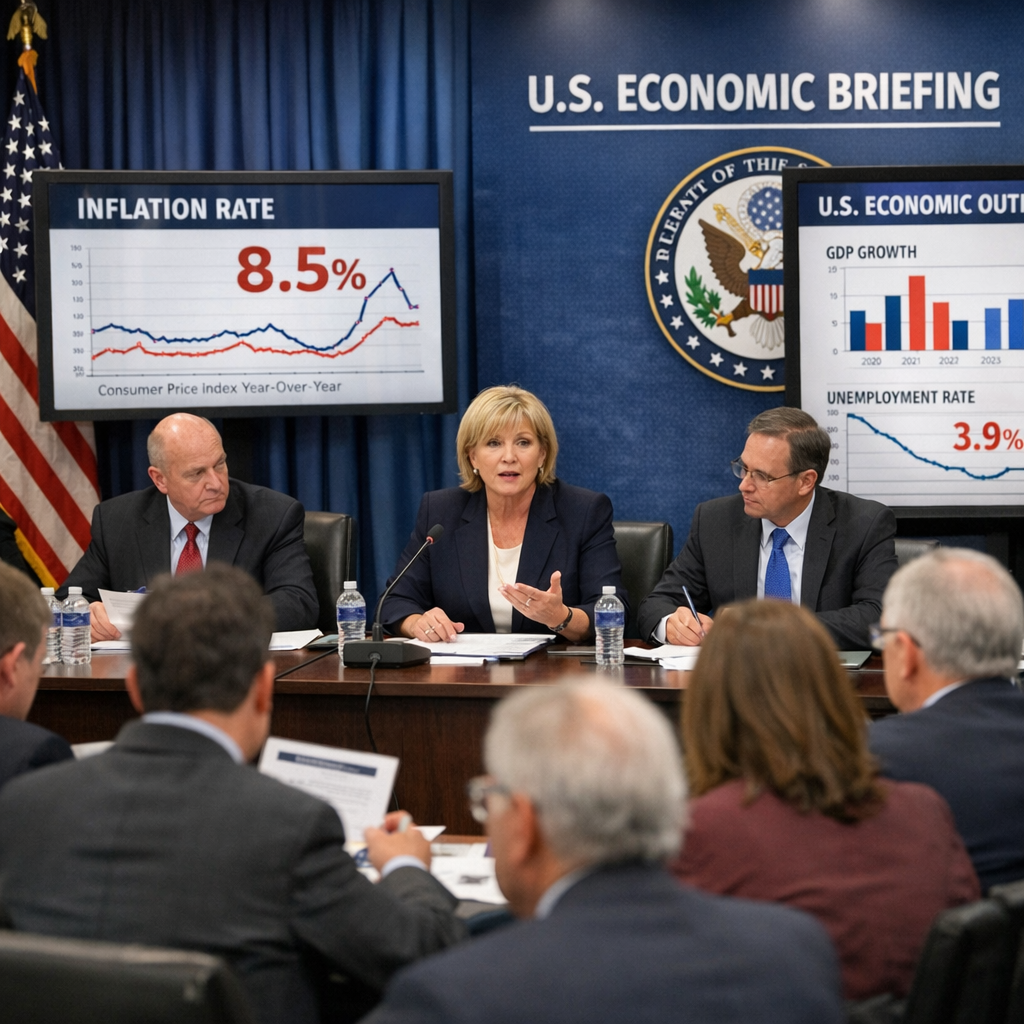
The U.S. economy has experienced a series of fluctuations in recent quarters, reflecting a complex interplay of domestic policies and global events. Understanding these dynamics is crucial for both policymakers and the public.
GDP Growth and Economic Performance
In the first quarter of 2025, the U.S. economy contracted by 0.5%, a downturn attributed to businesses accelerating imports ahead of anticipated tariffs. However, the subsequent quarters saw a rebound, with the economy growing at an annualized rate of 3.8% in Q2 and 4.3% in Q3, marking the fastest growth in two years. This resurgence was driven by increased consumer spending and business investments.
Rising National Debt
Despite the growth, concerns about the national debt have intensified. As of January 2026, the U.S. debt surpassed $38 trillion. BlackRock CEO Larry Fink highlighted that markets might be underestimating the implications of this ballooning debt, emphasizing that rising interest costs could crowd out other spending and lead to rapid shifts in borrowing costs. He suggested that sustained economic growth could help improve the debt-to-GDP ratio.
Impact of Tariffs and Trade Policies
The administration’s tariff policies have significantly influenced the economic landscape. In April 2025, a universal 10% tariff was imposed on nearly all countries, with higher rates on specific nations. This move escalated trade tensions and led to market volatility. The Supreme Court later struck down the broadest measures in early 2026, but the administration’s trade stance continues to affect financial markets and international relations.
Looking Ahead
As the U.S. navigates these economic challenges, the interplay between growth initiatives, debt management, and trade policies will be pivotal. Policymakers and stakeholders must balance fostering economic expansion with ensuring fiscal responsibility to maintain long-term stability.