

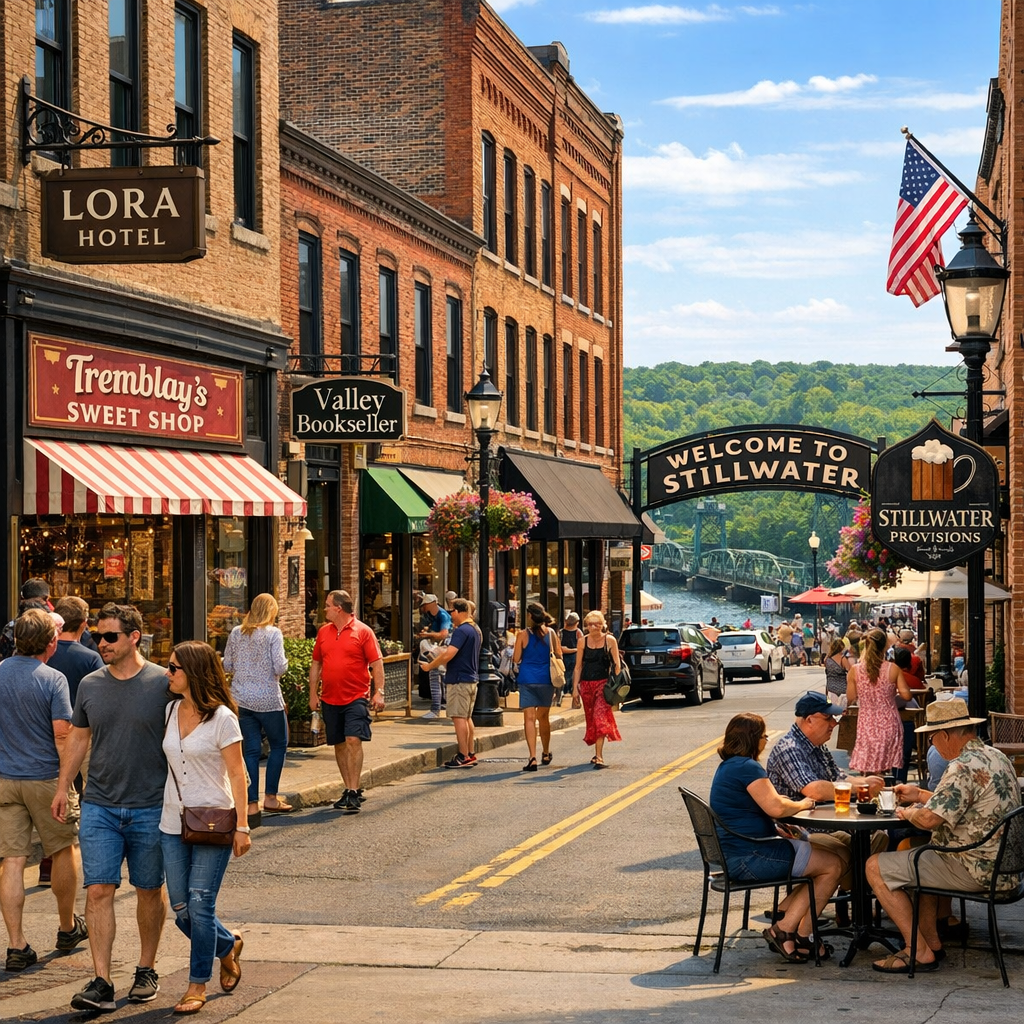
Stillwater, Minnesota, renowned for its picturesque setting along the St. Croix River, boasts a vibrant economy supported by diverse industries and a dynamic housing market. This article provides an overview of the city’s economic landscape, highlighting key sectors, housing trends, and resources available to local businesses.
Key Industries Driving Stillwater’s Economy
As of 2023, Stillwater’s economy employs approximately 9,870 individuals. The leading industries include:
- Health Care & Social Assistance: Employing around 1,559 residents, this sector plays a pivotal role in the local economy.
- Retail Trade: With 1,072 employees, retail businesses contribute significantly to the city’s commercial activity.
- Manufacturing: This industry provides jobs for approximately 1,040 individuals, underscoring its importance in the local economic framework.
Notably, the highest-paying sectors are:
- Professional, Scientific, & Technical Services: Offering an average annual salary of $98,831.
- Finance & Insurance: Providing average earnings of $95,769 per year.
Housing Market Dynamics
Stillwater’s housing market reflects the city’s economic vitality. As of April 2026, key metrics include:
- Median Listing Price: Approximately $449,950, indicating a 24.94% decrease year-over-year.
- Median Sold Price: Around $528,000, reflecting a 20.27% increase compared to the previous year.
- Median Days on Market: Homes typically remain on the market for 33 days, suggesting a balanced demand.
These figures suggest a dynamic housing market with opportunities for both buyers and sellers.
Resources for Local Businesses
The City of Stillwater offers a range of resources to support local businesses and entrepreneurs:
- Economic Development Authority (EDA): Established in 2021, the EDA aims to expand tools for economic development, including site assembly and public financing of projects.
- Business & Financial Resources: The city collaborates with organizations like the Washington County Community Development Agency to assist businesses with site selection and financial assistance programs, such as Tax Increment Financing (TIF) and the Minnesota Investment Fund.
These initiatives underscore Stillwater’s commitment to fostering a thriving business environment.
Conclusion
Stillwater’s economic landscape is characterized by robust industries, a dynamic housing market, and supportive resources for businesses. By leveraging these assets, the city continues to offer a conducive environment for economic growth and community development.