

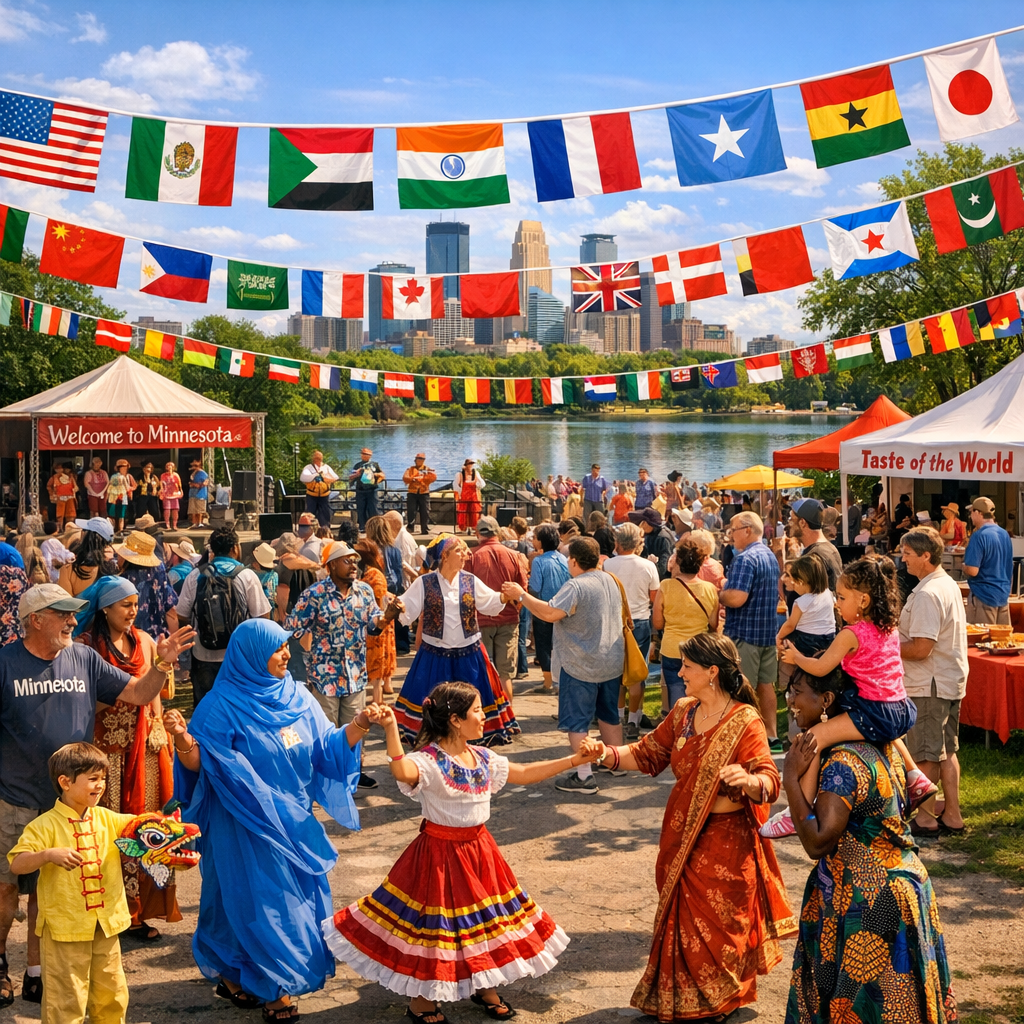
Minnesota’s position in the global landscape brings both opportunities and challenges, as international events and policies have direct and indirect effects on our state. Understanding these connections helps us navigate the complexities of a globally interconnected world.
Economic Impacts of International Events
Hosting international events can significantly boost Minnesota’s economy. For instance, the 2026 IIHF World Junior Championship, held from December 26, 2025, through January 5, 2026, generated $71.5 million in total economic activity across the Twin Cities region. This influx benefited local businesses, hospitality sectors, and reinforced Minnesota’s reputation as the ‘State of Hockey.’
Cultural Enrichment Through Global Festivals
After a seven-year hiatus, the International Festival of Minnesota (IFest-MN) returned on April 10–11, 2026, at the Saint Paul RiverCentre. Formerly known as the Festival of Nations, this event featured participation from 67 nations and ethnic communities, celebrating Minnesota’s cultural diversity and global connections. Attendees experienced global cuisine, hands-on multicultural activities, artisan goods, and music and dance performances, fostering a deeper understanding and appreciation of diverse cultures.
Environmental Challenges Linked to Global Climate Trends
Global climate change has tangible effects on Minnesota’s environment. The Minnesota Pollution Control Agency (MPCA) predicted an active air quality season for summer 2026, with conditions similar to those seen in 2024. Factors such as drought, wildfire smoke, and ozone levels are influenced by broader climate patterns, including the El Niño Southern Oscillation cycle, leading to warmer and drier conditions. These environmental changes pose health risks and affect daily life for Minnesotans.
Policy Responses to International Trade and Environmental Issues
International trade policies and environmental concerns also impact Minnesota. The Minnesota Department of Natural Resources (DNR) addressed congressional actions affecting federal minerals near the Boundary Waters Canoe Area Wilderness (BWCAW). While the DNR maintains rigorous environmental protections, federal decisions can influence state-level resource management and environmental policies.
In conclusion, Minnesota’s engagement with global events and policies underscores the importance of staying informed and proactive. By understanding these international connections, we can better prepare for economic opportunities, cultural enrichment, and environmental challenges that shape our state’s future.