

By Ava Peterson
Stillwater may be known for its scenic riverfront streets and historic charm — but behind closed doors and on living room lamps, technology is quietly transforming everyday life. From startups developing AI tools to the gadgets making work-from-home smoother, here’s a look at how tech is weaving itself into routines both big and small.
Visible vs. Invisible AI: It’s Already Here
You might not think about the virtual assistant that reminds you of an appointment or the app that suggests which songs you’ll like — but that’s AI, hard at work. Voice recognition, smart suggestions based on your shopping or streaming history, email filters identifying spam — these are all examples of what experts call invisible AI. Then there’s the AI you interact with directly, like chatbots or writing assistants that help you draft notes or brainstorm ideas. These tools may feel like novelties at first, but they’re rapidly becoming everyday essentials.
Understanding how these systems work — what they’re good at and where they can make mistakes — helps us use them more wisely. As many guides suggest, awareness of privacy and bias leads to smarter decisions when adopting new technologies.
Gadgets That Actually Improve Routine in the Home Office
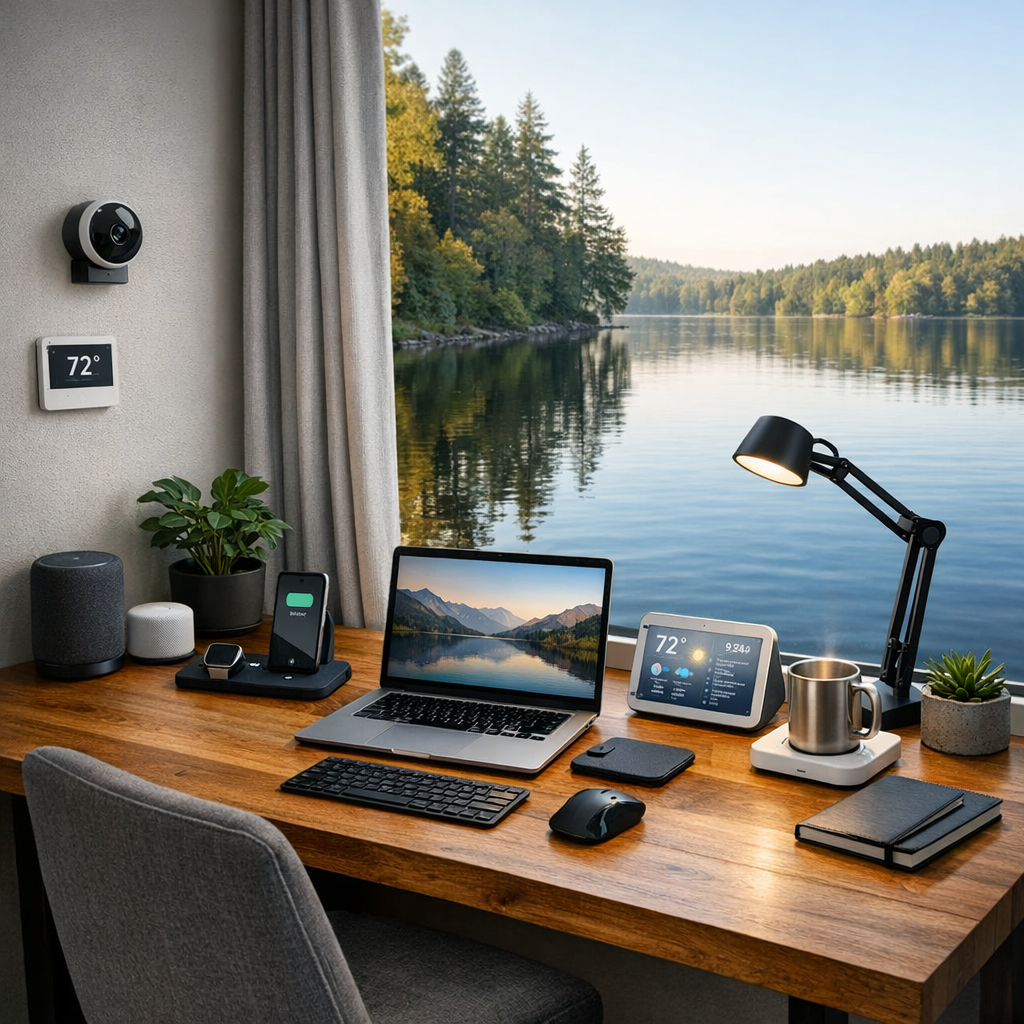
Whether you’re logging in from home across the river or making the trip downtown, certain gadgets can make your workspace easier and more comfortable. Experts recommend things like high-quality webcams and headphones for clearer calls, monitor arms to keep your workspace ergonomically sound, and smart plugs or light temperature settings to reduce strain and distraction.
Smart home devices are catching up, too. Robot vacuums that clean when you’re out, smart thermostats learning your schedule, video doorbells you can check from your phone — these add convenience without demanding constant input.
Practical AI Use Cases for Stillwater Residents
Here are ways locals can start using AI tools more intentionally:
- Planning meals or errands: Ask an AI assistant for recipe ideas based on what you already have, then get a shopping list automatically generated.
- Learning new skills: Apps that adapt to your pace — whether in language, coding, or art — can make learning go more smoothly.
- Managing work tasks: AI can summarize long email threads, generate outlines before drafting reports, or even suggest keywords when uploading business content online.
- Health and wellness: From fitness trackers that remind you to move, to apps identifying patterns in sleep or mood — AI can offer helpful nudges to support well-being.
Balancing Convenience with Responsibility
With all these tools at hand, it’s easy to get swept up in the excitement. But tech writers and researchers stress the importance of using AI and gadgets thoughtfully. That means keeping data privacy in view, understanding that AI recommendations aren’t always neutral, and preserving human judgment for decisions that truly matter.
Just because a smart device can do something doesn’t mean it should replace the personal touch — whether that’s in parenting, caregiving, or simply how we connect with one another.
The Takeaway
AI and modern gadgets aren’t futuristic anymore — they’re tools many of us already use. In Stillwater, that means these technologies are most helpful when tailored to daily needs: efficiency, comfort, health, and connectedness. When used well, they don’t steal the moment; they free up more moments to enjoy the river, meet neighbors, or try something creative.