

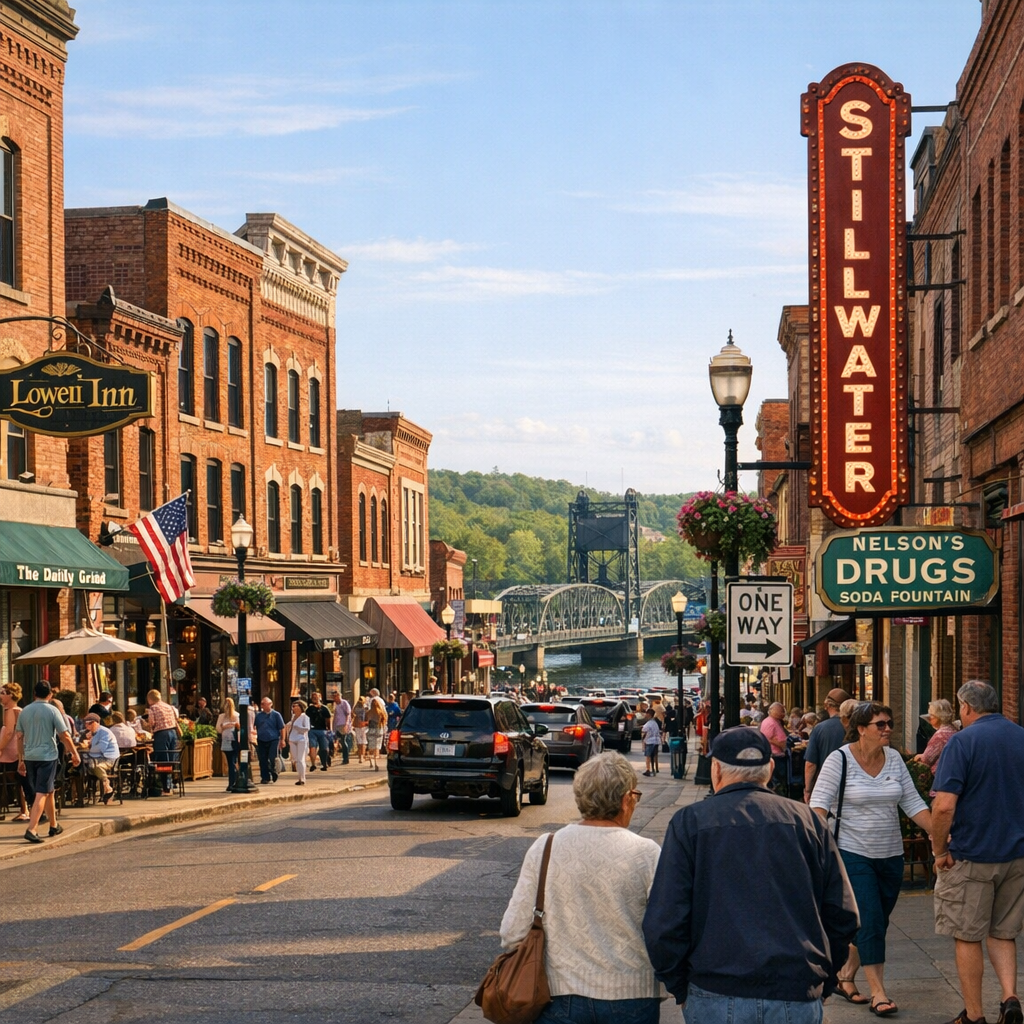
Stillwater’s economic profile continues to shift in meaningful ways — for both local business owners and workers. While the city remains valued for its scenic riverfront and vibrant downtown, broader forces are driving change across entrepreneurship, real estate, and employment patterns.
Income, Housing, and Remote Work Shaping Local Economy
The median household income in Stillwater has climbed substantially over recent years, with trail reports estimating it above $105,000 — placing it well above many regional averages. Meanwhile, home values have surged to over $400,000, and typical rent has also increased sharply. These housing trends are squeezing some renters while raising stakes for anyone considering opening a shop or leasing space downtown. (Data shows median home value around $414,200 and monthly rent near $1,622.)
Another major shift: remote work. Once rare in Stillwater, remote or hybrid arrangements now account for over 20% of local workers. That shift has ripple effects — less commuting congestion, demand for better broadband, and more services needed close to home.
Business Landscape & Employment Sectors
Stillwater supports nearly 1,000 businesses across fields from retail and food service to professional services and health care. Health care and social assistance lead among employment sectors, followed by retail trade and accommodation/food service.
Small- to medium-size retail establishments, especially in the downtown core, remain central. Tourism-driven hospitality still plays a key role, though city leaders have been working to draw visitors beyond weekends to create steadier demand for local businesses.
Opportunities for Entrepreneurs & Mini-Challenges
For entrepreneurs, there are helpful resources in town. The City of Stillwater works with regional programs that offer business financing, incentives like tax abatement or increment financing, assistance with site selection, and directories for sustainable or green business practices. These tools can help when launching or scaling operations.
Still, higher real estate and rental costs mean risk is greater for businesses depending on foot traffic or large storefronts. Also, while wages are strong, the cost of labor, utilities, and permitting is rising — squeezing margins. Entrepreneurs and small business owners need sharp planning and flexibility to navigate those pressures.
What’s Ahead for Stillwater’s Business Economy
- Workforce development: As remote roles grow and education levels rise (more residents holding college degrees), investing in skills training and talent retention will matter.
- Diversifying beyond tourism: Expanding business types — tech, professional services, health innovation — can reduce downtown’s dependence on hospitality demand swings.
- Balancing growth with small-town character: City economic planning puts emphasis on preserving identity while allowing for development in key corridors and neighborhoods. Local financial help is tied often to projects that respect heritage and aesthetics.
- Expanding local markets: Encouraging ways for residents to support home-area businesses (retail, services, workspace) through online platforms, flexible hours, or delivery can make revenue more reliable all week, not just weekends.
Stillwater’s economy is not static. Its strengths—wealth, education, character—offer a solid foundation, but opportunities will favor those who adapt. Local leaders, entrepreneurs, and workers alike will have to remain nimble to thrive.
— William Smith