

By Olivia Johnson
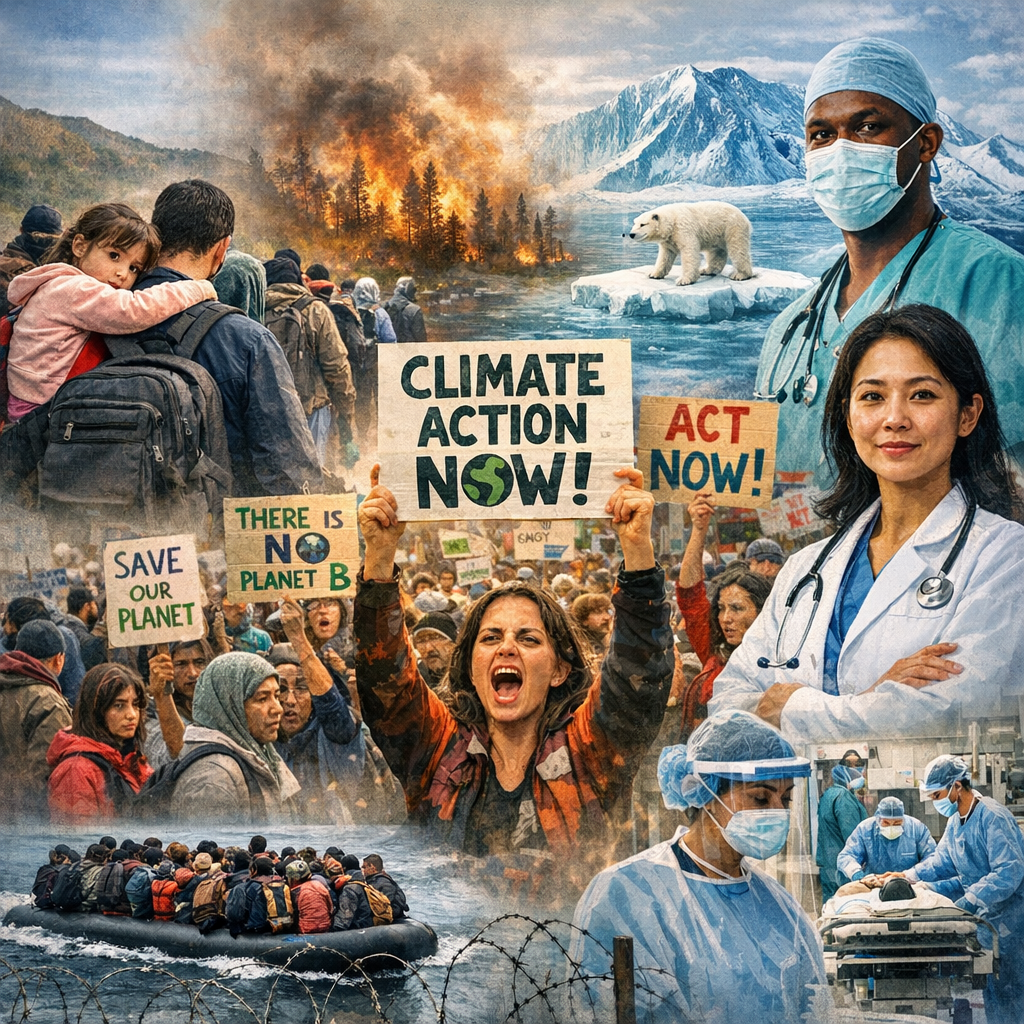
Stillwater doesn’t exist in a vacuum—and neither does today’s world. From forced migration to climate policy, pandemic readiness to environmental stress, a few global trends have implications for us all. Here’s what’s unfolding globally, why it matters, and how we might engage.
Migration at Record Levels—and Uneven Responses
The most recent figures show there are 304 million international migrants around the world—about 3.7% of the global population—with growth driven by work, family, study, and displacement. Internally displaced people—those forced from their homes but unable or unwilling to cross borders—now number over 80 million. Bordering on crisis, the world is seeing migration rooted in conflict, environmental change, and economic disparity.
Yet the response is fragmented. While remittances (money sent home) surpass both official foreign aid and foreign direct investment in many regions, safe legal migration pathways remain limited—especially for those coming from lower-income countries. Unequal visa access, restrictive border policies, and under-resourced protection systems mean many migrants resort to dangerous routes. Long-term integration—of health, education, labor rights—is still uneven across host nations.
Climate Commitments: Progress and Pressure
The Paris Agreement—signed by nearly every country—continues to serve as the backbone of global climate policy: limiting global warming to “well below 2°C,” ideally toward 1.5°C above pre-industrial levels. Recent reporting shows that while many nations are stepping up with updated targets and more renewable energy investment, several key issues remain unresolved. These include how to measure adaptation progress and align financial support with actual needs.
Meanwhile, international climate negotiations—such as those under the UN Framework Convention on Climate Change—are wrestling with links between funding, technology, and policy implementation. For many communities, delays in climate action translate into more intense storms, larger droughts, or rising seas. For Stillwater and places like it, global investment in resilience and clean energy can offer both risk mitigation and economic opportunity.
Pandemic Preparedness: A Fragile Foundation
Six years after COVID-19 first sounded alarms, the world has taken important steps toward better pandemic preparedness. International agreements, upgraded regulations, vaccine production hubs, genomic surveillance—all are part of a web of new safeguards.
Still, progress is uneven. Many nations still lack effective surveillance systems or workforce capacity. Funding is often tied to emergencies rather than sustained maintenance. The newly adopted WHO Pandemic Agreement, while promising, still depends on countries finalizing shared obligations—especially around sharing pathogens and guaranteeing fair access to diagnostics, vaccines, and treatments.
Humanitarian Echoes: Displacement, Reintegration, and Long-Term Stability
The picture of global displacement includes encouraging stories of refugees and internally displaced people (IDPs) returning home to Syria, Sudan, Afghanistan, and the Democratic Republic of the Congo. But “return” often doesn’t mean “safe” or “stable.” Reintegration—access to shelter, schooling, healthcare, economic opportunity—is lagging and frequently comes with social, economic, and physical risk.
Humanitarian aid is still essential—but more is needed to build systems that move beyond crisis-mode. Long-term development planning, inclusive rights protections, and investments in infrastructure and social services are critical if returns are to be sustainable.
What Can Residents in Stillwater Do?
1. Stay informed: Reading credible global reporting helps link local policy to global consequences—whether that’s climate policy in Washington affecting your lake health, or international migration law influencing immigration debates at home.
2. Support organizations working globally: Whether through local chapters of humanitarian groups, refugee resettlement agencies, environmental nonprofits, or public health outreach—local giving can ripple globally.
3. Engage in democratic processes: Encourage leaders to endorse equitable climate policies, sustained pandemic funding, and humane migration practices. Vote. Petition. Speak up.
The global landscape is unsettled—sometimes uncertain—but it’s never disconnected. What happens in distant countries shapes us here, in Stillwater, just as our actions can contribute to global resilience, equity, and health.