

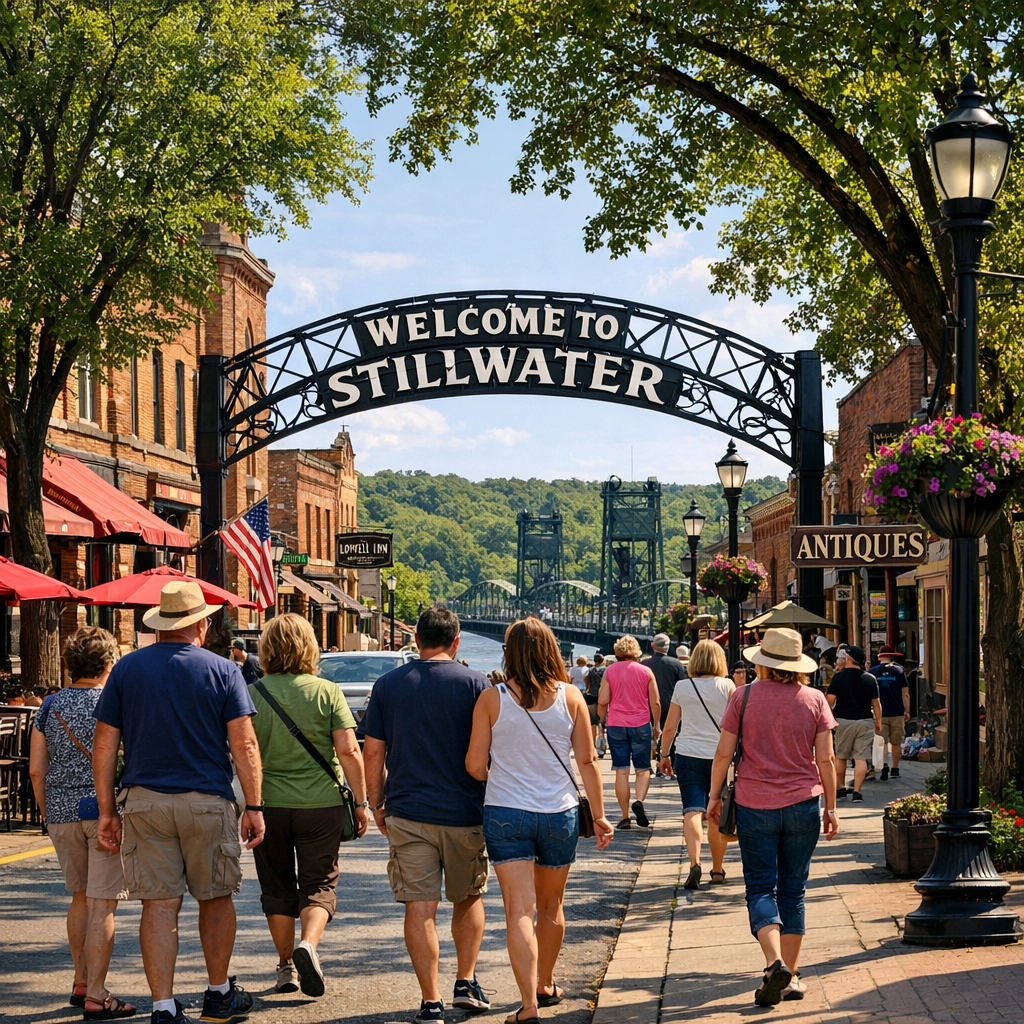
Stillwater has always stood at the edge of two identities: a tranquil river town known for its history and beauty, and a vibrant destination shaped by tourism. As we grow, how we design our public spaces—sidewalks, storefronts, streetscapes—matters deeply. It turns out, these everyday places are where our community’s soul is most visible.
Sidewalks, Parking, and the Sense of Safety
Walkable, safe routes are not just about mobility—they’re about belonging. Downtown Main Street is often congested, with narrow sidewalks and tight street crossings making simple errands feel stressful. Many residents say they avoid walking there, especially when sidewalks feel crowded by sandwich boards or blocked by activities intended for tourists. Removing parking from one side of Main or widening sidewalks could improve walkability.
Where Residents and Visitors Collide
There’s a delicate balance between being a place people love to visit and a place people love to live. For many residents, especially those living downtown or nearby, weekends mean dealing with noise, traffic, limited parking, and even public behavior that feels more suited to a festival than a neighborhood. But tourism supports local businesses. The question that keeps coming up: can we safeguard the peace of home while welcoming visitors?
Design and Decision-Making: Who’s at the Table?
We’ve heard from neighborhood residents who feel their insights are dismissed when facing new development proposals. Some notable plans prioritize housing density over preserving green space or street charm. In one case, proposals came forward lacking sidewalks or easy connections to nearby trails. In others, mature trees—a key part of Stillwater’s character—were threatened. It’s clear that residents want meaningful involvement—not just comment periods after major plans are drafted.
Bridging the Gap Together
Stillwater’s character isn’t something we inherited—it’s something we build every day. From families walking their dogs downtown to café conversations to festivals at the river, our public spaces are portals of connection. To see them thrive, I believe we need three simple shifts:
- Prioritize pedestrian safety in every design: wider sidewalks, better crossings, thoughtful parking layouts.
- Create a clear, ongoing process for resident input early in development—before decisions feel locked in.
- Protect natural beauty—trees, views, waterways—as part of our identity, not as afterthoughts.
When we redesign or develop, it’s not just about structures. It’s about community. Those sidewalks, those benches, that outdoor café—all are opportunities to affirm that Stillwater belongs to all who call it home.