

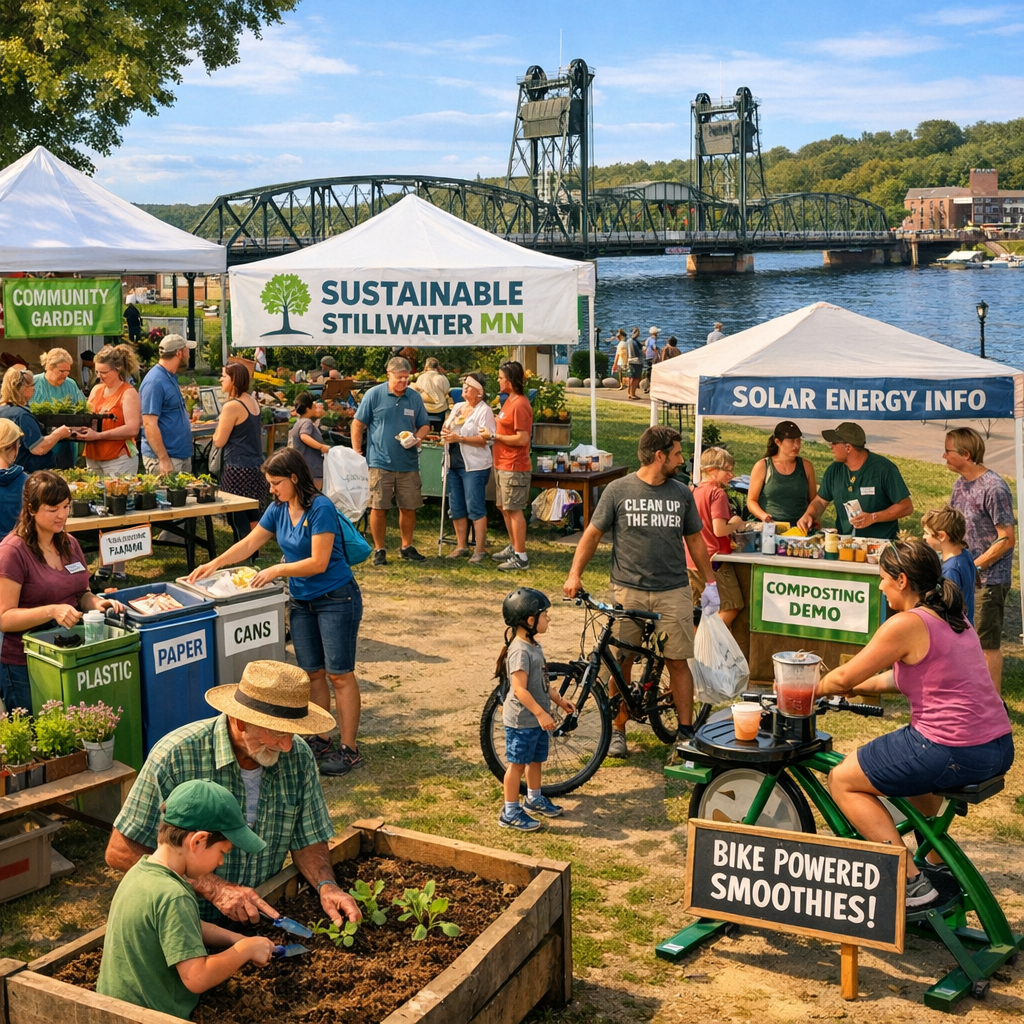
Stillwater, Minnesota, is actively pursuing sustainability through various community-driven environmental initiatives. These efforts aim to enhance the quality of life for residents while preserving the natural beauty of our region.
Environmental Learning Center at Stillwater Area High School
The Environmental Learning Center (ELC) is a 55-acre area behind Stillwater Area High School, featuring diverse biomes such as oak forests, prairies, and coniferous plantings. It serves as an outdoor classroom where students engage in activities like bird banding and wildlife monitoring. The ELC is open to the public for hiking, though dogs are not permitted.
Sustainable Stillwater MN
Established in 2016, Sustainable Stillwater MN is a nonprofit organization dedicated to promoting social, economic, and environmental resilience. The group has been instrumental in initiatives like the GreenStep Cities program, which provides guidelines for cities to achieve sustainability and improve residents’ quality of life. Their efforts have led to Stillwater’s designation as a Minnesota GreenStep City since 2018.
Energy Action Plan
In collaboration with Xcel Energy’s Partners in Energy program, Stillwater developed an Energy Action Plan to help residents and businesses reduce energy consumption and carbon footprints. The plan focuses on education and actionable steps to save energy, manage costs, and increase energy resilience while preserving the city’s historic character.
Water Quality and PFAS Monitoring
The City of Stillwater is committed to ensuring safe drinking water for its residents. Regular testing for per- and polyfluoroalkyl substances (PFAS) is conducted, and the city provides updates and information on water quality through its official channels.
These initiatives reflect Stillwater’s dedication to environmental stewardship and community well-being. Residents are encouraged to participate in local programs and adopt sustainable practices to contribute to a healthier, more resilient community.