

By Liam Anderson
Across the United States, public concern is rising around a cluster of issues that Americans believe demand urgent attention. Recent surveys suggest that while long-standing challenges like inflation and health care remain near the top, new perceptions of political dysfunction, institutional distrust, and economic uncertainty are shifting the national conversation.
Economy & Affordability Still Weigh Heavily
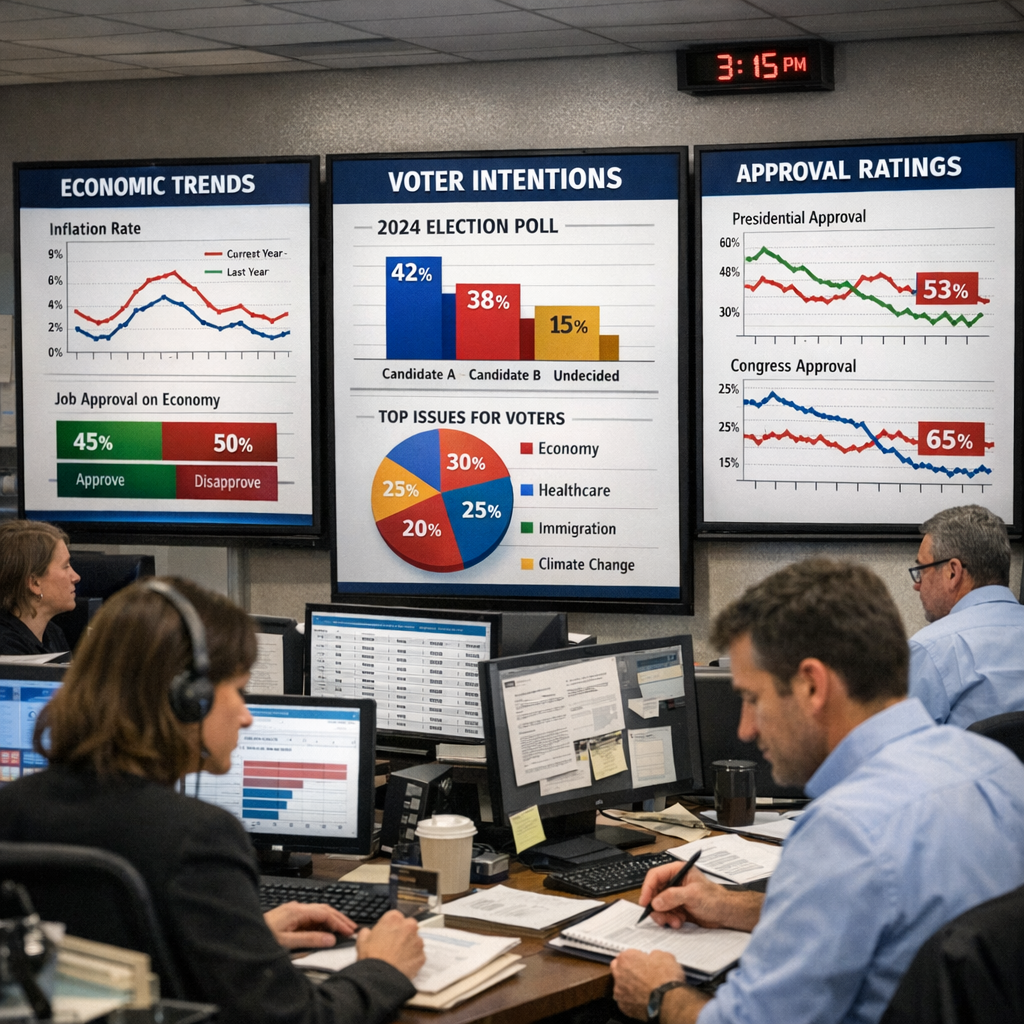
Most Americans say health care costs, inflation, and the mounting federal budget deficit are very big problems. Around 70–75% name the affordability of health care and the role of money in politics among their top concerns, with inflation following close behind. Unemployment has grown as a concern too. (Data: Pew Research Center)
Economic confidence remains fragile. While consumer spending and job gains in certain sectors continue, many are cautious—particularly when it comes to forecasts for the year ahead. Among Republicans, optimism has dipped slightly, while Democrats remain deeply skeptical. (Data: Pew Research Center; Gallup)
Trust in Institutions & National Politics Under Strain
Recent polling highlights deep concern about how politics is conducted: about three-quarters of adults say that the influence of money in politics is a “very big” problem. Meanwhile, fewer than a third express confidence in major institutions like the presidency, Congress, and the Supreme Court.
The U.S. Supreme Court’s job approval has slid to record lows, contributing to a broader decline in trust. Many feel government leaders are not responsive to ordinary citizens. For younger Americans—those under 30—economic inequality, political mistrust, and climate issues are frequently among their top worries.
What This Means as the Country Moves Forward
These trends suggest that policy proposals will increasingly need to address not just economics in the abstract, but affordability in practical terms—housing, health care, energy. At the same time, political reform—campaign finance, transparency, institutional accountability—is rising as a priority.
For Stillwater and communities like ours, this means local leadership has an opening to engage constituents on how national policies translate into lived realities. When people don’t feel their government works well—or that their wallets are secure—the demand for trusted representation grows.
While national headlines will always spotlight elections and foreign affairs, it may be the everyday pressures—costs, confidence, trust—that shape what’s at stake for many voters.