

By Sophia Miller
Growing Participation Across the Board
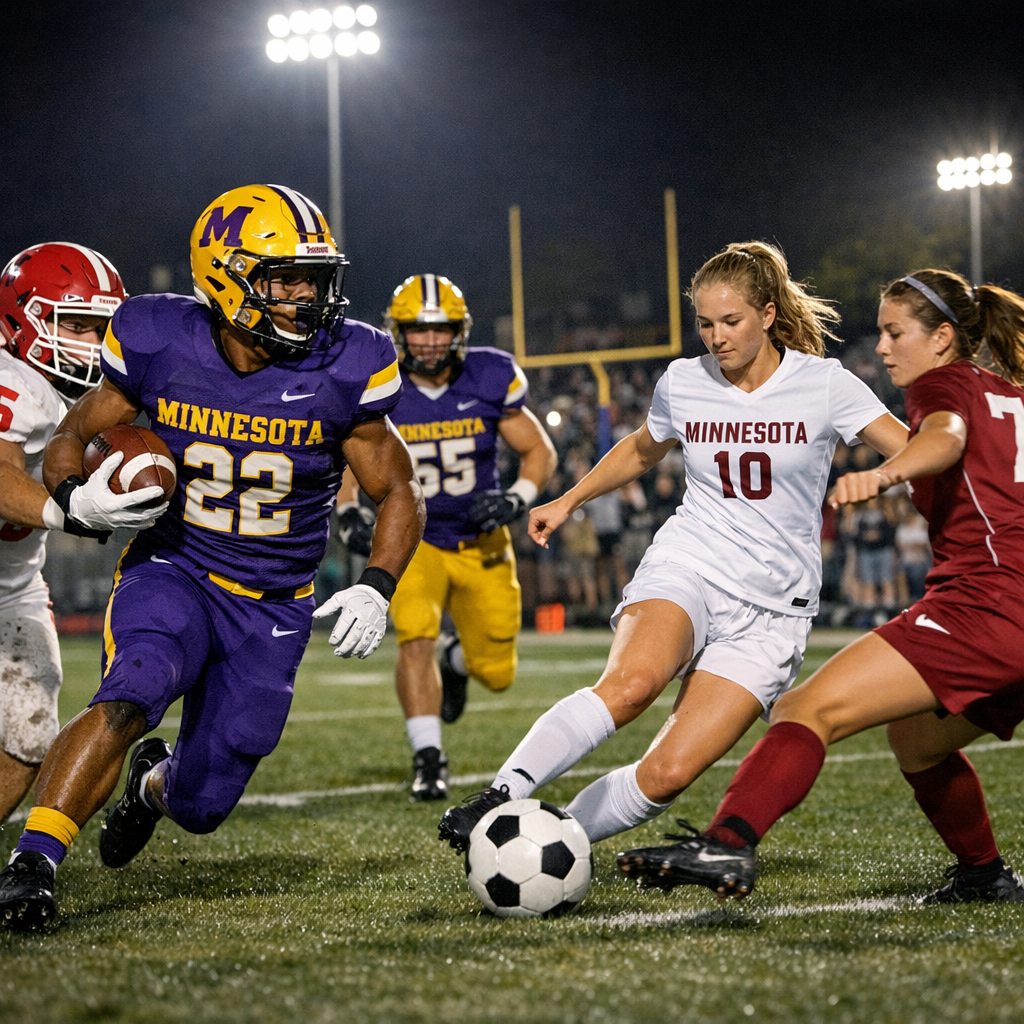
High school sports participation has reached record highs nationwide, and Minnesota is a big part of the surge. Across 2025-26, the National Federation of State High School Associations reported increases for both boys and girls in total participants, setting new marks. In particular, girls’ participation in emerging sports such as flag football and girls wrestling has shown sharp gains, helping reverse declines in other traditional sports.
In Minnesota, the latest “State of Play” data shows that about 65% of children ages 6-17 played a team sport at least once in 2024—one of the highest rates in the country—underscoring how strong youth engagement remains here. These trends go hand in hand with the Sports & Fitness Industry Association’s 2026 report, which showed over 92 million Americans played team sports in 2025, up more than 7% year-over-year. Outdoor soccer led the growth, while basketball—already the most widely played—is rising fast.
Stillwater Ponies: A Bit More Than Tradition
Locally, Stillwater Area High School’s Ponies continue to be a major force in Minnesota high school athletics. Their football program alone has claimed three state championships, a testament to decades of competitive success. The Ponies also maintain a solid all-time win percentage hovering around 57%, reflecting consistent performance even in tough matchups.
Beyond football, Stillwater’s athletic programs are broad and deep. The district offers a wide variety of fall and spring sports—soccer, swimming, tennis, mountain biking, adapted sports and more—offering opportunities for students with different interests and abilities. This breadth helps explain how the district has accumulated the third-most state championships in Minnesota High School League history, with 66 total team titles.
Collegiate Highlights: The Golden Gophers Pattern of Growth
At the college level, the University of Minnesota’s Golden Gophers have maintained momentum. Their 2025 football season ended with an 8-5 record, including a Big Ten bowl victory over New Mexico in overtime, extending a remarkable streak of postseason success under head coach P.J. Fleck. Among non-revenue sports, volleyball advanced to the NCAA Sweet Sixteen, breaking ground for recent seasons, while women’s basketball also posted significant tournament success not seen in decades. Academic performance is up too: student-athletes across sports sustained strong GPAs and high retention rates.
What’s Driving the Turn
Several key forces are powering these trends:
- Opportunities for girls expanding. Programs like girls flag football and wrestling are no longer niche; they’re drawing large and growing numbers of participants.
- Variety and access matter. Schools offering diverse sports—adapted, co-op, traditional—tend to see broader student engagement, especially when costs and logistics are managed.
- Community pride and infrastructure. Strong school cultures, solid facilities, and local fan support sustain programs even through slumps and competition.
Challenges Still on the Field
No progress comes without hurdles. Girls’ participation is growing, but in many sports gaps persist—Minnesota remains near the top nationally per capita, yet sports like ice hockey and basketball have lagged gender balance metrics compared to volleyball or tennis. Youth coaching numbers are declining, according to recent SFIA reports, potentially undermining future quality and depth. And while participation is up, regular physical activity levels (meeting federal guidelines) still fall short for many students.
What To Watch Moving Forward
For Stillwater, sustaining momentum likely means continued investment in nontraditional programs, ensuring all students see themselves represented. On the state front, tracking female participation trends sport by sport, supporting coach development, and preserving access in smaller or rural schools will be key. Nationally, sports participation is likely to keep growing—but whether that leads to healthier, more competitive, and more inclusive programs depends on where resources go.
At the end of the day, Stillwater reflects more than tradition—it reflects what’s working. As students lace up for another season, the foundation beneath their feet is stronger than it’s been in years.