

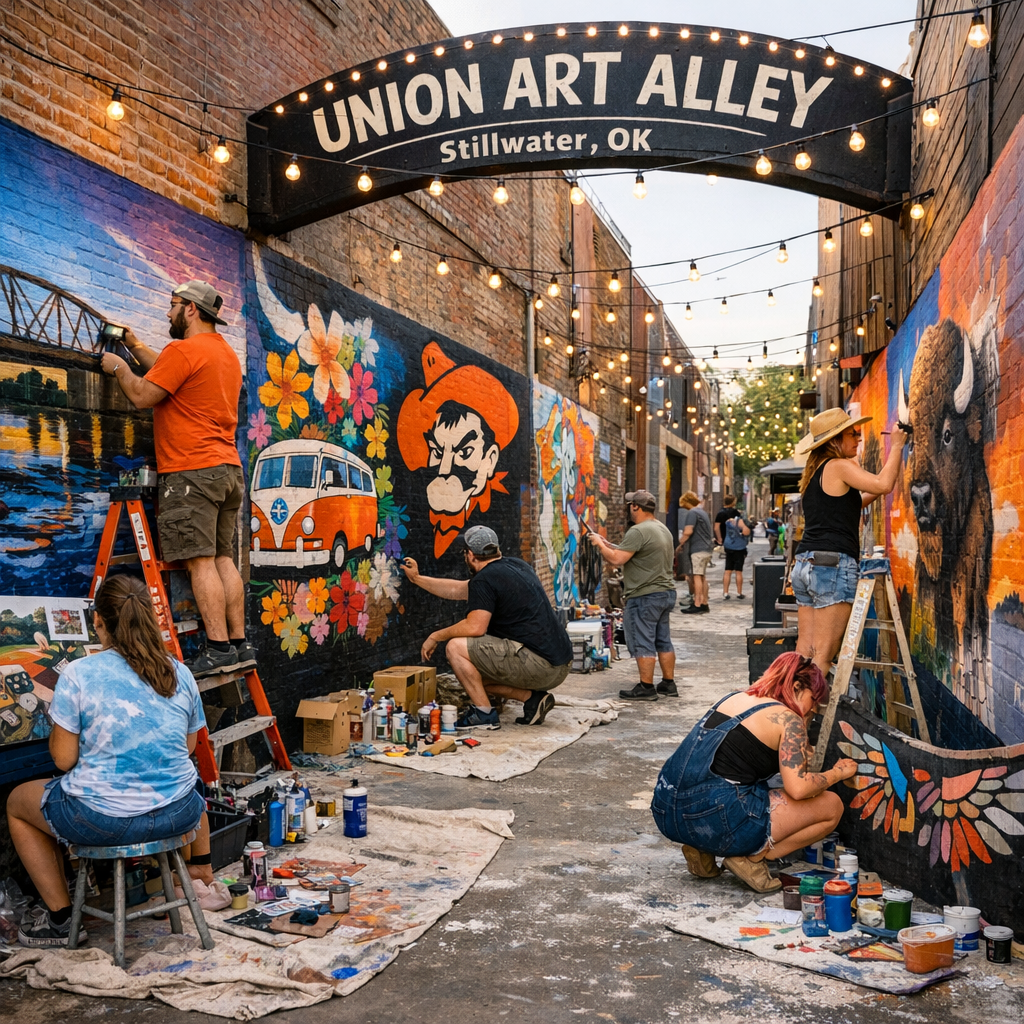
In Stillwater, a painted alley, a decorated utility box, a gallery show—these are more than just pretty sights. They’re expressions of who we are, what we believe, and what we’re becoming as a community.
The walls do talk
Take Union Art Alley. What used to be dubbed “garbage alley” is now a vibrant stretch of murals, outdoor gathering space, and shared identity. It’s one of the clearest examples of how public art can transform not just a place, but the rhythm of everyday life downtown. Local business owners, artists, and city partners saw potential and made something beautiful from what had been neglected. The alley now invites people to linger, to photograph, to reflect. And to feel connected. (cite: public/private mural project led by ArtReach St. Croix)
Listening, not just looking
Art & Water Space, an artist‐led gallery and studio here in downtown Stillwater, is rooted in creative listening. Exhibitions aren’t one‐way; they come with workshops, conversations, even art-science collaborations about our river, land, and shared environment. These spaces give people—residents, scientists, artists—a chance to be part of the process, not just spectators. It builds a stronger communal bond. (cite: description of Art & Water Space studio/gallery and its public‐conversation‐based programs)
Seeing nature and history in our streets
From historic murals recalling the log jams and the old pontoon bridge to utility boxes decked out by regional artists, Stillwater is full of stories embedded in public art. These works do more than decorate—they preserve our memory. They connect people who’ve lived here decades with newcomers drawn to our river, trails, and small-town warmth. (cite: public art examples around Stillwater—utility boxes, River City Sculpture Tour)
Why public art matters now
- It cultivates a sense of ownership—when neighbors see art that reflects their experiences, they feel seen.
- It supports local economies—artists, galleries, cafes, and stores all benefit when people spend time in well-loved public places.
- It motivates civic involvement—projects like walking trails, murals, or alley transformations often start with residents speaking up or partnering with city officials.
- It keeps us grounded—amid change, growth, and outside pressures, public art is a reminder of our heritage, values, and creative spirit.
A shared canvas for our future
Public art projects aren’t free of tension. Questions about who gets to decide what art goes up, whose stories are told, and how we preserve the balance between tourist appeal and resident experience come up all the time. Still, these conversations are part of the work. They help ensure that what we build now is for everyone.
As we walk down Union Art Alley or visit the Art & Water Space, consider what you want our Walls, our Galleries, even our alleys to say about us. That’s not just an aesthetic question—it’s a civic one. Our murals are our voices. Let’s keep them diverse.