

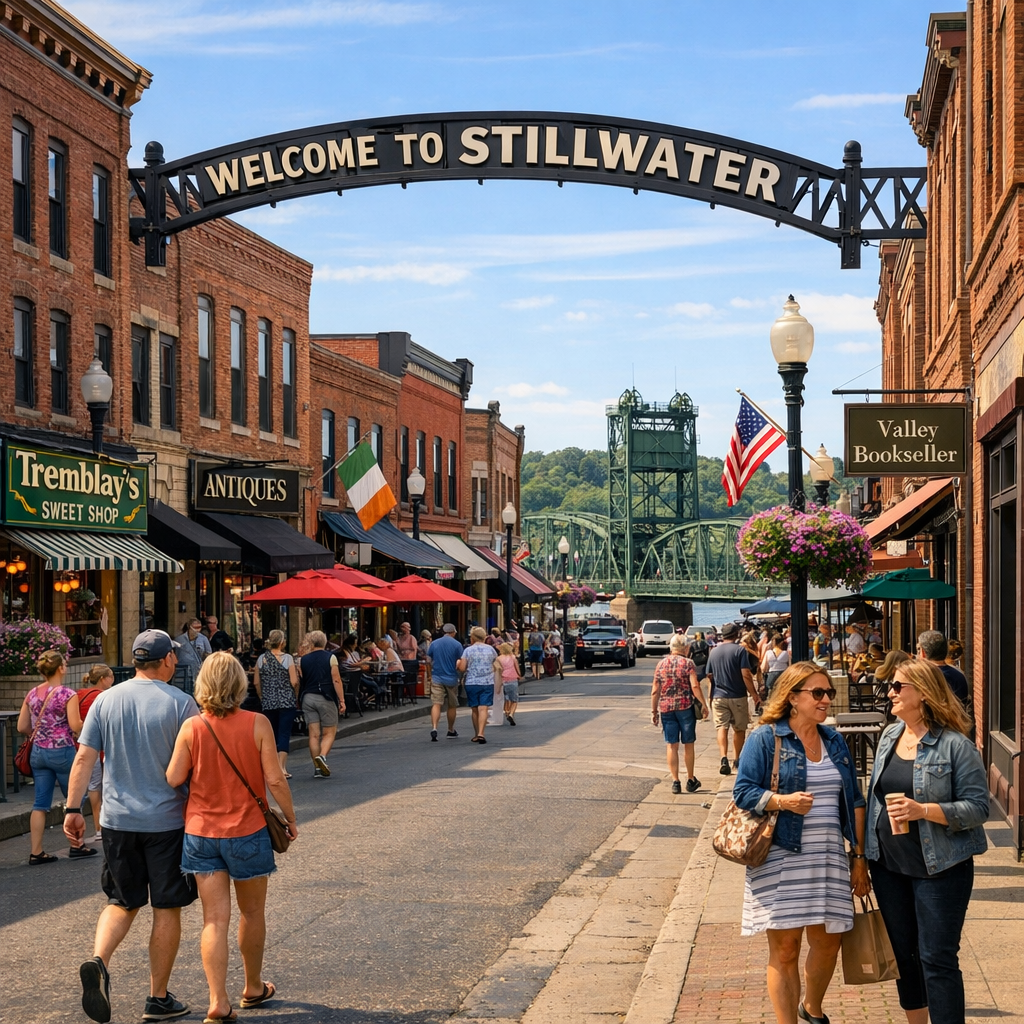
Stillwater is experiencing several economic shifts that matter for anyone running a business, looking for work, or considering investing locally. These enduring trends point to both fresh opportunities and real challenges in our community.
Population, Income, and Housing: Foundation of Change
Since 2009, Stillwater’s population has grown roughly 10%, and median household income has increased by about half (from ~$70,000 to over $105,000)—not adjusted for inflation. That suggests growing demand for higher-quality goods, services, and amenities. Median home values have similarly risen by more than 50%, while commute times have dropped. Working from home has grown from about 5% to nearly 22%. These shifts are reshaping what residents expect from businesses in town. (Data from recent ACS and local estimates.)
Labor Force Trends and Job Growth Prospects
Washington County’s labor force has seen strong growth: more people are living in the area, employment is rising, and job creation is forecasted to continue at a steady clip (~0.8% per year over five years). Industries tied to Health Care, Social Assistance, Information/Tech, and Professional & Business Services are expected to contribute significantly to future gains.
Occupations in Demand
Fields likely to see the biggest gains include software development, general and operations management, health sciences, and hospitality roles. At the same time, retail, food service, and other customer-facing small businesses must adjust to competition from remote work, changing shopping patterns, and rising costs.
Small Businesses: Critical and Under Pressure
Small businesses make up nearly 89% of business establishments statewide and employ a meaningful share of workers. Since the end of the last recession, they’ve led job creation in Minnesota—but many are seeing slower wage growth compared to larger firms. That gap raises questions about sustainability for business owners and their staff.
Local Cost Pressures
Downtown Stillwater businesses are reporting tighter margins. Rising rental costs, higher materials and supply costs, and reduced foot traffic are squeezing merchants—especially in sectors like retail and dining. Some store owners have decided to close or scale back. These challenges aren’t unique to Stillwater, but the historic downtown and tourist‐oriented sectors are feeling them sharply.
Resources and Strategic Efforts to Support Local Business
The city and partners offer various tools: tax increment financing (TIF), tax abatement, state‐level grants, and county business incentive programs help lower the financial barriers for developers and entrepreneurs.
The Stillwater Chamber of Commerce has adopted a renewed Economic Development Strategic Plan focusing on five pillars: business attraction, retention and expansion; property readiness; workforce development; incentive alignment; and storytelling to elevate Stillwater’s identity and business brand. This framework strengthens the support network for established firms and startups alike.
What Entrepreneurs, Employers, and Job-Seekers Should Watch
- Investment in Health & Social sectors: Given local demand and projected growth, businesses in healthcare services, elder care, mental health, and social assistance are likely to find expanding markets.
- Tech & Remote Work Products: With remote and hybrid work more common, businesses providing digital services, co-working spaces, or remote-friendly operations are positioned well.
- Affordable Retail/Dining Models: Smaller footprint, lower overhead, creative use of shared spaces or pop-ups may help mitigate rising costs.
- Workforce Training & Upskilling: As demand increases for tech, health science, and management roles, training programs and reskilling initiatives will be key. Local libraries, CareerForce, and extension services are important partners here.
Stillwater’s economy is far from static. Higher incomes and a growing population bring opportunities for innovation and business growth, but local firms must navigate cost pressures and evolving consumer behavior. With the right strategies and support systems, the community can continue building a resilient, diversified local economy.