

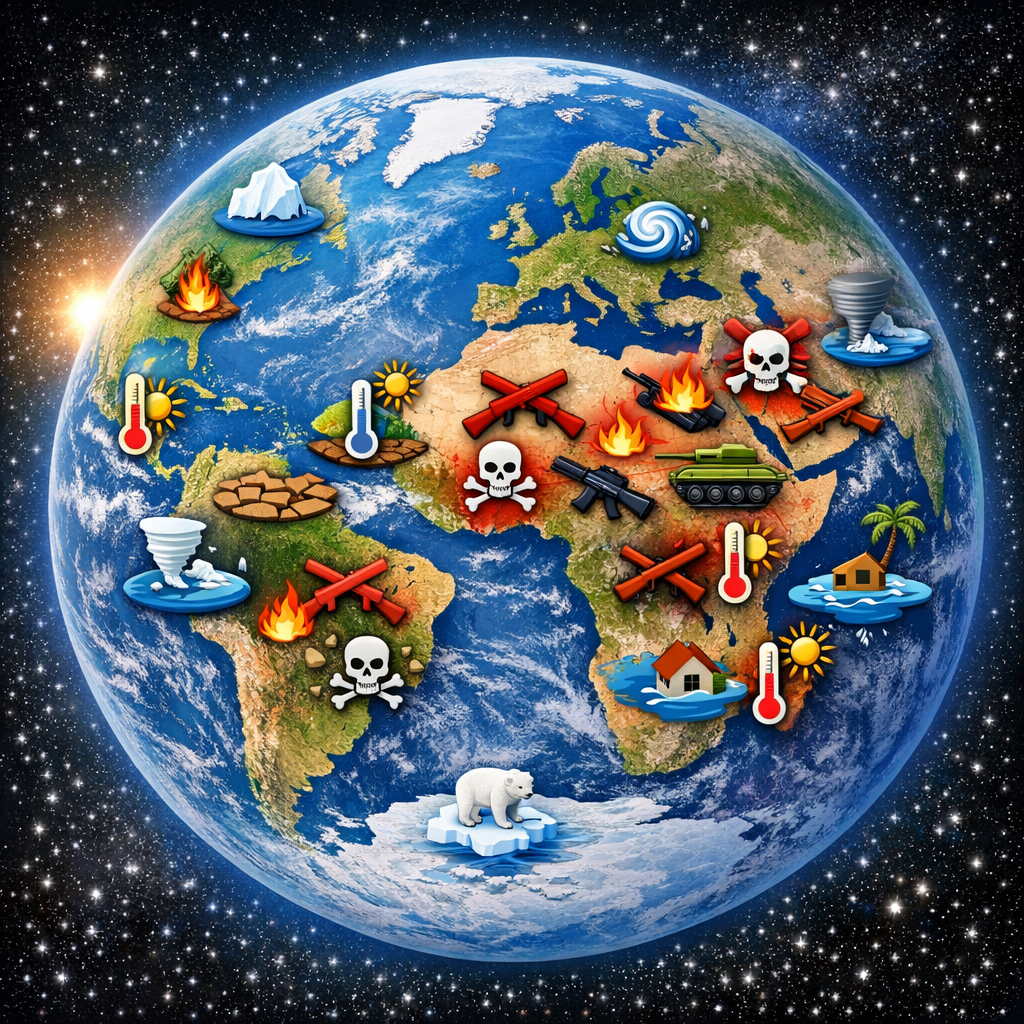
Hi Stillwater—Olivia Johnson here. In this column, I want to walk you through several major global trends that affect us all, even from halfway around the world. We’re living in a time where tensions and collaboration both rise together—conflicts flare, but so do shared efforts to solve big challenges like pandemics and climate change.
Surging conflicts and a changing security landscape
Analyses show that the number of state-based armed conflicts is higher now than at any point since World War II. These aren’t just background statistics—wars in places like Sudan, Gaza, Ukraine, and Yemen are driving desperation, increasing refugee flows, and straining global systems for aid. Besides direct violence, the world is seeing more one-sided attacks on civilians. (data from PRIO and others)
One pattern to watch: escalation isn’t limited to distant fronts. Border clashes, regional proxy wars, and disputes over maritime rights or strategic influence are multiplying. In many cases, nations are responding with stronger defense postures, which in turn raises risks of miscalculation or unintended escalation. (from global security risk reports)
Where cooperation is still alive—and growing
Despite the turbulence, there are signs that international collaboration hasn’t broken—it’s evolving. The World Health Organization has completed its Global Action Plan for Healthy Lives and Well-being for All, and is pulling together lessons for new cooperative efforts in global health initiatives. (on SDG3 GAP, WHO reports)
Climate diplomacy also saw some advances in recent negotiations. Countries are pushing for more transparency in their climate commitments, setting up mechanisms for just transition (helping communities shift away from fossil fuels without leaving people behind), and trying to fulfill earlier promises of financial aid for adaptation and capacity-building. (from UNFCCC updates)
The mixed picture: interdependence but under pressure
All this is happening with growing obstacles. Multilateral institutions are facing funding shortfalls. Some nations are acting more unilaterally—pursuing strategic autonomy rather than relying on global support. Economic strains, demographic shifts, and worsening governance in many places exacerbate the instability. (from Global Risks Report and others)
Public goods like health preparedness and climate resilience are especially vulnerable. Disruptions in supply chains, reduced foreign aid, or political instability can weaken global responses to everything from disease outbreaks to extreme weather. In other words, global cooperation can’t simply be a side project—it’s central to managing these risks.
Why this matters for us in Stillwater
Even in this community, farther from conflict zones, we feel the impact. Energy prices shift when global energy supplies are disrupted. Food costs rise when markets suffer from export restrictions or wartime damage. Diseases can spread across borders, requiring strong global monitoring and local readiness.
On the upside—there’s hope: public awareness is higher. Many in our community and across the U.S. are supporting global health funding and climate policies. Local nonprofits can partner with global organizations. And every time citizens demand action on climate or health, it strengthens the case for cooperation at the international level.
The takeaways
- Conflicts are increasing—not just by number but by complexity and impact.
- Cooperative efforts in health and climate are among the most promising paths forward.
- Vulnerabilities—financial, political, social—are real; maintaining global public goods requires vigilance.
- Local connections matter: what happens abroad influences us—and what we do here helps the bigger picture.