

By Olivia Johnson
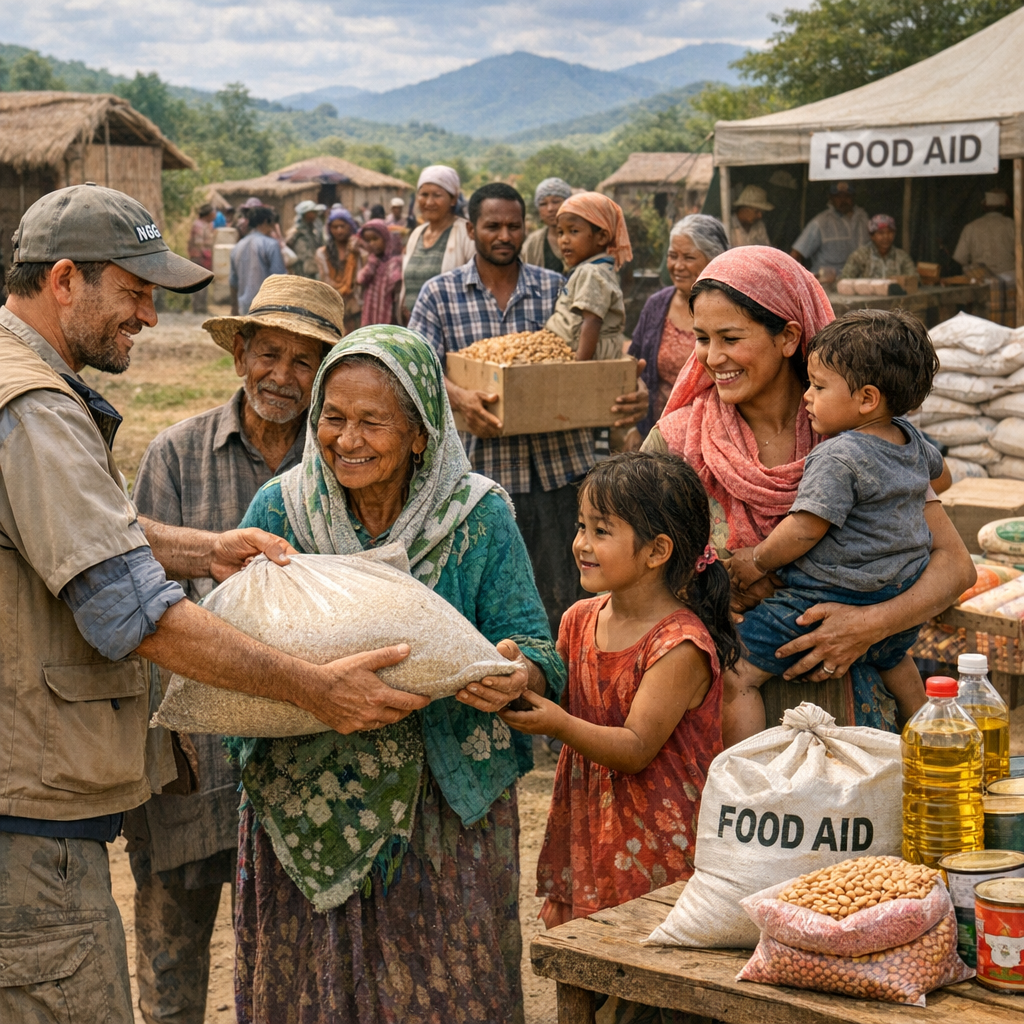
Across the globe, two interconnected humanitarian challenges have been growing more severe: acute food insecurity and forced displacement. They go hand in hand, often driven by the same forces, with ripple effects that reach communities everywhere—including ours in Stillwater.
Worsening Food Crises
Recent reports show that in 2025–2026, nearly 300 million people are facing high levels of acute food insecurity—roughly three times the number from 2016. Conflict, climate shocks and economic instability are aligning in destructive ways.
Two famines were officially confirmed last year in parts of Gaza and Sudan, and major risk continues elsewhere. Many affected populations are trapped in “protracted crises”—places where one disaster after another erodes coping mechanisms year after year.
Climate extremes—from droughts to floods—are no longer isolated events. When paired with rising fuel, fertilizer or transportation prices, the damage intensifies, especially for small-scale farmers. At the same time, conflicts disrupt food production and block humanitarian relief in vulnerable regions.
Forced Displacement Rising—and Shifting
As of the end of 2025, more than 117 million people worldwide were forcibly displaced due to war, violence, human rights abuses, or disasters. That includes 41.6 million refugees and asylum seekers, and nearly 69 million internally displaced—people who remain within their own country.
While the overall number of refugees decreased slightly in 2025—thanks largely to returns to places like Syria, Sudan, and Afghanistan—many of those returns are fraught. Returnees often return to areas still touched by violence, or with few services.
An increasingly large share of those displaced are stuck in protracted situations. Their stays in camp-like settings or informal makeshift homes last for years, without access to stable education, livelihoods, or legal protection.
Root Causes & Cross-Cutting Drivers
Several forces lie behind both food insecurity and displacement:
- Conflict and instability: Wars and political unrest make farming dangerous or impossible, while pushing people to flee for safety.
- Climate change: More frequent and intense weather shocks—from heatwaves to heavy storms—are undermining agriculture and displacing communities.
- Economic shocks & inflation: Global supply chain disruptions, rising input costs, fuel prices, and inflation make food more expensive and aid less powerful.
- Barriers to recovery: Displaced people often face restricted access to basic services. Meanwhile, governments and NGOs struggle to mobilize sufficient funding and scale up support fast enough.
What Can Be Done—and How Local Awareness Helps
While the challenges are immense, there are strategies with proven or promising results:
- Invest more in resilience: supporting local food production, crop diversity, infrastructure that can withstand climate extremes. These steps help communities recover faster when shocks occur.
- Boost peacebuilding and conflict-sensitive programming: resolving or reducing violence doesn’t just save lives—it helps stabilize food systems.
- Expand durable solutions for displaced people: stronger access to education, legal work, health care, and pathways to return or resettle safely.
- Support global cooperation and funding: because crises cross borders, international coordination is essential. Aid needs to be predictable, sustained, and responsive.
Here in Stillwater, although the scale is global, it’s not abstract. These issues affect international migration flows, global markets that influence food prices, and even climate action policies that shape our shared future. Staying informed, supporting organizations working abroad, and engaging in dialogue about global responsibility are ways we all participate.
Understanding the connections between hunger and displacement reminds us how deeply interwoven our world is—and how much more grounded, long-term responses matter.