

By Olivia Johnson, Stillwater
Introduction
Across continents, global events are revealing how deeply tied our world’s biggest challenges really are. Climate instability, war, and fraying international trust have become intertwined risks, each making the other worse. Understanding how these forces overlap is essential—not just for national leaders but for communities everywhere.
Climate Action Moves Forward, but Gaps Remain
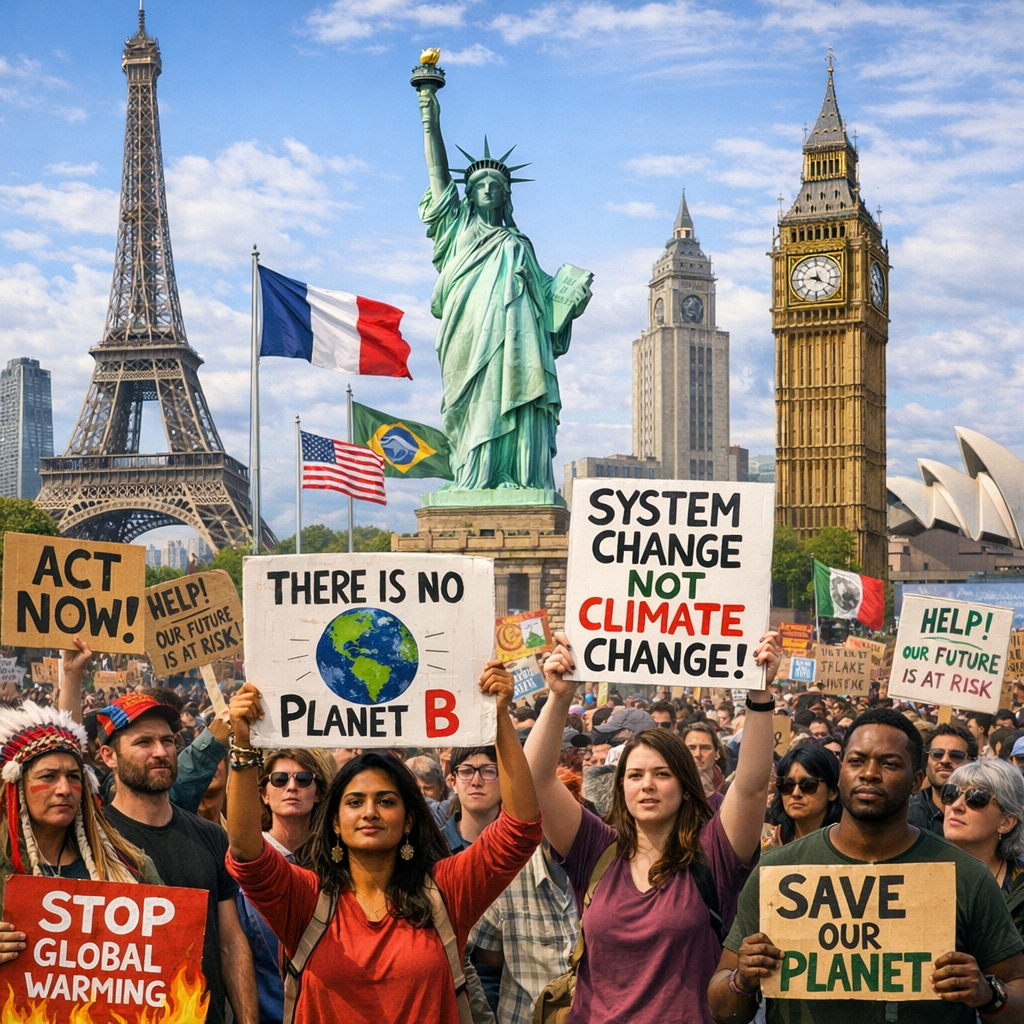
Climate change is no longer just a scientific prediction—it’s a daily reality. The United Nations Framework Convention on Climate Change reported that many nations are submitting more detailed national plans (NDCs) for cutting emissions and adapting to new realities. Still, the ambition in those plans often falls short of what’s needed to limit warming to 1.5 °C and avoid catastrophic outcomes. Funding and support for vulnerable nations remain major sticking points. UN negotiations continue to grapple not only with reducing emissions but also with loss and damage associated with irreversible harms.
Conflict and Economic Pressure: Rising Global Risks
War in Ukraine continues to have global reach—not only through displacement and humanitarian crisis but through ripple effects on energy markets, food prices, and geopolitical alignments. In the Middle East, tensions over maritime control and strategic waterways have added volatility to global trade and fuel costs. As countries respond, economic disruptions increasingly affect everyday lives, even in places far from conflict zones.
The Retreat of Multilateralism and Trust
One of the most concerning trends is the weakening of international cooperation. Experts warn that competition—over trade, resources, and influence—is replacing cooperation, straining traditional alliances. Multilateral institutions and treaties are being challenged; bilateral deals are taking precedence. Meanwhile, public trust is eroded by perceived inequality, unfulfilled promises, and lack of transparency.
Why It Matters Locally
Even in Stillwater, we feel these global currents. Energy prices influenced by world conflicts show up on monthly utility bills. Agricultural supply chain disruptions affect costs at the local co-op. Climate impacts—heat waves, shifts in precipitation—aren’t just distant phenomena; they have local health, economic, and environmental consequences.
Paths Forward
What can improve the outlook? Stronger implementation of existing climate and trade agreements, clear accountability mechanisms for global commitments, and more inclusive policymaking that values the voices of communities most affected. Governments and institutions must strengthen early warning systems, fund adaptation worthy of the scale of harm, and prioritize diplomacy over division.
It’s a moment that calls for vision as well as action. If we fail to integrate climate, conflict, and cooperative trust into how we plan and govern, the risks won’t dissipate—they’ll compound.