

By Olivia Johnson
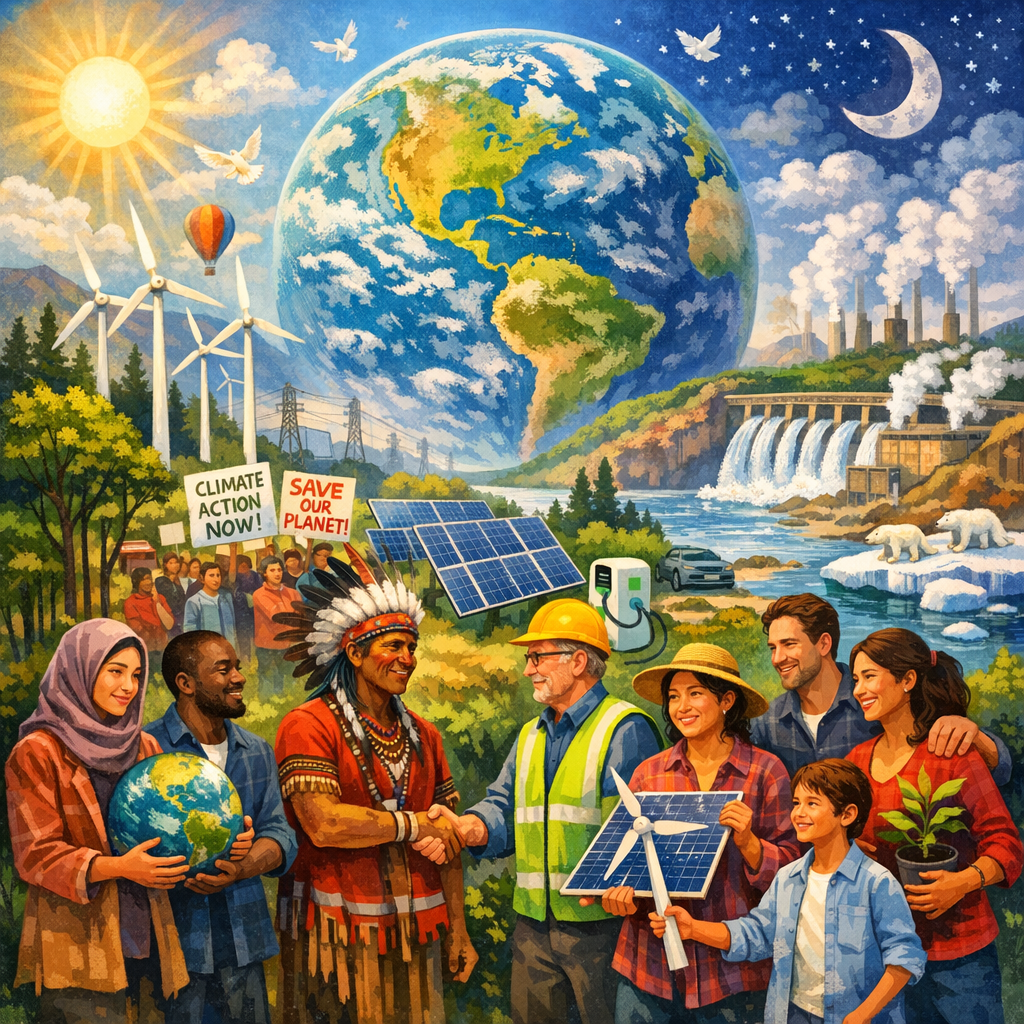
Climate change is no longer a distant threat; its effects are already reshaping lives and economies across the globe. As rising temperatures, extreme weather, and ecological disruption become more frequent, governments, scientists, and communities are stepping up efforts in both mitigation (reducing emissions) and adaptation (adjusting to changing conditions).
Why Climate Action Has Taken Center Stage
World leaders and environmental organizations are warning that we are now in a period where incremental delays may lead to irreversible damage. For instance, a strengthening El Niño is combining with human-caused warming to fuel heat extremes already pushing ecosystems and infrastructure to their limits. With overlapping crises—from pandemics to economic instability—climate action is being framed as foundational for public health, security, and long-term development.
Paths Forward: Mitigation and Adaptation
Expanding Clean Energy and Technologies
Renewable energy, electric mobility, and sustainable cooling are increasingly affordable and being deployed at scale. Urban planners and engineers are integrating innovations like heat-reflecting surfaces, rooftop gardens, and efficient cooling systems to reduce heat risks for city dwellers.
Adaptation in Action
Coastal cities are building defenses like wetlands or sea walls; drought-affected regions are shifting agricultural practices; in many countries, early warning systems now factor climate forecasts to alert communities before extreme heat, floods, or storms. Nature-based solutions—restoring forests, protecting wetlands—are proving not only effective but often more resilient and sustainable than purely hard infrastructure.
Challenges That Still Need Attention
Despite momentum, several barriers remain. Climate finance—funds needed to support vulnerable countries and communities—is still falling short. Political will is uneven: policy frameworks vary wildly from one nation to another, and enforcement is inconsistent. Furthermore, the governance challenges posed by global supply chains, energy transition costs, and competing economic priorities add layers of complexity.
How Communities Like Ours Can Engage
While Stillwater is far from many climate hotspots, what happens globally still affects us—through supply chains, weather patterns, or economic shifts. We can contribute by supporting clean energy locally, conserving green spaces, pushing for sustainable practices at municipal levels, and staying informed so we vote for leaders committed to climate resilience.
Real change will take sustained, collective effort. But there is reason for cautious optimism: momentum is growing, tools are improving, and solutions are already in place in many parts of the world. How fast and how equitably we act now will make all the difference.